Carney says he is concerned about U.S. escalation over Greenland tariffs
Canada backs Greenland’s autonomy and says the Arctic territory is protected through NATO amid U.S. threats of tariffs and a proposal to buy Greenland.
Copy link
By Torontoer Staff
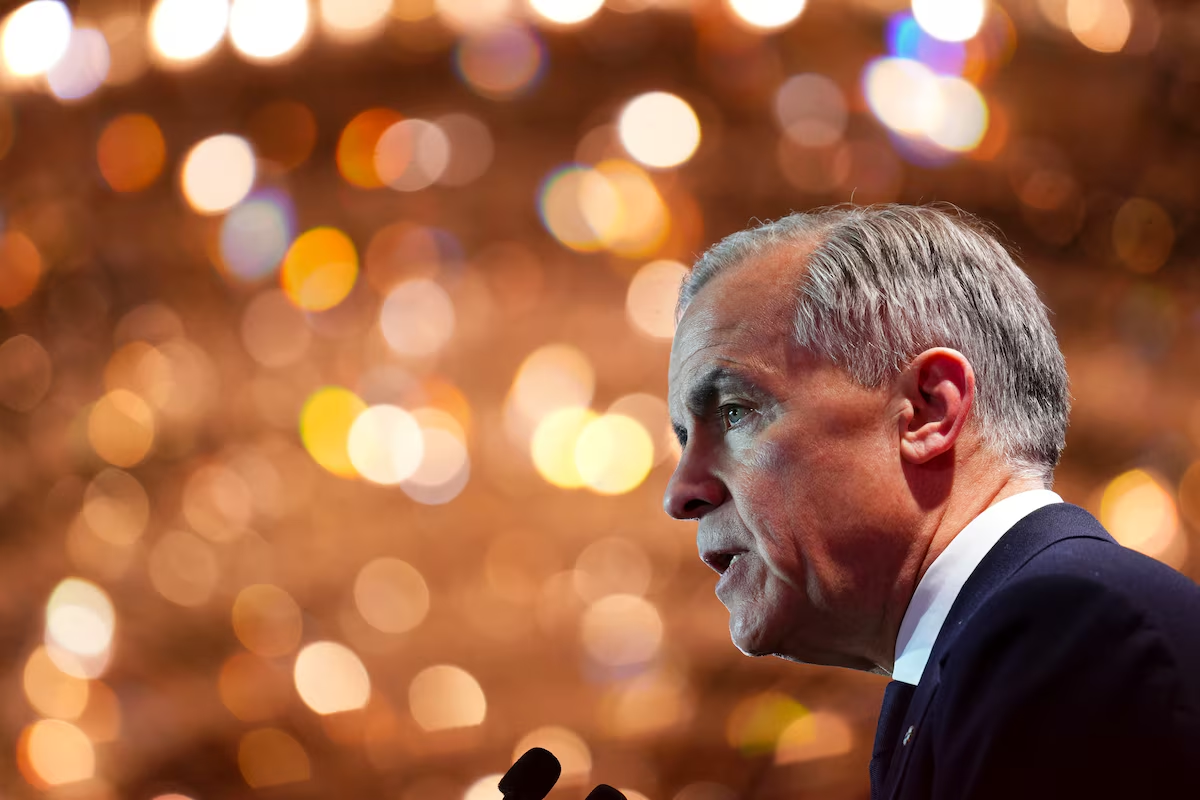
Prime Minister Mark Carney said he is "concerned" about what he described as U.S. "escalation" after President Donald Trump announced tariffs on eight European countries tied to Washington’s bid to buy Greenland. The president said the tariffs will begin at 10 per cent on Feb. 1 and rise to 25 per cent on June 1 if a purchase agreement is not reached.
Carney told reporters in Doha, Qatar, that Canada supports Greenland’s autonomy and territorial integrity, and that decisions about the territory rest with Greenlanders and Denmark. He said NATO already provides protection for the territory and that Canada will work with allies to strengthen Arctic defence capabilities.
What the U.S. announced
President Trump tied the prospect of a U.S. purchase of Greenland to a new schedule of tariffs on countries he said oppose the sale. The list includes Denmark, Norway, Sweden, France, Germany, the United Kingdom, the Netherlands and Finland. Trump framed the tariffs as leverage, saying they would increase if no deal for a "Complete and Total purchase of Greenland" was in place by June 1.
The announcement prompted a swift diplomatic response in Europe. EU ambassadors scheduled a meeting to consider the bloc’s response to the tariff threat, and Danish leaders have reiterated that Greenland is not for sale.
Canada’s stance and the NATO angle
Carney framed Canada’s position around two core principles: respect for self-determination and collective defence. He emphasised that any future for Greenland must be decided by its people and by Denmark, and said Canada supports working with alliance partners to improve Arctic defence readiness.
I am concerned about this escalation and we will continue to underscore the importance of sovereignty, territorial integrity and the role of NATO in the Arctic.
Prime Minister Mark Carney
Carney said he planned to raise the issue with President Trump if they meet at the World Economic Forum in Davos. He described the matter as one that sits at the intersection of diplomacy, security and the rights of a self-governing people.
Why Greenland matters
Greenland occupies a strategic position in the Arctic, and control over the territory has implications for military positioning, shipping routes and access to natural resources. That combination helps explain why the U.S. has expressed interest in acquiring the island and why European and Canadian officials react strongly to any proposal that appears to undermine sovereignty.
Greenland is a self-governing territory within the Kingdom of Denmark. Its political status and relationship with Denmark have evolved through devolution of powers, and any change to sovereignty would involve complex legal and diplomatic processes.
Potential outcomes and next steps
- Diplomatic pushback: European partners and NATO allies may coordinate a response through diplomatic channels and trade measures.
- Domestic reaffirmation: Denmark and Greenlandic authorities could reiterate that Greenland is not for sale and outline steps to assert self-governance.
- Arctic defence cooperation: Canada and NATO partners could accelerate plans to enhance surveillance, search and rescue, and military readiness in the region.
- Economic and political fallout: Tariff threats risk escalating trade tensions between the U.S. and affected European states, prompting broader negotiations.
Observers say the situation will test alliances and norms around sovereignty. For Canada, the immediate focus appears to be reaffirming support for Greenlandic autonomy while working with allies to ensure security in the Arctic.
What to watch in the coming days
- Meetings at the World Economic Forum, where leaders may raise the tariff threat in bilateral conversations.
- Responses from EU capitals and NATO officials on collective measures or declarations.
- Statements from Greenlandic and Danish authorities on sovereignty and any diplomatic steps they intend to take.
The next few weeks could clarify whether the tariff threat was a negotiating tactic or the start of broader trade measures, and whether talk of a purchase will move beyond rhetoric. Canada has signalled it will press allies to respect the rights of Greenlanders and to maintain cooperation on Arctic security.
Concluding: Carney said Canada stands by Greenland’s right to self-determination and will work with NATO partners to ensure the Arctic remains secure and governed by established rules.
GreenlandCanadaNATOArctictrade