EU ambassadors to meet as bloc weighs rare counter-measures after U.S. tariffs over Greenland
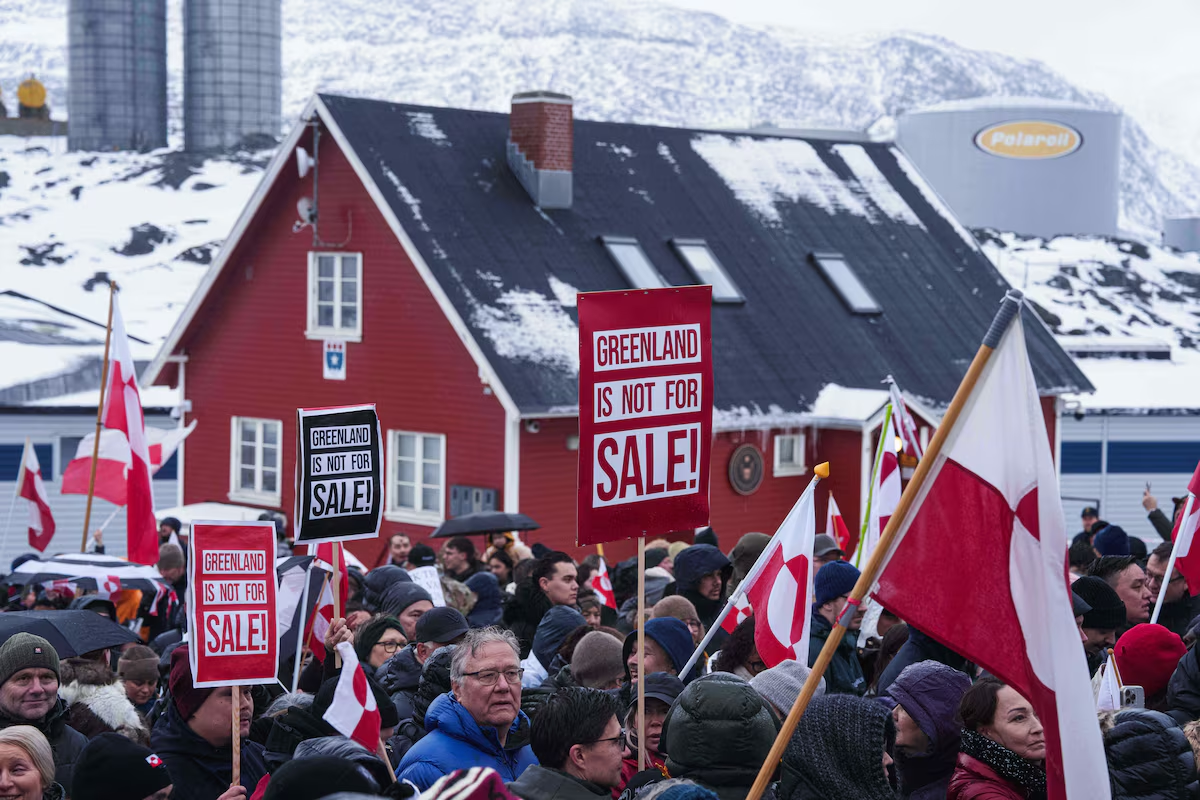
EU diplomats convene for an emergency meeting after Trump threatened tariffs over Greenland, and leaders discuss using the bloc's Anti-Coercion Instrument.
Copy link
By Torontoer Staff
European Union ambassadors will meet Sunday in Brussels after U.S. President Donald Trump threatened escalating tariffs on several European countries over a dispute tied to Greenland. The emergency session, convened by Cyprus during its rotating EU presidency, will consider responses including the rarely used Anti-Coercion Instrument.
Trump announced plans to raise tariffs on Denmark, Sweden, France, Germany, the Netherlands and Finland, along with Britain and Norway, until the United States is allowed to buy Greenland. The announcement followed interest expressed by U.S. officials in the island and has intensified diplomatic tension between Washington and its European partners.
What prompted the meeting
The tariff threats came after the U.S. indicated it wanted to buy Greenland. Several European countries have since sent small contingents of military personnel to Greenland. The new U.S. measures would add to existing tariffs of 10 and 15 per cent, and they target a mix of EU members, allied states and the United Kingdom.
- Denmark
- Sweden
- France
- Germany
- the Netherlands
- Finland
- Britain
- Norway
The Anti-Coercion Instrument, explained
European leaders have raised the possibility of activating the Anti-Coercion Instrument, a tool created to respond to economic coercion that threatens the EU’s interests. It has never been used. If triggered, the instrument would allow the bloc to impose targeted counter-measures, including limiting access to EU public procurement and restricting trade in services where the United States runs a surplus with the EU.
- Limit access to EU public tenders
- Restrict trade in specific services
- Targeted tariffs or trade limitations on sectors where leverage exists
French President Emmanuel Macron has pushed for activation, and senior lawmakers in the European Parliament urged a firm response on social media. At the same time, some EU diplomats counsel caution, arguing that immediate escalation risks further damaging transatlantic ties.
How leaders are responding
Responses from national leaders and officials have varied. Italian Prime Minister Giorgia Meloni called the tariff threat a mistake and said she had spoken with Trump. Britain’s Culture Secretary Lisa Nandy urged dialogue and described Greenland as non-negotiable, saying allies should work together rather than inflame the dispute.
Our position on Greenland is non-negotiable. It is in our collective interest to work together and not to start a war of words.
Lisa Nandy, UK Culture Secretary
EU institutions are also shifting their approach to pending trade business with the United States. The European Parliament is expected to suspend its work on ratifying the transatlantic trade agreement reached in July. Manfred Weber, head of the European People’s Party, said approval was not possible for now.
Wider trade context
The tariff dispute arrives as the EU signs its largest free trade agreement, with the Mercosur bloc in South America. Ursula von der Leyen, president of the European Commission, framed that deal as a commitment to long-term, rules-based trade and contrasted it with unilateral tariffs.
We choose fair trade over tariffs. We choose a productive, long-term partnership over isolation.
Ursula von der Leyen, European Commission president
Observers note the recent U.S. trade deals with Britain in May and with the EU in July already drew criticism for being unbalanced. Critics argued the U.S. maintained broad tariff leeway while partners were asked to remove import duties. The latest threats increase the possibility of reciprocal measures and could complicate those limited agreements.
What to watch next
Diplomats will assess whether to pursue the Anti-Coercion Instrument, opt for more measured diplomatic pressure, or seek an immediate de-escalation with Washington. The Cyprus-led emergency meeting will convene ambassadors to discuss next steps and test whether EU capitals can present a coordinated response.
If the bloc activates the Anti-Coercion Instrument, that would mark a significant moment in EU trade policy and set a precedent for responding to economic pressure from any third country. The stakes include potential disruptions to negotiations, trade flows and political relations across the Atlantic.
The coming days will show whether European leaders unite behind punitive measures or forge a diplomatic path that preserves trade ties while defending sovereign interests in Greenland and beyond.
EUGreenlandTradeTariffsAnti-Coercion Instrument