How Canada’s new rules on Chinese-made EVs could change your next car purchase
Canada will allow a capped number of Chinese-made electric vehicles to enter with a 6.1% tariff. Here’s how that could affect prices, which brands may arrive first, and what shoppers should watch for.
Copy link
By Torontoer Staff
The federal government has replaced the 100 per cent tariff on Chinese-made electric vehicles with a quota system that allows up to 49,000 imports a year, subject to a 6.1 per cent tariff on most-favoured nation terms. The quota could rise to 70,000 within five years, and half of the initial allocation will be reserved for models priced at C$35,000 or less.
The change shifts the landscape for Canadian EV shoppers. It opens a route for lower-cost models from China, while giving established brands that already ship from China a fast track back to the market.
What changed and why it matters
Until recently, Ottawa applied a 100 per cent tariff on most Chinese-built EVs, effectively blocking imports. Under the new arrangement, most vehicles from China will face a 6.1 per cent tariff, but imports will be capped to the annual quota. The government has also carved out a price-based subquota to protect the lower-priced segment of the market, reserving half of the allocations for vehicles under C$35,000.
For buyers, the immediate effect will depend on which brands win quota slots and how quickly they can set up Canadian sales channels. Some automakers could pass cost savings on to consumers, while others may use the quota to test demand before committing to wider distribution or local assembly.
Why Tesla may move fastest
Tesla is well placed to resume shipments from its Shanghai factory, after already equipping that plant to build a Canada-specific version of the Model Y in 2023. The company shipped Model Ys from Shanghai to Vancouver that year, contributing to a large rise in Chinese auto imports, but switched to shipping from its U.S. and Berlin plants in 2024 after the 100 per cent tariff was imposed.
Tesla also has an established retail and service network across Canada, with dozens of stores and service centres, which gives it an operational advantage over many Chinese rivals that do not yet have a sales presence here. Tesla’s relatively simple line-up of core models can make it easier to adjust production and shipping based on quota availability and market demand.
This new agreement could allow resumption of those exports rather quickly.
Sam Fiorani, AutoForecast Solutions
Tesla indeed has an advantage with its offering of a few models, versions and simple production lines so that it can be flexible to sell cars produced in any country in any markets to achieve the best cost efficiency.
Yale Zhang, AutoForesight
Opportunities for Chinese brands and the price cap
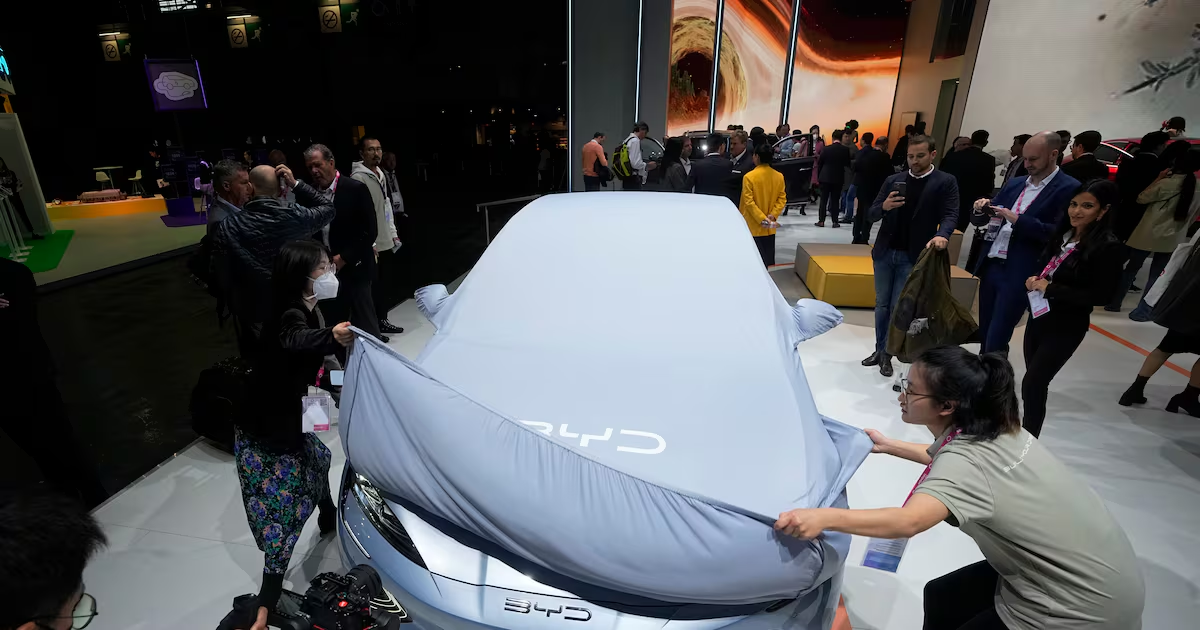
The price-based clause will favour lower-cost Chinese models and could open room for brands such as BYD, Nio and others to enter the Canadian market in the entry-level segment. Analysts expect the quota to act as a trial period, allowing manufacturers to gauge demand among Canadian buyers and among communities with larger populations of Chinese Canadians.
The beneficiaries are likely to be Chinese automakers and the Canadian customers looking for an entry-level vehicle.
Sam Fiorani, AutoForecast Solutions
Some Chinese-owned brands such as Volvo and Polestar previously exported China-made vehicles to Canada, and BYD already operates an electric bus assembly plant in Ontario. The quota and lower tariff could spur more joint ventures or investment in Canadian assembly over the next few years.
What buyers should watch for
- Which models win quota slots, and whether allocations favour entry-level prices or higher-end vehicles.
- How quickly manufacturers set up Canadian sales and service networks, which affects warranty support and resale values.
- Final pricing after tariffs, shipping and any incentives, including provincial rebates or trade-in credits.
- Battery range, charging compatibility with Canada’s networks, and availability of parts and repairs.
- Timing: even if imports resume quickly, supply could be limited during the first year of the quota.
Practical steps if you are shopping for an EV now
If you are in the market today, compare total cost of ownership rather than headline price alone. Factor in range, charging costs, insurance, maintenance and expected resale. Check dealer and manufacturer support for software updates and parts. If you prefer a brand without an established Canadian footprint, ask about warranty fulfilment, loaner vehicles and local repair options before you buy.
If you are willing to wait, monitor announcements about quota allocations and initial Canadian dealer openings. New arrivals could lower prices or prompt promotions from incumbents.
Broader context
The United States currently maintains a high tariff on most Chinese EV imports, which has largely prevented similar shipments there. Canada’s approach is more measured, using a quota and a modest tariff to allow controlled market access while preserving space for lower-priced vehicles and domestic negotiations on investment and joint projects.
Over the next three years, Ottawa is expected to explore partnerships and investments with Chinese firms to develop Canadian electric vehicles that combine local production with Chinese technology and manufacturing know-how.
For Canadian EV shoppers, the policy change promises more choice and potential price competition, but the immediate effects will depend on which automakers secure quota slots and how quickly they establish sales, parts and service networks here.
electric-vehiclesEVsTeslaauto-industryCanada