How Canadians can respond to Carney’s call for unity and economic resilience
Mark Carney urged national unity and practical action on cost of living, trade and AI. Here are clear steps households and communities can take to adapt.
Copy link
By Torontoer Staff
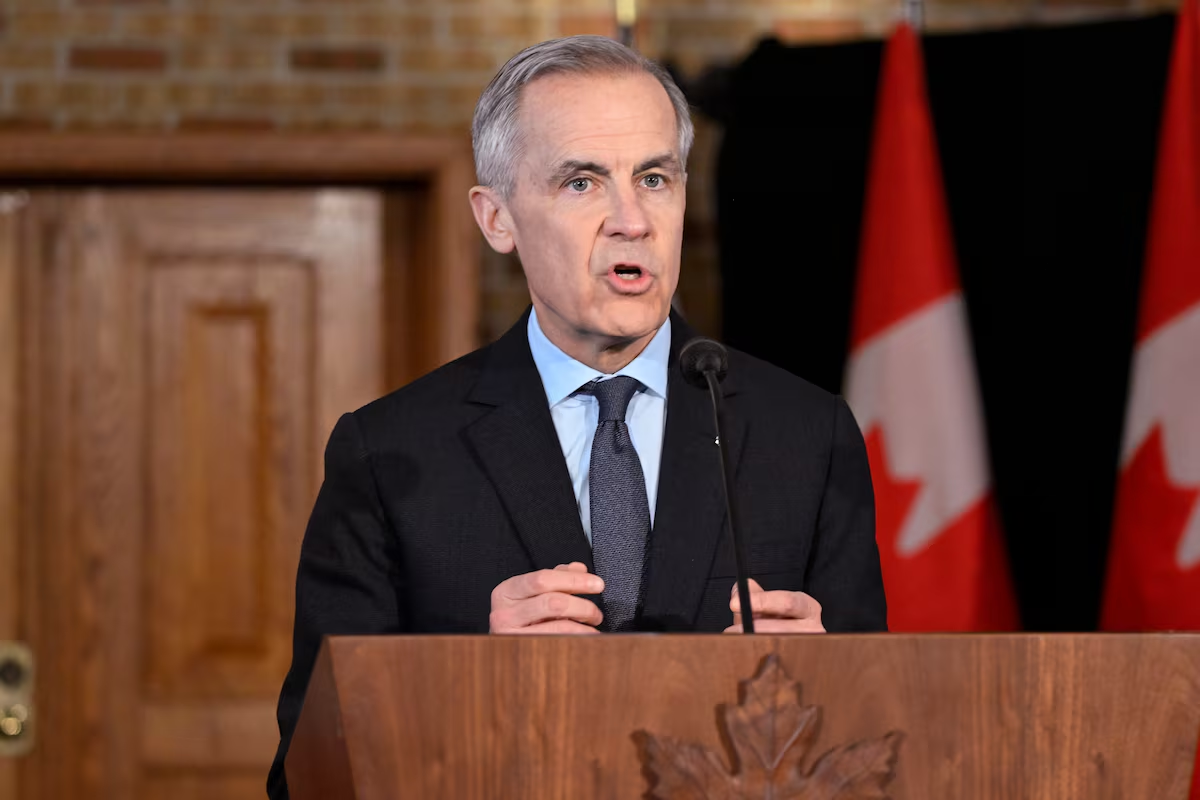
Prime Minister Mark Carney used a nationally broadcast address to call for Canadians to pull together as the country faces economic pressures from tariffs, shifting trade relationships and rapid technological change. He framed unity as a practical tool for growth and resilience, and flagged policy priorities that will influence household budgets, jobs and training over the coming years.
Carney spoke from La Citadelle in Quebec City, ahead of a federal cabinet planning retreat. He focused on domestic measures: removing interprovincial trade barriers, fast-tracking major projects and lowering the cost of living. He also raised the challenges and opportunities of artificial intelligence and the need to align education and social supports with new labour realities.
What he said and what it means for you
When we are united, unity grows. When we are Canadian – inclusive, fair, ambitious – Canada grows.
Prime Minister Mark Carney
Carney framed national unity as a source of economic strength rather than a purely symbolic value. For households that translates into expectations that governments will prioritise projects and policies meant to improve mobility, reduce costs and create jobs. He also warned that global trade tensions are already affecting Canadians through higher prices and uncertainty.
Practical steps for household finances
- Build or top up an emergency fund, aiming for three months of essential expenses, to buffer short-term shocks from price increases or job transitions.
- Review recurring costs. Compare energy, insurance and cellphone plans annually and switch when savings justify the effort.
- Diversify income where possible: part-time freelance work, rental income or a side business can reduce exposure to sector-specific downturns.
- Use government supports and tax credits. Check federal and provincial programs designed to ease cost-of-living pressures and to support retraining.
Preparing for AI and changing job markets
These tensions can only be reconciled if AI works for all. AI can provide powerful solutions, but realising AI’s potential fairly will require fundamental reforms to our education system, skills training and social-welfare systems.
Prime Minister Mark Carney
Carney’s remarks on artificial intelligence put the emphasis on public policy and education. For individuals, the priority is skills that are complementary to automation: critical thinking, digital literacy, data basics and people-focused skills such as project management and client relations. Short courses, micro-credentials and targeted certification can be faster routes back into the workforce than multi-year degrees.
- Identify in-demand skills in your sector and enrol in short online courses or certificate programs.
- Seek employer-supported training. Many companies subsidise upskilling to retain staff.
- Explore apprenticeship and co-op opportunities that combine wage income with practical learning.
- Use public reskilling programs and workforce development centres to access low-cost or free training.
Civic habits that strengthen community resilience
Carney positioned Canada as a middle power that can model openness and security. Responding at the local level can multiply the effect of national policy. Small civic actions influence how quickly communities adapt and how equitably benefits are shared.
- Engage with municipal and provincial representatives about priorities for infrastructure and regional trade improvements.
- Support local businesses to keep economic activity circulating within your community.
- Volunteer with workforce development or mentorship programs that connect experienced workers with people transitioning careers.
- Stay informed about major projects and public consultations; community input shapes how benefits are distributed.
A role for everyday choices
Carney’s speech was both a policy outline and a call to collective action. The national priorities he identified will require government planning, but everyday choices matter. Managing household finances, investing in relevant skills and participating in local civic life are practical ways Canadians can respond. Those steps also align with the broader objectives Carney set out: stronger markets, fairer access to opportunity and a more resilient economy.
Mark Carneyeconomycost of livingartificial intelligenceskills trainingnational unity