How Taiwan tensions could affect Canadian consumers and businesses
As Mark Carney wraps up his Beijing visit, Canada faces strategic choices that could reshape supply chains, trade and everyday goods. Here’s what to watch and how businesses can respond.
Copy link
By Torontoer Staff
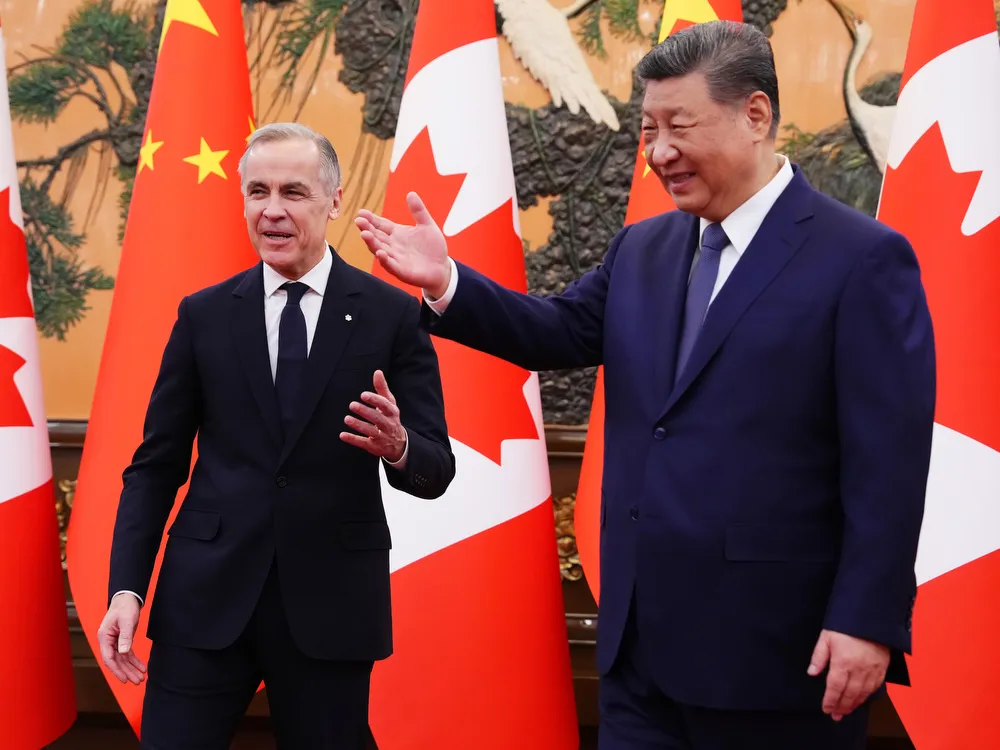
Prime Minister Mark Carney’s visit to Beijing has focused attention on trade deals for electric vehicles and canola. Beyond those headlines, the balance of power in the Taiwan Strait has practical implications for Canadian consumers, businesses and supply chains.
Tensions in the region are not only a diplomatic concern. The waters around Taiwan carry over half of global container traffic each year. Any disruption there would ripple through shipping, manufacturing and the tech components that underpin everyday products in Canada.
Why Taiwan matters to Canadians
Taiwan sits at the centre of several critical industries, notably semiconductors and advanced manufacturing. Many consumer electronics and automotive components rely on Taiwanese production and the undersea cables that link markets across the Pacific. That makes the stability of the Taiwan Strait an economic concern as much as a geopolitical one.
China’s recent military exercises around Taiwan, described by Beijing as “Justice Mission 2025,” and its use of economic pressure on jurisdictions that take opposing stances, show how diplomatic disputes can translate into trade actions. Canada has faced targeted trade restrictions in past diplomatic disputes, and similar measures could return if relations sour.
How tensions could change daily life and business
Disruption in the Taiwan Strait would affect prices and availability of electronics, electric vehicle components, and higher-tech consumer goods. Companies that depend on single-source suppliers or tightly integrated just-in-time logistics are most vulnerable. Smaller retailers and manufacturers could face delays or cost increases that are passed on to shoppers.
Beyond goods, projects tied to critical minerals, liquefied natural gas, artificial intelligence and carbon capture could face investment slowdowns if geopolitical risk prompts companies to delay contracts or relocate supply chains to friendlier jurisdictions.
Business responses and practical steps
Many multinational firms have already started to re-shore or friend-shore operations, favouring countries with transparent regulation and predictable trade rules. Canadian firms can follow this lead while exploring partnerships that diversify sourcing for components and raw materials.
- Map critical suppliers and identify single points of failure in your supply chain.
- Assess inventory strategies, balancing just-in-time with safety stock for key components.
- Seek partnerships with suppliers in multiple jurisdictions to reduce geographic concentration.
- Invest in supplier due diligence focused on geopolitical risk and regulatory transparency.
- Engage with industry associations and government export offices for support and guidance.
For consumers, awareness of where components come from can guide purchasing decisions. Choosing products built with diversified supply chains may offer greater stability in the face of disruptions.
What Canada can do, and what Taiwan is offering
The Canadian government and private sector can promote reliable, resilient and predictable trade links. That includes stronger protections for intellectual property, clear rules on fair trade, and investment in sectors where Canada and Taiwan have complementary strengths.
Taiwan is ready to deepen its partnership with Canada to establish reliable, resilient, and predictable supply chains defined by strong protections on intellectual property and rigorous protocols on fair trade.
Angel Li-hsin Liu, Director General of the Taipei Economic and Cultural Office in Vancouver
Officials in Taipei have been explicit about seeking closer ties with democracies that prioritise transparent regulation. For Canadian businesses, that represents an opportunity to diversify sourcing and collaborate on technologies from critical minerals processing to AI and clean energy solutions.
At the same time, Ottawa must weigh diplomatic and economic costs. As one observer put it, China has previously used trade as leverage: "China has weaponized trade with Canada in the past," a reminder that commercial ties can be complicated by political disputes.
Takeaways for readers
- Geopolitical events in the Taiwan Strait can affect goods, prices and investments in Canada.
- Businesses should prioritise supply-chain resilience and supplier diversification.
- Consumers can favour products with diverse sourcing to reduce exposure to disruptions.
- Closer ties with Taiwan offer opportunities in tech, critical minerals and energy.
Mark Carney’s talks in Beijing may centre on trade deals today, but the wider strategic context matters for long-term planning. Firms, investors and consumers can use the present moment to assess vulnerabilities and build more resilient supply chains.
TaiwanCanada-China relationssupply chainstradebusiness