Joseph Medwecki, 190 St. George and the triumph of the wraparound balcony
Joseph Medwecki, the architect of 190 St. George, died Nov. 10, 2025 at 98. His Midtown condo, known for its pointed wraparound balconies, reshaped how Torontonians live with glass and views.
Copy link
By Torontoer Staff
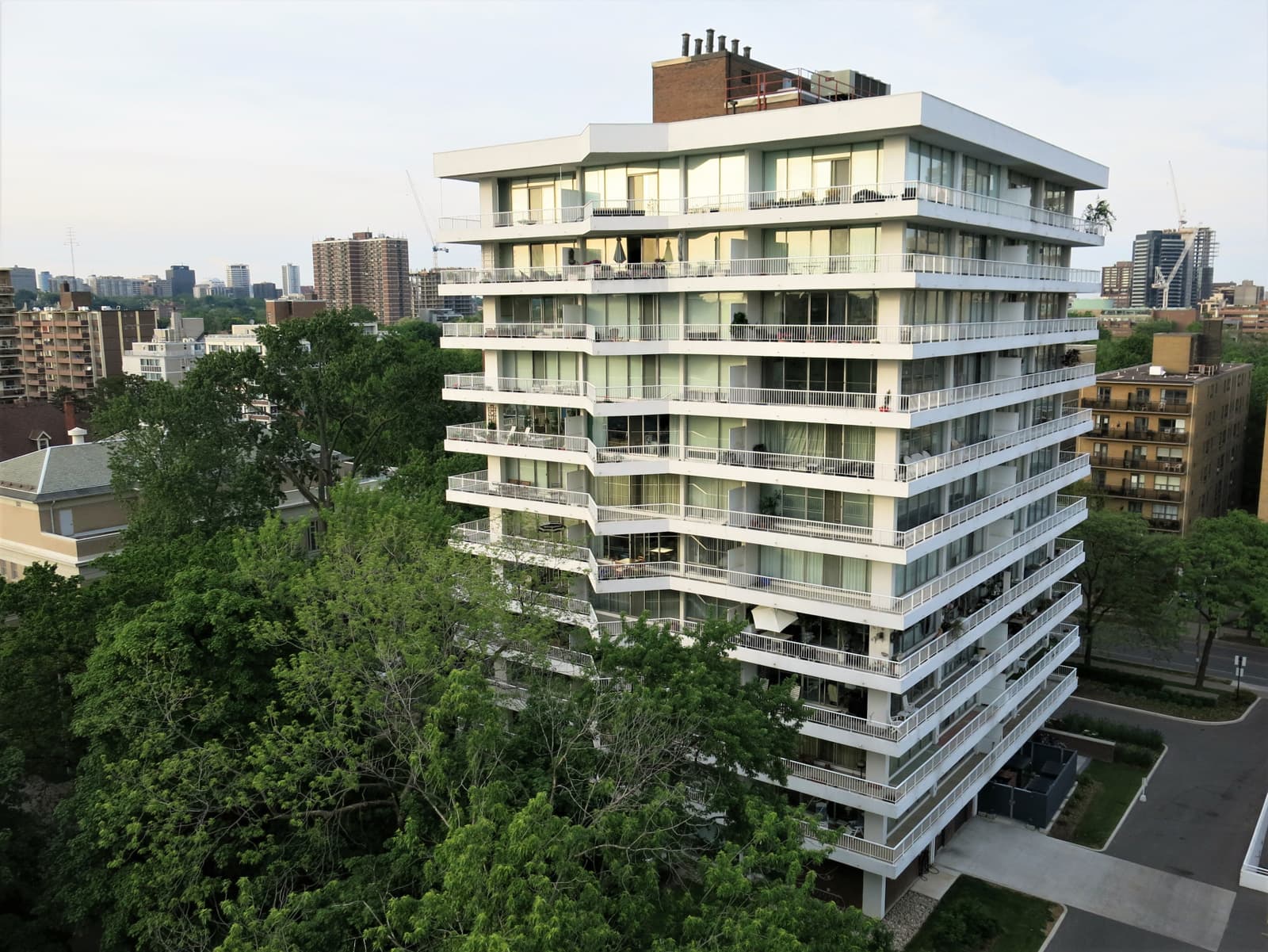
Joseph Medwecki, the Polish-Canadian architect behind 190 St. George, died in Toronto on Nov. 10, 2025, at age 98. The 12-storey building at St. George and Lowther is best known for its pointed, wraparound balconies and floor-to-ceiling glass, features that helped it earn a place in Toronto architectural guides and a top-ten condo mention in the National Post.
Medwecki designed the 70-unit building between 1970 and 1972. Residents and critics have long praised its Late Modern proportions, its continuous terraces and its ability to make a glazed apartment private and liveable in an urban setting.
How the design works
From the second floor upward, balconies wrap around every apartment, while double-pane, floor-to-ceiling glass encloses the living spaces. End posts sit outside the glazing, allowing windows to carry into the corners. Metal railings are see-through, admitting light and views while offering privacy from street level.
Medwecki emphasised practical gains from those choices. Removing heavy masonry and brickwork simplified construction, he said, and the pointed terraces on the east and west sides provided middle units with usable outdoor patios and framed views toward the lake.
The building speaks for itself. I have nothing more to contribute.
Joseph Medwecki
He added a more specific defence of the layout when speaking with residents: you should take advantage of a high-rise view, and at 190 you can enjoy that view even if you are quite deep in the living room.
Context and recognition
190 St. George sits back on its corner because of zoning of the period, and now rests discreetly among mature trees. Critics have compared the building to Le Corbusier’s tower-in-the-park concept, and architectural writers have praised its Late Modern scene setting and continuous balcony strategy.
Jack Batten described the tower as one of the winners in elegant appearance among postwar St. George developments. Patricia McHugh called it a "distinguished essay in Late-Modernism," and Joe Panabaker credited Medwecki with making the glass house private and habitable, a sort of refinement of modernist ideas.
From Poland to Toronto, a brief biography
Medwecki was born in Poznan in 1927 and trained at the Warsaw University of Technology. He worked with Bohdan Pniewski on postwar projects, including design work for the National Opera, where he contributed the mosaic floor of exotic woods.
He emigrated to Canada in 1956 and joined his father, an aircraft designer who had arrived earlier. He married Antonia "Tosia" Kajetanowicz in 1953. Medwecki ran a small practice in the Toronto area. The largest staff he ever kept was five people, and he drew the working drawings for 190 St. George himself.
- 600 Sherbourne St., Medical Arts Building, for developer Tadeusz Lempicki
- Residential commission at 937 Whitter Crescent, Mississauga
- Industrial and commercial buildings across greater Toronto
- Teaching at Humber College in the 1970s, noted for his carnation-on-lapel signature
Late in life he returned to school at the Ontario College of Art and Design and produced a self-portrait that included 190 St. George and the tools of his trade.
The developer, the thesis and the change to condo
The building began as an idea discussed between Medwecki and developer Tadeusz Lempicki during Medwecki’s urban design studies at the University of Toronto under Jack Diamond. Lempicki asked him to carry the concept into a real project. Intended originally as rental housing, 190 was ultimately offered as one of Toronto’s earlier condominiums.
The tower replaced one or two Annex mansions on the site and, for a time, marked the end of tower-building on St. George. Over the years the building proved enduringly popular with both buyers and the neighbourhood.
The building was cherished basically from the very beginning.
Hanna Bartel, resident
You can’t beat the terraces, the windows.
David Fenster, Royal LePage realtor and resident
Legacy
Medwecki never lived at 190 St. George, but he could see it from his condo at 284 Bloor West. The building continues to draw attention from pedestrians and professionals, a rare residential project whose architect is known to residents and passersby alike.
As the city debates density and design, 190 St. George remains a clear example of how a restrained modernist approach can deliver light, privacy and outdoor space in a dense urban setting. For many in the Annex and beyond, its continuous balconies and corner glazing still set a standard for thoughtful multi-unit living.
architectureMidtownAnnexcondominiumsJoe Medwecki