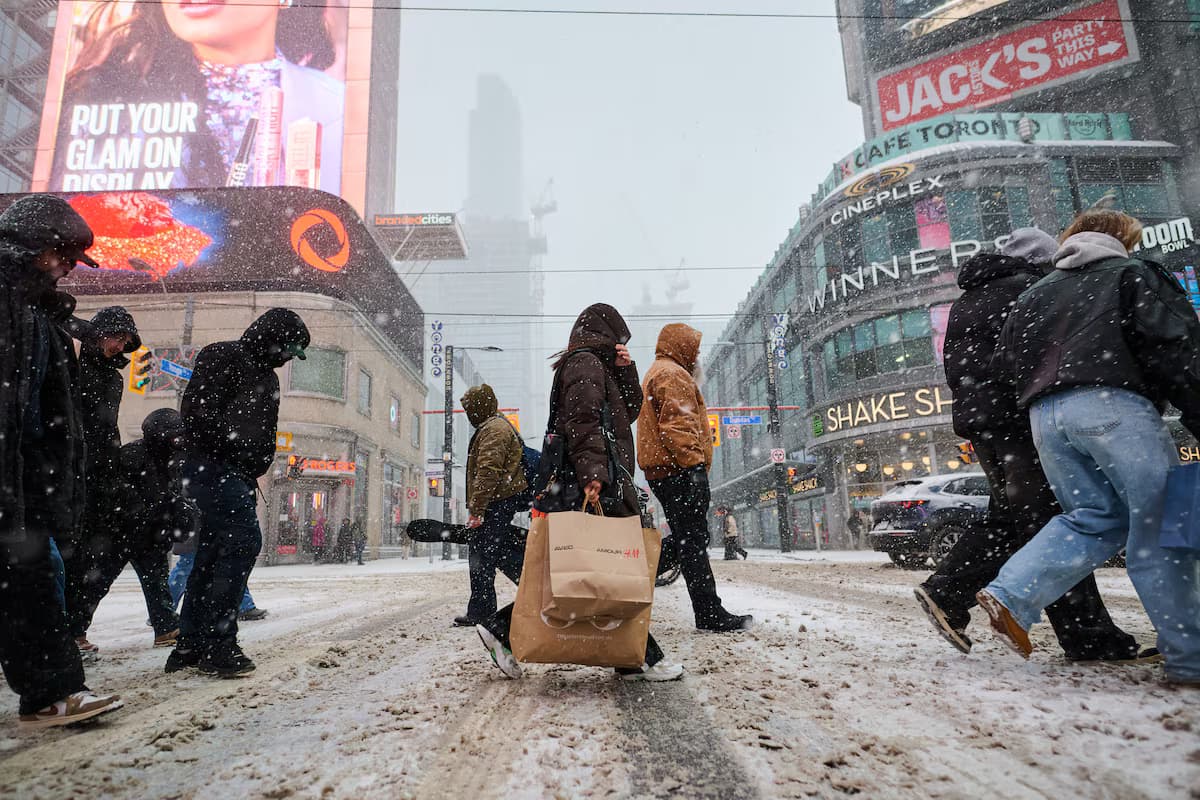
A powerful winter storm on Thursday set a new city record for snowfall on Jan. 15 and brought large parts of Toronto to a near standstill. Some neighbourhoods, including north Scarborough and Markham, received as much as 50 centimetres, while roads, transit and schools were widely disrupted.
The storm forced the temporary suspension of the Finch West LRT, shut the Don Valley Parkway for several hours and contributed to hundreds of collisions across the Greater Toronto Area. City crews and transit agencies worked through the day as more cold and flurries were forecast for Friday.
How far the storm reached
Environment Canada said the storm produced record snowfall for Jan. 15 in Toronto. The Ontario Provincial Police reported more than 400 collisions and calls for service across the GTA. Highway 400 was closed at Finch Avenue for nearly six hours after a collision between a transport truck and a car.
Transit and road failures under strain
Line 6, the Finch West light rail transit line, was taken out of service for the day and replaced by shuttle buses. City and provincial officials described problems with the line’s vehicles, its maintenance yard and the track switches that allow trains to change direction when snow and ice build up.
Metrolinx advised they are working on the issues and TTC staff are providing expertise and advice to support.
Stuart Green, TTC
Older sections of Toronto’s streetcar network managed to operate through the snowfall, which underscored frustrations over new infrastructure that remains vulnerable during severe winter events.
Expert view: climate changes the baseline
Engineers and climate experts say these kinds of events will become more frequent and less predictable, and that cities must plan with that reality in mind. Hardening every piece of infrastructure against all extremes is neither feasible nor affordable, but better planning and redundancy can reduce major failures.
If you have a really huge dump of snow, stuff's gonna shut down. Climate change is going to make these types of events more unpredictable and more likely.
Shoshanna Saxe, civil engineering professor, University of Toronto
City response and coordination
Mayor Olivia Chow said agencies were coordinating through a central command hub to streamline reporting and response, a system the city has emphasised since last year’s prolonged blizzards. City officials declared a "major snow condition" and a "significant weather event" to prioritise removal efforts.
All divisions, including the police, fire, ambulance and TTC are working together. The reporting structure is cleaner, more streamlined.
Olivia Chow, mayor of Toronto
Deputy city manager Will Johnston said crews would start truck and heavy machinery operations earlier than in the previous season to get ahead of snow buildup on the road network.
How the storm affected daily life
Long commutes and late notices created practical headaches for many residents. Adshayah Sathiaseelan left Markham before dawn for a three-hour trip to McMaster University’s Burlington campus. She learned after 5:30 a.m. that the university had cancelled classes.
If I found out a bit earlier, then I could have just not left my house at all. A lot of people were scrambling to figure out what to do next.
Adshayah Sathiaseelan, commuter
The Toronto District School Board announced a system-wide closure but said a technical issue with its third-party email system delayed notices to some parents. Many households coped with shovelling and childcare on short notice while others turned to neighbourhood volunteers.
What’s next and how to prepare
Environment Canada meteorologists forecast a brief chance of additional snowfall and persistent cold. Forecast temperatures for Friday included a morning wind chill near -17 C and daytime highs around -9 C.
It’s not looking like anything too significant, maybe five centimetres. What doesn’t help is the fact that our temperatures are remaining so cold, which is compounding the situation.
Monica Vaswani, Environment Canada meteorologist
- Check transit alerts and local road closures before leaving home.
- Allow extra travel time and avoid highway driving in heavy snowfall.
- Keep a charged phone, warm layers and an emergency kit in your vehicle.
- Confirm school or childcare closures directly with providers or official channels, not just social media.
- If you can, help a neighbour clear a sidewalk or check on an elderly resident.
Thursday’s storm exposed gaps in infrastructure resilience and communication. City officials call this a stronger test than last February’s blizzards, and they say coordination and earlier deployment of equipment should reduce recovery time. For residents, the immediate priority is safety and preparation as colder, windy conditions persist.