Snow squall warning re-issued for Toronto, prepare for hazardous travel and deep cold
Environment Canada re-issued a snow squall warning for Toronto and parts of the GTA. Expect brief heavy snow, reduced visibility and a deep cold snap this week.
Copy link
By Torontoer Staff
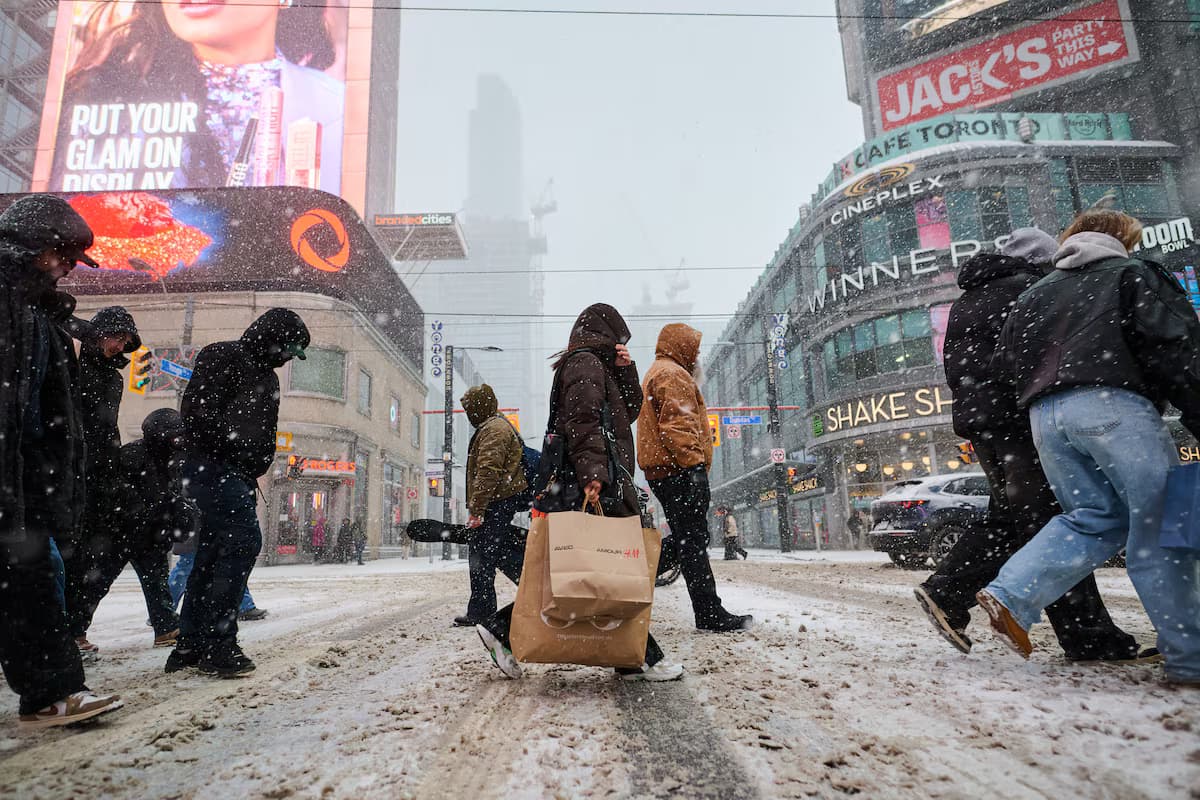
Environment Canada re-issued a snow squall warning for Toronto and several parts of the Greater Toronto Area on Monday evening, with briefly intense snowfall and severely reduced visibility expected overnight. The agency warned that snow squalls will move through quickly and that travel will likely be hazardous.
The city can expect about five centimetres of snow in the evening and possibly into the overnight hours, followed by a prolonged period of bitter cold through the week. Local authorities have already reported whiteout conditions in parts of the region.
What to expect tonight
Environment Canada said visibility in Toronto will be significantly reduced in heavy and blowing snow. Snow squalls are expected to shift through the area quickly, so short but intense episodes of near-zero visibility are possible.
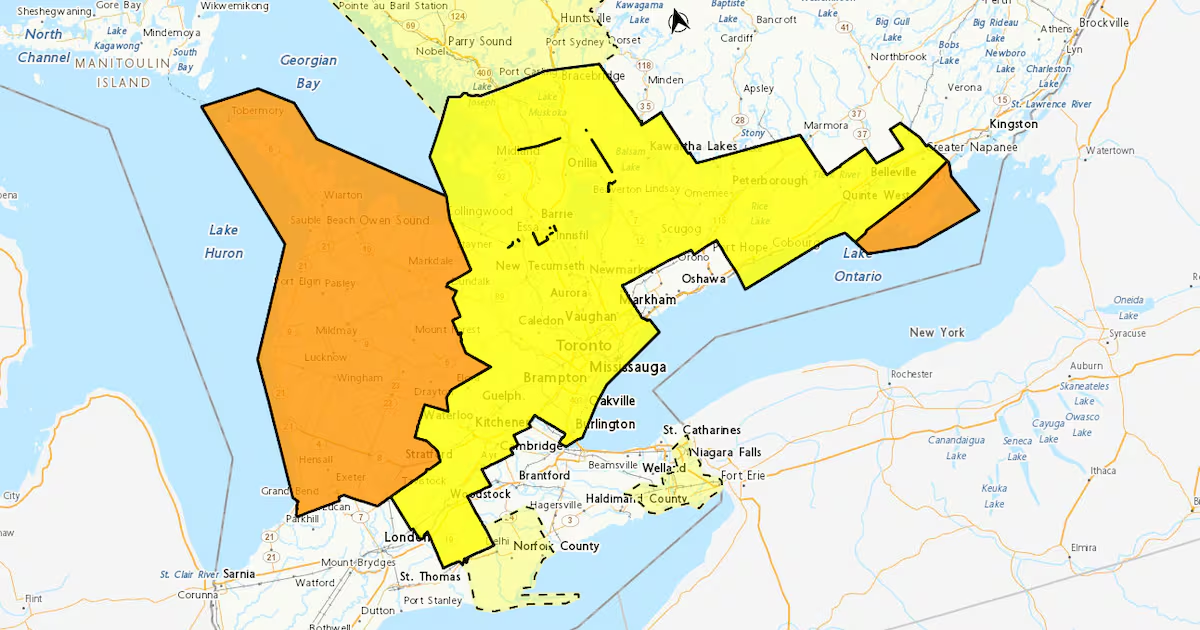
- Expected accumulation: about 5 cm for Toronto, Burlington-Oakville, Caledon, Halton Hills-Milton, Mississauga-Brampton, Newmarket-Georgina-Northern York Region, Niagara Falls-Welland-Southern Niagara Region, Uxbridge-Beaverton-Northern Durham Region, and Vaughan-Richmond Hill-Markham.
- Caledon also has a yellow advisory for blowing snow, with westerly gusts up to 70 km/h and wind chill values between -20 C and -25 C.
- An earlier orange alert covered parts of the Niagara Region, including Welland, Fort Erie, Port Colborne and Niagara Falls.
Visibility will likely be suddenly reduced to near zero at times. Prepare for quickly changing and deteriorating travel conditions.
Environment Canada
Travel and commuting: practical steps
Short, intense snow squalls create the most danger because conditions can change in minutes. If travel is not essential, delay it until conditions improve. If you must travel, reduce speed and leave extra distance between vehicles.
- Check local road and transit updates before leaving. Monitor TTC, GO, 407 and municipal road reports.
- Keep headlights on, avoid cruise control, and use low beams in heavy snow.
- Carry an emergency kit: warm blanket, extra layers, hat and gloves, water, non-perishable snacks, phone charger, flashlight, and a small shovel.
- If visibility drops suddenly, pull over safely, turn on hazard lights and wait out the squall. Do not stop in a travel lane.
- For pedestrians, wear visible layers and footwear with good traction. Be cautious near intersections and curb edges that can be hidden by snow.
Provincial police warned of whiteout conditions in the Niagara Region and urged people to check weather and road updates and adjust schedules accordingly.
At home: heating, pipes and pets
A cold snap will follow the snow, so protect your home and household. Keep your thermostat at a safe, steady temperature to prevent frozen pipes, and open cabinet doors under sinks if basement or crawlspace pipes run along exterior walls.
- Set thermostats no lower than the minimum recommended by your building or landlord, and keep a small trickle of water running on vulnerable taps if very cold.
- Test smoke and carbon monoxide detectors, and have spare batteries on hand.
- Keep an emergency kit at home with water, food, warm clothing and a battery-powered radio.
- Bring pets indoors or ensure they have insulated shelter, unfrozen water and extra food.
Warming centres and community support
The City of Toronto opened additional warming centres on Monday evening in response to the extreme cold. Locations are intended for people who need a safe, warm place to stay during the coldest hours.
- Cecil Community Centre, 58 Cecil St., opened at 5 p.m.
- Jimmie Simpson Recreation Centre, 870 Queen St. E., opened at 5 p.m.
- Previously opened warming centres remain available; check the city website for locations and hours.
Additional Warming Centres will open at 5 p.m. due to extreme cold temperatures.
City of Toronto
Quick checklist
- Avoid non-essential travel during snow squalls.
- Charge phones and keep a portable charger ready.
- Prepare a 24- to 72-hour emergency kit at home and in your car.
- Keep informed with Environment Canada alerts and municipal advisories.
- Look out for neighbours, seniors and anyone who may need help getting to warming centres.
Monitor Environment Canada and local authorities for updates as the situation evolves. Short bursts of heavy snow and strong winds can change conditions quickly, so check conditions before you go out and plan for the cold that follows.
weathersnowwinterTorontosafety