Toronto transit needs practical fixes, not slogans
Election-year transit talk has reverted to slogans. Toronto should prioritise faster buses, better LRTs and smarter use of existing infrastructure before committing more costly subways.
Copy link
By Torontoer Staff
Transit planning is a long-term endeavour, not a one-time project with a single solution. Recent opinion pieces and local reporting have pushed subways as a cure-all, but they ignore cheaper, faster ways to move people across neighbourhoods and the region.
Debate over subways has resurfaced with the municipal election approaching. That conversation should be about trade-offs, costs and timelines, not recycled slogans from past campaigns.
What recent coverage missed
A January op-ed that invoked the chant "subways subways subways" echoed a polarizing approach to transit. The phrase recalls former mayor Rob Ford’s politics, which influenced decisions that delayed projects, raised costs, and shifted resources away from other priorities. Coverage of transit in Scarborough also included an inaccurate claim that the area has been without a subway since the Scarborough RT closed. There are three subway stations within the old Scarborough boundaries, and three more are under construction.
Arguments for more subways often skip the practical questions: where should lines run, which neighbourhoods would benefit most, and who will pay for construction, operation and maintenance over decades?
Fix the network we have, and fast
Many of Toronto’s mobility problems can be addressed by improving existing services. Faster buses, better-performing light rail, and more effective regional rail could deliver affordable, reliable trips sooner than new subway construction. Surface LRTs can fail to deliver expected speed gains if they face the same congestion and signal delays as buses. That is what happened with sections of the Finch West line.
Other jurisdictions show what is possible. The Ion LRT in Kitchener-Waterloo uses active transit priority to maintain regular headways. In Minneapolis-St. Paul, suburban light rail receives full signal priority so trains cross intersections without added restrictions. These operational tools can be applied in Toronto to cut travel times and improve reliability.
Transit planning is a long-term endeavour, not a one-time project with a single solution.
Sean Marshall
Practical measures for quick gains
- All-door boarding and off-board payment to shorten station dwell and stop times.
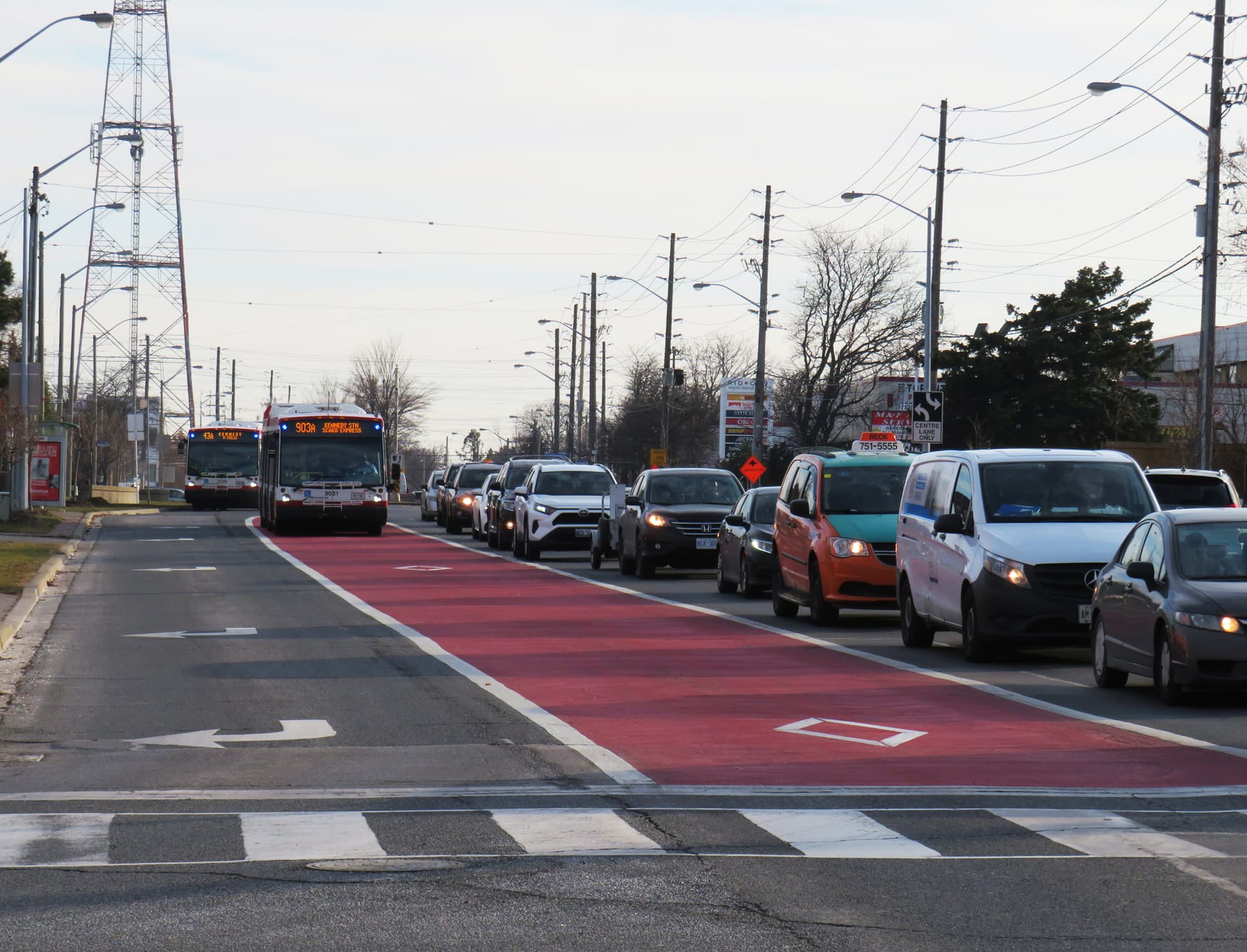
- Transit signal priority and adjusted signal timing to keep buses and LRTs moving through intersections.
- Dedicated bus lanes on priority corridors so surface services are not stuck in general traffic.
- Queue-jumps and bus-only turn provisions at busy intersections.
- Reduced schedule padding and faster boarding procedures to improve on-time performance.
- Targeted investments in maintenance and fleet upgrades to reduce breakdowns and delays.
Many of these changes are relatively low-cost and can be implemented faster than new subway lines. Toronto already operates a network of 900-series express buses that could be prioritised to connect neighbourhoods rather than only facilitating suburb-to-downtown commutes.
When subways make sense, and when they do not
Subways are justified on very busy corridors where surface capacity and rights-of-way are constrained. They carry lots of people reliably over long periods, but they cost far more to build and maintain. Replacing committed LRT projects with limited-stop subways is not always viable. The Scrapping of the Transit City plan under Rob Ford illustrates how politically driven switches can delay projects and inflate costs.
Regional rail also deserves clearer thinking. Metrolinx is expanding GO services, but its role in providing frequent, all-day regional rapid transit has been inconsistent. A stronger regional rail strategy would shift some longer trips off crowded urban lines and create seamless connections between suburbs and the city.
"Subways, subways, subways,"
Reece Martin, quoted phrase from recent op-ed
That chant captures political appeal, but transit decisions must be technical and financial as well as political. Planners need to match mode, route and funding to expected ridership and urban form.
What voters should demand this election
Ask for concrete plans with timelines, cost estimates and accountable delivery mechanisms. Prioritise measurable improvements that can be delivered within years, not decades. Expect candidates to explain how they will balance fast, low-cost operational fixes with strategic capital investments where subways or regional rail are truly warranted.
Focusing only on grand gestures will leave commuters waiting. Faster buses, repaired and optimised LRTs, and clearer regional rail policy offer real reductions in travel time and better service across the city now, while bigger projects are carefully evaluated and funded.
transitTTCbusesLRTsubwayMetrolinxToronto