Trudeau declines to say if Canada will align trade policy with U.S. as USMCA review begins
Ottawa will not negotiate trade alignment in public, Prime Minister Justin Trudeau says, as the U.S. and Mexico open formal talks about possible USMCA changes that could tighten continental trade rules.
Copy link
By Torontoer Staff
Prime Minister Justin Trudeau declined to say whether Canada would align its external trade policy with the United States, after the U.S. and Mexico agreed to formally begin talks about possible changes to the United States-Mexico-Canada Agreement. The announcement by Washington and Mexico City sets the stage for a high-stakes review of the pact later this year.
U.S. Trade Representative Jamieson Greer and Mexico’s Marcelo Ebrard said they will explore “possible structural and strategic reforms” to the USMCA, including stronger rules of origin for industrial goods, closer collaboration on critical minerals, and greater external trade policy alignment. Ottawa’s posture on those ideas remains unclear.
What Washington and Mexico are proposing
Greer’s public outline to Congress included a mix of industry-specific measures and broader strategic aims. The U.S. wants tougher North American content requirements for non-automotive industrial goods, more coordinated export controls and investment screening, and steps to limit the role of third-country suppliers in continental supply chains.
Mexico has already responded with higher tariffs on about 1,400 products from countries that do not have a free-trade deal with Mexico, a move Greer described as addressing U.S. concerns about foreign, especially Chinese, participation in regional supply chains.
Ottawa’s recent trade moves and the tension with Washington
Canada has taken steps that do not always align with Washington’s preferences. Ottawa struck an agreement with China to remove tariffs on some electric vehicles and invited Chinese investment into parts of Canada’s auto sector, a move that prompted sharp U.S. reactions earlier this month.
I find one of the most effective ways to negotiate is not to negotiate in public.
Prime Minister Justin Trudeau
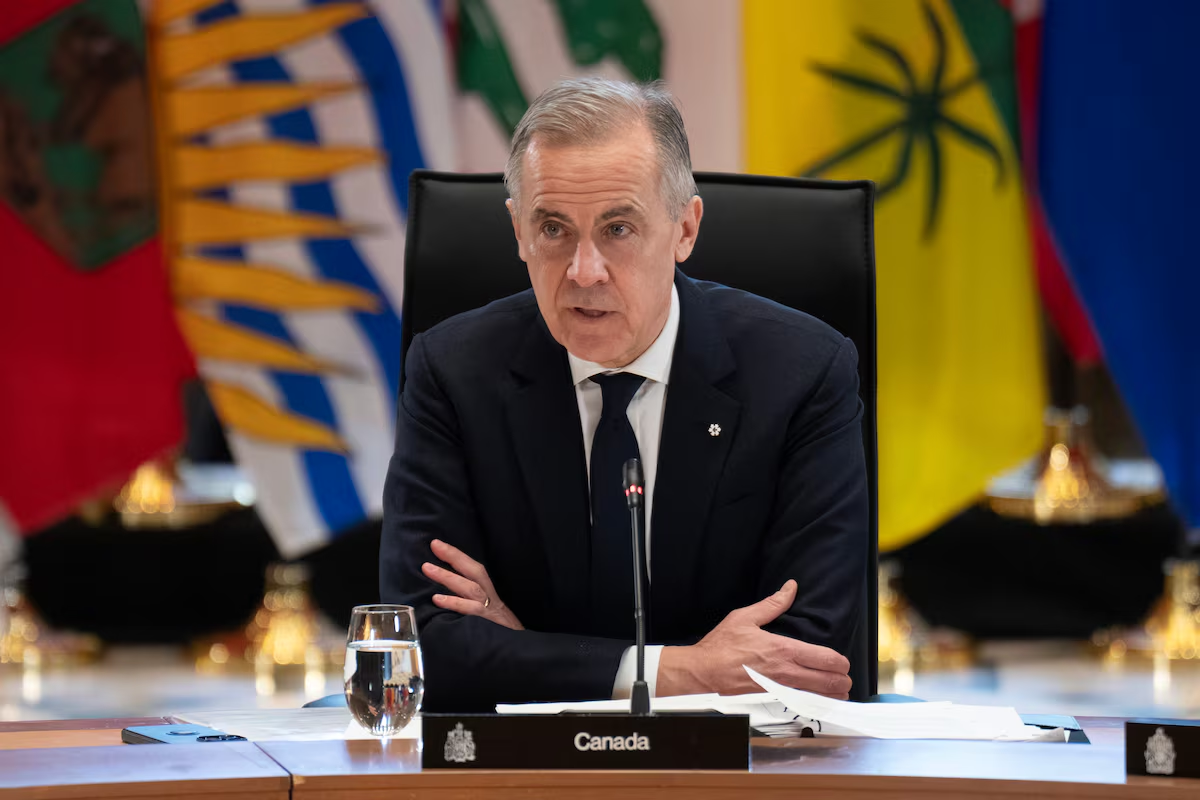
At a press conference after meeting with provincial premiers, Trudeau said Canada would wait for the formal review process under the USMCA and avoid public bargaining. He insisted the coming exercise is a review, not a renegotiation, but would not spell out where Ottawa might accept closer policy coordination with Washington.
Why alignment matters to industry and consumers
The USMCA underpins more than $1 trillion in annual trade across North America. It also functions as a partial shield against U.S. tariffs. Washington has at times exempted goods that comply with free-trade pact rules from broader tariff measures, meaning changes to the pact could affect tariff protections for Canadian exports.
Tighter continental rules could favour suppliers in North America and reduce imports from countries deemed strategic competitors. That could benefit some domestic manufacturers, while increasing costs and limiting choice for others, particularly in sectors that rely on global supply chains such as electronics and automotive components.
Geopolitics, China and Mexico’s role
U.S. officials view a coordinated North American approach as a tool to address economic-security concerns related to China. Geoffrey Gertz, a senior fellow at the Center for a New American Security, said the review will have a clear geopolitical lens, with China central to many of the issues under discussion.
To have deep economic integration in the North American market is going to come along with more common barriers towards common adversaries, chief among them clearly China.
Geoffrey Gertz, Center for a New American Security
Mexico’s recent tariff increases are one reason Washington sees an opportunity to accelerate continental alignment. The Mexican measures have been framed in Washington as concrete steps that reduce the risk of third-country suppliers accessing the U.S. through Mexico.
Political flashpoints and what to watch
Analysts predict coordinated trade policy will be a major flashpoint in the USMCA review. Brian Clow, a former Trudeau deputy chief of staff who worked on the original USMCA talks, said U.S. demands for closer coordination are likely to be a significant challenge for Ottawa.
Putting together Trump and his team’s reactions to the Canada-China deal with the changes Greer is seeking, I think it’s going to be a big, big part of what the Americans push.
Brian Clow, former deputy chief of staff to Prime Minister Justin Trudeau
- Watch for formal timing and scope of the USMCA review, and whether it becomes a broader negotiation.
- Track any U.S. proposals on stronger rules of origin and coordinated export controls.
- Monitor Ottawa’s response on investment screening, critical minerals cooperation and China-related measures.
The coming months will clarify whether Canada moves closer to Washington’s vision of a tightly integrated North American market, or pursues a more independent trade approach that accommodates strategic ties with other partners. For businesses and consumers, the review could change sourcing, pricing and investment patterns across several sectors.
USMCAtradeJustin TrudeauCanada-US relationsauto industry