Trump posts Macron text about Greenland, exposing private diplomacy
President Trump published a private text from France’s Emmanuel Macron, confirmed by Macron’s office. The message mixes deferential language with blunt concern about Greenland and offers for talks.
Copy link
By Torontoer Staff
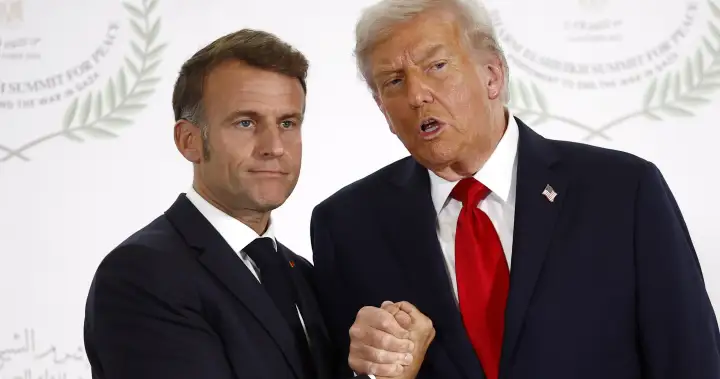
President Donald Trump on Tuesday published a private text he received from French President Emmanuel Macron, a message Macron’s office confirmed as genuine. The short exchange mixes conciliatory language on Syria and Iran with a blunt line of bewilderment about Trump’s interest in Greenland.
The post adds to a running debate over the propriety of airing private diplomatic messages, and it highlights a gap between the language leaders use in public and the tone they take in private.
What Macron actually wrote
Trump published two sections of a message that began, simply, "My friend." In fluent English, Macron first noted areas of alignment: "We are totally in line on Syria. We can do great things on Iran." He then turned to Greenland and wrote, "I do not understand what you are doing on Greenland," immediately adding, "Let us try to build great things."
We are totally in line on Syria. We can do great things on Iran, I do not understand what you are doing on Greenland, Let us try to build great things.
Emmanuel Macron, text published by President Trump
The message concluded with a diplomatic proposal that Macron has not voiced publicly: he suggested inviting representatives from both Ukraine and Russia to a Paris meeting, with the Russians to be hosted "in the margins." He also proposed including Danish and Syrian representatives, the G7, and a dinner in Paris "on thursday before you go back to the us," signing off, "Emmanuel."
Other messages and official confirmations
Trump also posted a message from Dutch prime minister Mark Rutte, which NATO verified as authentic. Rutte wrote, "I am committed to finding a way forward on Greenland. Can't wait to see you. Yours, Mark."
I am committed to finding a way forward on Greenland. Can't wait to see you. Yours, Mark.
Mark Rutte, message published by President Trump
Rutte has avoided public comment on Greenland amid concern about Trump’s intention to pursue the island, and Denmark has warned that any U.S. move affecting its territory could harm NATO. When pressed previously, Rutte said, "I can never comment on that. That's impossible in public."
Private diplomacy made public
Leaders commonly use private channels to discuss sensitive issues, allowing a different tone than they use in press conferences or official statements. Publishing such exchanges alters the usual discretion of diplomacy, making private nuance part of public debate and exposing behind-the-scenes proposals that might complicate existing positions.
Macron has long cultivated direct access to Trump, and he appears aware that private messages can become public. The contrast between the measured, sometimes deferential language in his text and France's strident public objections to any prospect of Greenland changing hands is notable.
What the episode shows about modern political communication
The publication of private messages highlights three practical shifts in how leaders communicate and how the public consumes those exchanges. First, digital platforms make it easy to move private material into the public record. Second, real-time sharing can short-circuit diplomatic channels and shape media narratives instantly. Third, private concessions or nuanced proposals can be forced into a public context where they are judged without background or room for negotiation.
- Digital permanence raises the stakes of candid messages.
- Public release of private notes can undermine carefully negotiated positions.
- Leaders may be less willing to explore compromise if private proposals risk immediate exposure.
For observers, the episode is a reminder that tone and context matter. A single short message can signal alignment on one issue and sharp disagreement on another, and posting it for public consumption sets a different agenda than discussing it behind closed doors.
A practical note for communicators
For public figures and private citizens alike, the takeaways are straightforward: assume messages may be shared, keep sensitive negotiations off unsecure channels, and recognise that a friendly opening does not guarantee agreement. The rules of private conversation have changed in an era where a screen tap can make a remark headline news.
The Macron texts give a rare glimpse of that change. They show a French leader calibrating tone and offering diplomatic pathways while the broader public dispute over Greenland plays out in headlines and official statements.
Concluding: The exchange underlines how quickly private diplomacy can become public theatre, reshaping discussions on policy and alliances and prompting new questions about discretion in a digital age.
GreenlandMacronTrumpdiplomacycommunication