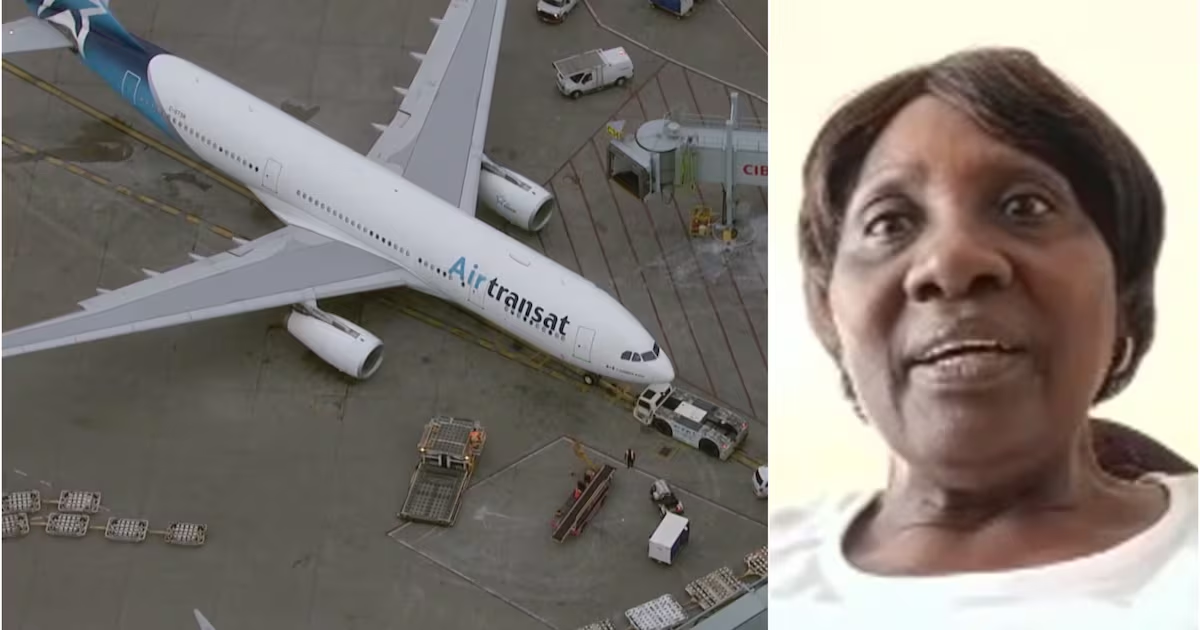
Trump’s decertification threat could squeeze U.S. access to Canadian-made jets
A presidential social media post threatened to decertify Canadian-built aircraft, which could restrict U.S. access to new Bombardier, Airbus and other models and affect operators.
Copy link
By Torontoer Staff
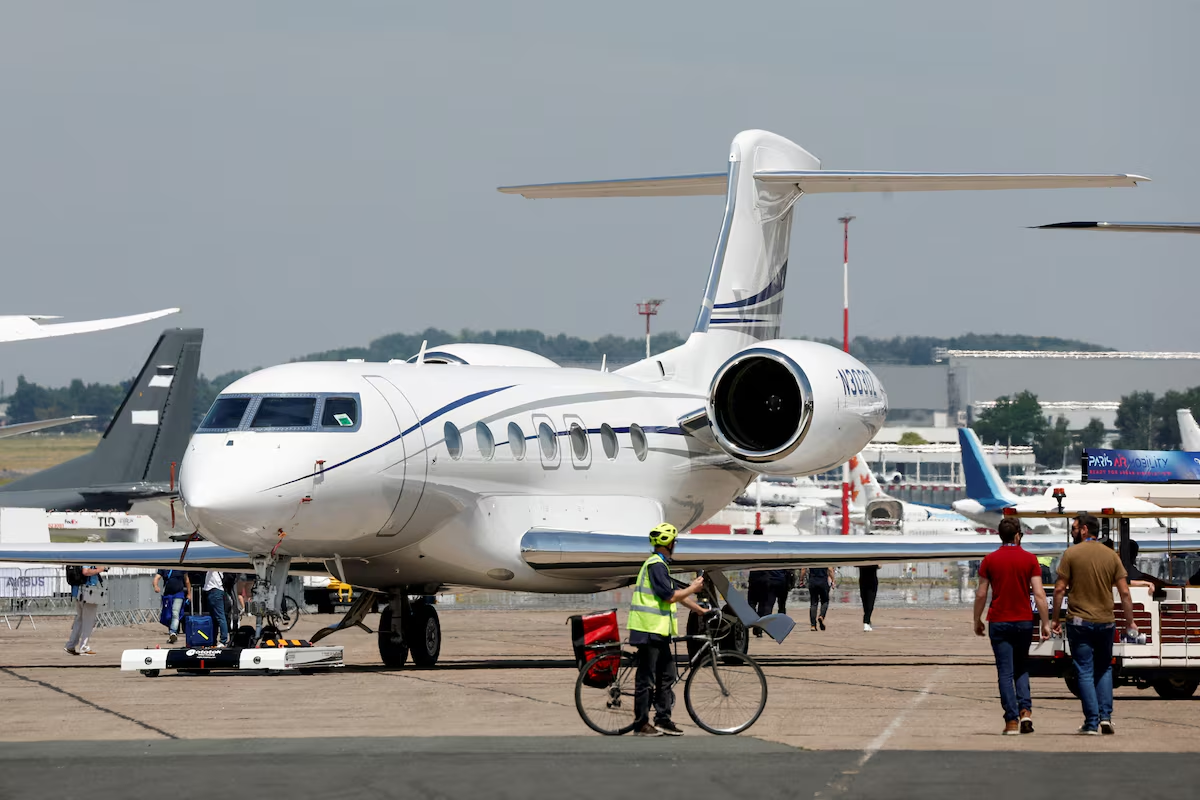
President Donald Trump said on social media that he would decertify Canadian-made aircraft in the United States and impose 50 per cent import taxes on planes from Bombardier and other manufacturers. Aviation analytics firm Cirium warned the move, if implemented, could limit U.S. access to new jets built in Canada and disrupt operators that fly them.
The declaration appeared linked to a Canadian review of electronics changes on Gulfstream business jets. A White House official later told Reuters the president did not mean to decertify aircraft already in operation, but the threat has introduced uncertainty for manufacturers, operators and buyers.
What decertification would entail
Aircraft certification is a technical regulatory process intended to ensure safety when manufacturers update systems or make design changes. In practice, the U.S. Federal Aviation Administration handles certification for aircraft put into service in the United States, while Transport Canada reviews changes made in Canada.
We are hereby decertifying their Bombardier Global Expresses, and all aircraft made in Canada, until such time as Gulfstream, a Great American Company, is fully certified.
Donald Trump
Regulators routinely review electronics and software changes that affect range, payload or other performance characteristics. Canada is currently examining changes Gulfstream made to its G700 and G800 models to increase range and payload, according to John Gradek, an aviation leadership instructor at McGill University.
Scale of potential impact
Cirium’s analysis suggests any formal decertification of Canadian-built aircraft in the U.S. would be far-reaching. The tally includes business jets, turboprops, regional airliners and helicopters that many U.S. operators rely on.
- 5,425 aircraft of various types made in Canada currently in service in the United States
- 2,678 Canadian-made Bombardier aircraft registered in the U.S., flown by 1,202 operators
- 58 Airbus A220s in U.S. service, listed as Canadian-built in Cirium’s count
- 150 Bombardier Global Express aircraft in service, operated by 115 U.S. operators
Who would feel the effects
Operators that buy, lease or operate Canadian-built models would face the most direct consequences. Cirium named carriers and operators such as Delta Airlines, SkyWest and NetJets among those that could be affected. The impact would be largest for buyers waiting on new deliveries and for companies that rely on cross-border certification for maintenance or modifications.
Manufacturers and market reactions
Bombardier responded by notifying the Canadian government and highlighting its U.S. operations. The company said it employs more than 3,000 people at nine U.S. facilities and works with about 2,800 U.S. suppliers. Bombardier also noted that its U.S. technicians and facilities meet Federal Aviation Administration standards and that it is expanding stateside, including a new service centre in Fort Wayne, Indiana.
Bombardier is an international company that employs more than 3,000 people in the U.S. across 9 major facilities, and creates thousands of U.S. jobs through 2,800 suppliers.
Bombardier statement
Bombardier’s Toronto-listed shares dropped about 6 per cent in early trading after the announcement. General Dynamics, owner of Gulfstream, did not immediately comment when asked. Industry Minister Mélanie Joly said the Gulfstream certification process is underway and that Canada expects the matter can be resolved.
We believe that this can be resolved. The certification process is something we don’t politicize.
Mélanie Joly, Industry Minister
Analysts suggested the dispute could be settled through regulatory assurances. Benoit Poirier, a Desjardins Group analyst, said both Gulfstream aircraft are already certified in the U.S. and Europe and that Canadian certification could likely follow quickly with appropriate assurances.
Practical implications for travellers and operators
For most commercial airline passengers, the announcement is unlikely to have immediate visible effects. The principal risks are to future deliveries, resale values and scheduling for business and regional aviation. Operators awaiting new Canadian-built jets could face delays or renegotiations, and companies that maintain or modify Canadian-made aircraft may confront new paperwork or temporary restrictions.
The White House clarification that in-service aircraft were not intended to be decertified reduces the immediate operational risk. Still, the episode underlines how regulatory disputes and commercial rivalries can ripple through supply chains and buyer decisions in aviation.
What to watch next
Look for formal statements from the Federal Aviation Administration, Transport Canada and the manufacturers involved. Market reactions, statements from major U.S. operators and any follow-up steps by the U.S. administration will determine whether the issue remains a temporary political flare-up or becomes a sustained trade and regulatory problem.
For now, industry analysts and Canadian officials say the situation can likely be resolved through standard regulatory processes and assurances between authorities and manufacturers. The outcome will affect new deliveries and commercial planning more than aircraft already flying in U.S. airspace.
aviationBombardieraircraftindustryCanada-US relations