Trump withdraws Mark Carney’s invitation to new ‘Board of Peace’ after Davos speech
Donald Trump revoked an invitation for Mark Carney to join a newly announced international body days after Carney warned the rules-based order was fraying in a Davos address.
Copy link
By Torontoer Staff
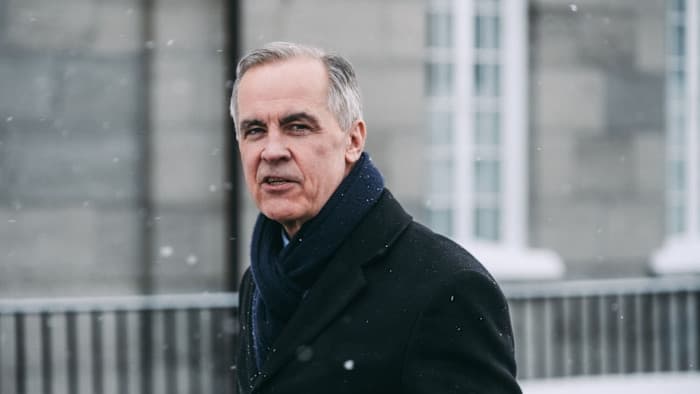
Donald Trump has withdrawn an invitation for Mark Carney to join the Board of Peace, posting the move on Truth Social late Thursday. The announcement came days after Carney used a Davos speech to warn that the rules-based international order was experiencing what he called a rupture.
Trump unveiled the Board of Peace at the World Economic Forum earlier in the week, pitching it as a leadership body that could work alongside the United Nations. The board was originally conceived to oversee Gaza but, according to its charter shared with prospective members, it would have a broader mandate to mediate other conflicts.
Please let this Letter serve to represent that the Board of Peace is withdrawing its invitation to you regarding Canada’s joining, what will be, the most prestigious Board of Leaders ever assembled, at any time.
Donald Trump, Truth Social
What Carney said at Davos
In his Davos address, Mark Carney spoke about a fault in the international system. He did not directly name the US president, but said the rules-based order was undergoing "a rupture, not a transition," and urged middle powers to find common ground and new forms of cooperation.
Our view is that this is to be welcomed and this is a positive vehicle. Our view is that we need to work on the actual structure of the vehicle.
Mark Carney, remarks after his Davos speech
Carney stopped short of saying in Davos whether he would accept membership on the board. He has previously indicated agreement in principle, while also raising concerns about governance and decision making that he said ought to be addressed for the board to meet immediate needs in Gaza.
Who has joined, and what the board aims to do
Organisers say more than 20 countries have signed on to the board. Publicly reported participants include Israel, Morocco, Argentina and Belarus. Among European Union members, only Bulgaria and Hungary are listed as participants so far. The board’s charter suggests a mandate that could see it act independently of the UN in some mediation roles.
Why this matters to public profiles and diplomacy
The exchange highlights how quickly public statements by prominent figures can reshape diplomatic opportunities. For Carney, who has built a public profile as a central banker and international adviser, a single speech at a high-profile forum translated into immediate political consequences. For organisers, a withdrawal of a high-profile invitation signals a reputational cost for participants and for the initiative itself.
- High-profile invitations are now part of public signalling, not just diplomatic protocol.
- Public remarks at forums such as Davos can have immediate consequences for personal branding and institutional partnerships.
- New multilateral bodies may attract members quickly, but credibility depends on transparent governance and broad buy-in.
What to watch next
Expect further clarification from both sides. Carney may elaborate on his position about joining the board, and organisers could respond to concerns about structure and decision making. Other prospective members will also face pressure to state their level of commitment as the board’s remit and governance are debated publicly.
For readers tracking how global leadership is being reshaped, this episode is an example of modern diplomacy where personalities, public platforms and institutional design intersect. The Board of Peace’s future influence will depend on whether it can resolve those tensions and attract sustained participation.
Mark CarneyDonald TrumpDavosBoard of Peaceinternational relations