Union Station becomes refuge as warming centres exceed capacity
With warming centres over capacity, people experiencing homelessness are sheltering in transit spaces such as Union Station. Advocates and officials say the system remains unable to house everyone.

Copy link
By Torontoer Staff
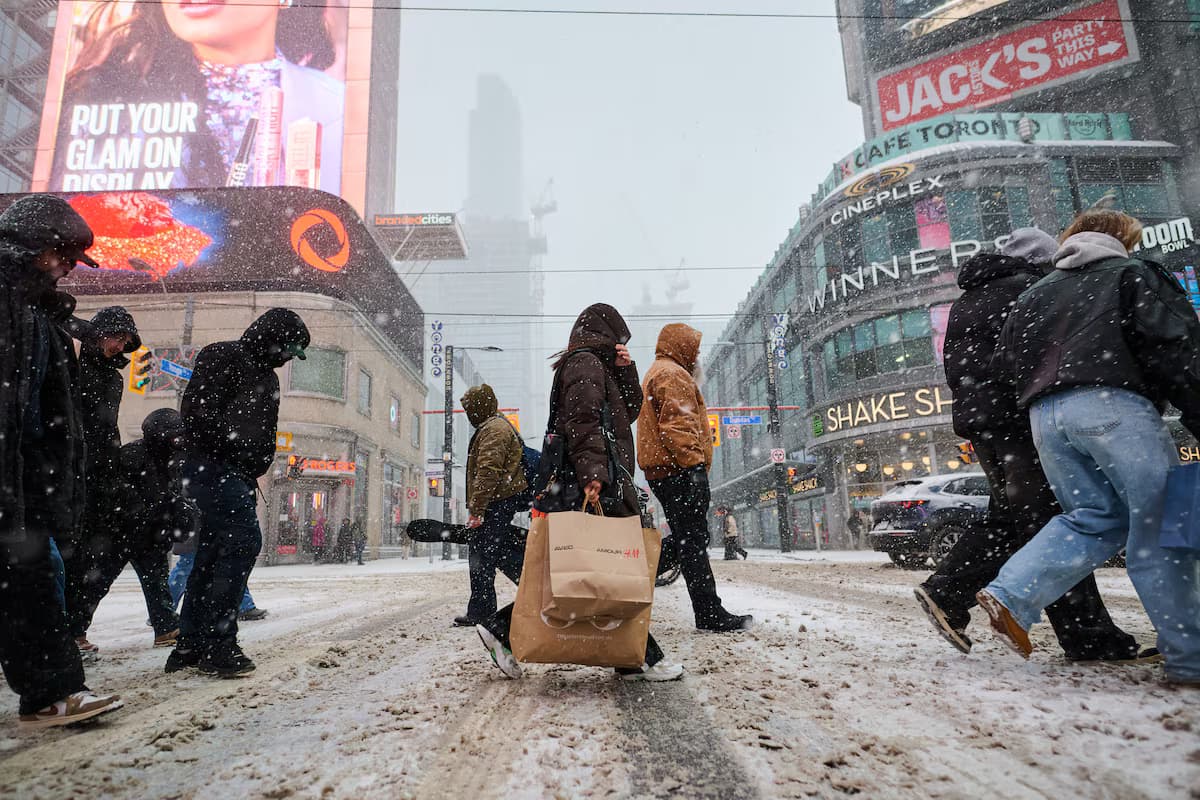
During a major snowstorm this week, dozens of people sought shelter inside Union Station as Toronto’s formal winter supports reached and exceeded capacity. Transit concourses and adjacent spaces have become informal warm zones for people who cannot get into a shelter or warming centre.
Advocates say the trend shows persistent gaps in the city’s shelter response. As temperatures fell and shelters filled, some residents moved into transit tunnels, bus terminals and other public spaces to stay out of the cold.
People taking shelter where they can
On her daily commute through the tunnel between Union Station and Scotiabank Arena, Melanie Morales stopped to talk with Douglas Watt, who had been in the station all day. A cardboard sign in front of him read, "HOMELESS ANYTHING GOD BLESS." Watt said he had spent the previous night in a humid stairwell to keep warm.
There’s too many people that are living on the streets.
Douglas Watt
Watt estimated 30 to 40 people regularly shelter in the transit complex when the cold spikes. Some rummage through food court waste bins to find a meal. He relies on limited disability supports and said he sometimes sleeps at GO stations outside the city when shelters are full or unavailable.
In the adjacent bus terminal, Keisha Job gathered her belongings after sleeping in the station. She described a long struggle with addiction, and a desire to leave Toronto for her hometown. Like others, she said the system feels punitive to people with substance use problems.
I know the government is really hard on addicts right now, and they’re really tough on homeless people. I know they want to get rid of them.
Keisha Job
How the winter shelter system is supposed to work
The city expands shelter capacity in winter by squeezing extra beds into existing shelters, opening warming centres when temperatures drop below negative five Celsius, and using contingency spaces once temperatures fall to negative 15 Celsius. These measures are meant to prevent deaths from exposure.
- Additional cots added to existing shelters
- Warming centres open below -5 C
- Contingency spaces used below -15 C
Even with those steps, demand has outpaced supply. Warming centres reported occupancy of 103.3 per cent earlier this week. Staff at a Fred Victor warming centre at the Better Living Centre said they had taken in more people than the site was designed to hold.
We need to advocate for more spaces in general. The system is overwhelmed with maximum capacity.
Lorraine Pennington, Fred Victor spokesperson
Advocates and officials offer differing assessments
Cathy Crowe, a longtime street nurse and advocate, said warming centres save lives but do not address the root causes of homelessness. She described a system that still leaves people out in the cold when capacity is reached.
It’s not getting to the crux of the problem.
Cathy Crowe
City shelter staff told councillors they have reduced turn-away rates over the past year, with some days seeing as few as two people turned away in December. Gord Tanner, head of the shelter department, said staff are doing their best to match beds to individual needs but acknowledged limits.
Will we always have the right bed for matching with an individual’s needs? That may not be possible.
Gord Tanner, City of Toronto
Budget notes from the shelter department warn that without adequate supports to move people into housing, turnover in shelters will slow. That has the effect of pushing the crisis into public spaces, including encampments and transit systems.
On-the-ground risks and barriers
People sheltering in transit hubs face precarious conditions. They risk being told to move on, losing their possessions, or occupying spaces not designed for overnight use. Some avoid shelters because of concerns about theft, crowding, or conflicts.
Watt said he sees many young people in transit terminals. He also said shelters can feel worse than being on the street for some, which deters people from using them. During the storm he waited for small acts of charity, hoping to raise enough change for a coffee.
I’ll be honest with you, shelters are even worse than being on the streets sometimes.
Douglas Watt
Officials and service providers say more space and better transitions to housing are required to reduce reliance on warming centres and public sheltering. Advocates want long term measures that prevent people from needing last-resort winter capacity in the first place.
As the city faces more frequent extreme weather, shelter capacity and housing supports will determine whether public spaces remain unintended refuges for people with nowhere else to go.
homelessnessTorontoshelterswinterUnion Station