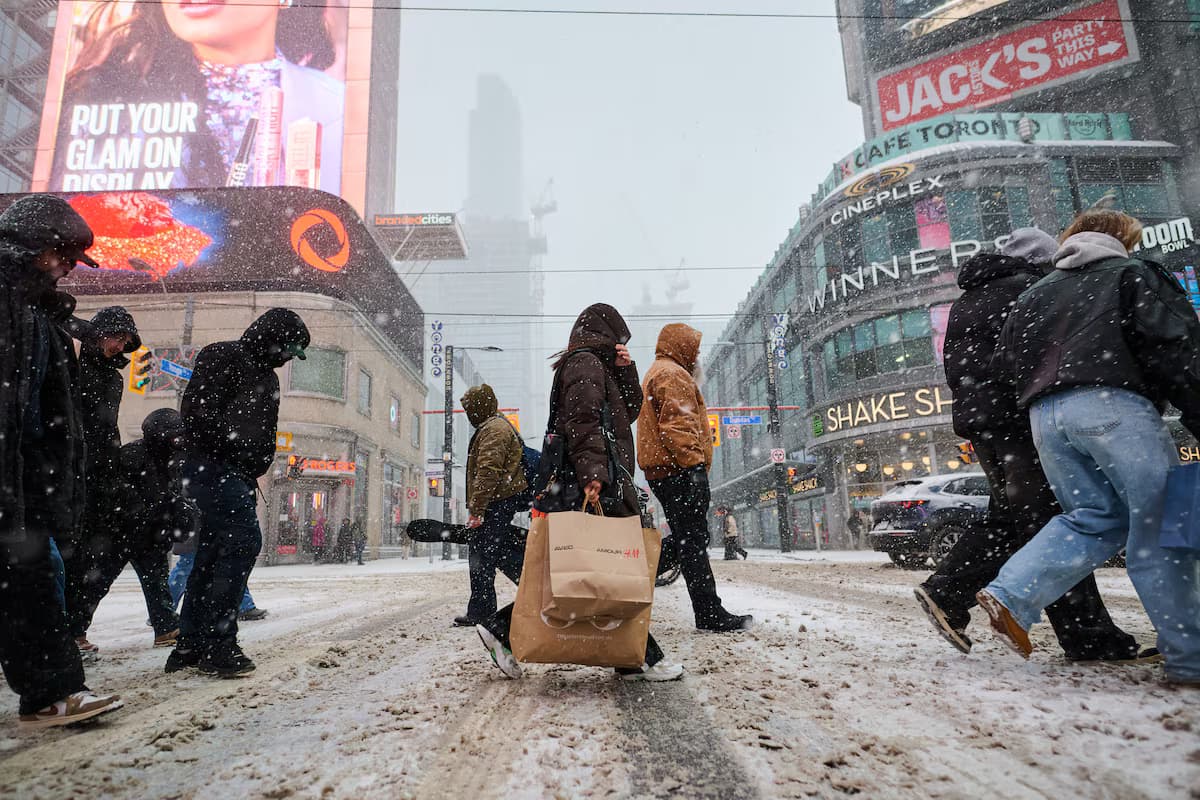
Environment Canada upgraded Toronto’s snowfall alert from yellow to orange early Thursday after forecasts showed more snow and greater impacts than first predicted. The agency says the 18-hour gap reflected evolving model guidance and the time needed to confirm how the storm would behave.
Meteorologist Monica Vaswani told Torontoer that the upgrade came once forecasters had enough consistent data to raise both the expected snowfall totals and the anticipated impacts on travel and infrastructure.
How the colour-coded system works
Environment Canada introduced a three-tier colour system two months ago, assigning yellow, orange or red alerts based on expected severity and community impacts. Yellow typically covers 15–30 cm of snow within 24 hours, orange spans roughly 30–60 cm, and red indicates the most severe events with significant, widespread impacts.
The system is designed to reflect both amounts and consequences. Vaswani said an orange alert signals that impacts — for example, extended highway closures, stranded vehicles or prolonged power outages — are likely to persist beyond a single day.
At this point, you’re just looking at maybe some remnant flurries. But basically, the worst of the storm has moved through and passed. The reason that we had the orange-level alert is because we expect impacts to persist throughout this day and into the next day as well.
Monica Vaswani, Environment Canada
Why the upgrade took 18 hours
The initial yellow warning, issued Wednesday afternoon, was based on forecasts suggesting 10–20 cm of snow. Overnight and into Thursday morning, model runs converged on higher totals and a pattern that would produce heavier, longer-lasting impacts across the Greater Toronto Area. Forecasts change as new data and model outputs arrive, and forecasters wait for consistency before altering public alerts.
- Human meteorologist analysis, drawing on experience and local knowledge
- Computer model guidance that tracks pressure systems and storm tracks
- Observation of the storm as it develops, including localized heavy snow bands that models may miss
Vaswani said models were not in agreement until close to the event. The agency also watches for narrow bands of intense snow, which can dramatically increase local totals but are difficult to predict in advance.
It wasn’t really until yesterday that they all started to sort of come together and give the same message, which was an increasingly intense snowstorm for much of southern Ontario, including the GTA.
Monica Vaswani, Environment Canada
Public confusion and criticism
Some residents questioned why the alert stayed yellow during severe conditions, noting school closures, transit delays and hazardous roads. Social media users said the earlier yellow warning underestimated the storm and could mislead people assessing risk.
I’ve got questions about the new Environment Canada colour-coded warning system when a yellow snow warning is in place for a 30cm storm that cancels all schools in Canada’s largest city. It’s brutal outside, 50km/h winds, -25 C wind chills.
An X user
Experts and Environment Canada officials note that the colour reflects expected impacts, not just raw totals, and that alerts can change as forecasts improve. The agency says it aims to avoid over- or under-warning by waiting for clearer signals, even if that means updates come while the event is already underway.
What lifting the alert actually means
Environment Canada lifted the orange alert Thursday afternoon, stating the worst of the snowfall had passed. That does not mean conditions are safe immediately. Officials say roads may remain treacherous, ice can persist under snow, and travel impacts may linger into the next day.
Vaswani recommended continued caution. Even after an alert is downgraded or lifted, local authorities and residents should expect residual hazards and follow guidance from municipal transportation and emergency services.
What to expect going forward
Forecasters will continue to rely on a mix of models, observations and human assessment. The colour-coded system aims for clearer public communication about expected impacts, but it requires the same data-driven decisions meteorologists have always made.
For now, Environment Canada and municipal services are monitoring cleanup and travel conditions, and the public should plan for lingering road and transit disruptions.
The storm’s timeline showed why alerts change: as models and observations converge, officials update colours to reflect the most likely impacts. That process can take time, and it can occur while a storm is still ongoing.