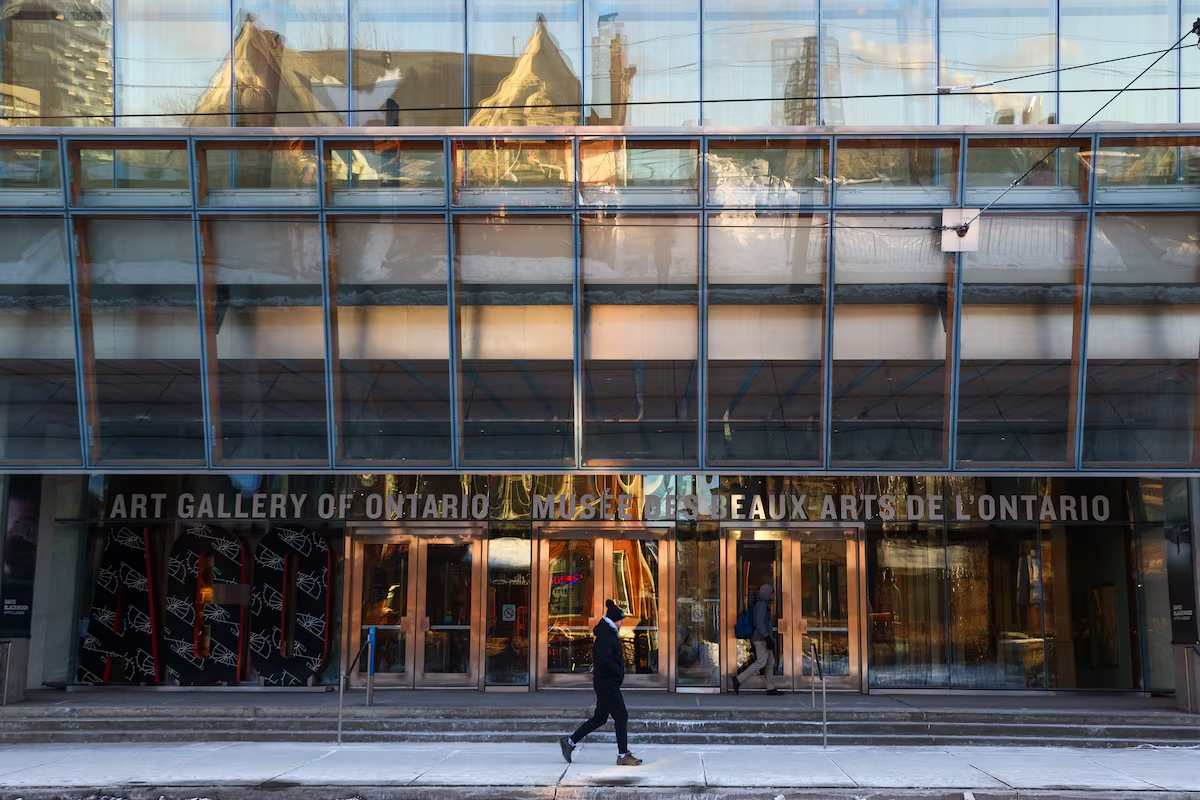
AGO dissolves acquisitions committee after Nan Goldin dispute
The Art Gallery of Ontario is disbanding its modern and contemporary collections committee after a narrow vote against acquiring a Nan Goldin video triggered resignations, donor intervention and a governance review.
Copy link
By Torontoer Staff
The Art Gallery of Ontario has dissolved its modern and contemporary collections committee after the group narrowly voted not to acquire Nan Goldin’s video work, following a heated debate over the artist’s political views. The decision comes amid four resignations from the committee and an internal governance review.
Gallery director and chief executive Stephan Jost said the committee’s work was undermined by discussion focused on members’ political judgements of the artist rather than the art itself, and that the gallery will take steps to refocus acquisition processes on curatorial criteria and respectful dialogue.
What happened at the May meeting
In a May meeting, the AGO’s modern and contemporary collections committee voted narrowly to decline the acquisition of Stendhal Syndrome, a video by New York–based artist Nan Goldin. Internal correspondence obtained by The Globe and Mail shows the discussion veered into criticism of Goldin’s positions on Israel, with some members describing her views as "offensive" and "antisemitic."
The internal push against acquiring the work was linked in documentation to Judy Schulich, a prominent trustee and donor to the gallery. The documents show Schulich characterised the artist as a liar and accused her work of spreading propaganda, prompting concern among committee members about donor influence on collection decisions.
Who is involved
Nan Goldin is a Jewish-American artist known for intimate photography and video work that often engages with activism. The controversy has prompted a wider reaction in the art community, including an open letter signed by hundreds calling for Judy Schulich to resign as an AGO trustee.
Stephan Jost, the AGO’s director and CEO, issued an internal memo acknowledging the committee’s purpose had been undermined and announcing its dissolution. The gallery also launched a governance review to examine processes around acquisitions and committee function.
I can assure you we are focused on our mission and working to take the necessary actions to ensure our processes are about art and respectful dialogue.
Stephan Jost, AGO director and chief executive
Why the case matters for museums and donors
The episode highlights recurring tensions between donor influence and curatorial independence at public institutions. Museums rely on philanthropic support to operate and expand collections, but interventions that appear to shape acquisitions on political or personal grounds risk undermining public trust and curatorial prerogatives.
Governance mechanisms, conflict of interest rules and transparent decision making are the standard responses institutions use to manage those tensions. The AGO’s governance review will be watched for changes to how trustees and major donors interact with curators and committees.
Timeline of key events
- May 2025: Modern and contemporary collections committee meets to consider acquiring Nan Goldin’s Stendhal Syndrome and votes narrowly against the acquisition.
- Internal memo and correspondence indicate debate shifted to the artist’s political views, with some members calling the views "offensive" and "antisemitic."
- Documentation links donor and trustee Judy Schulich to efforts opposing the acquisition, describing the artist in harsh terms.
- Four committee members resign following the dispute.
- An open letter signed by hundreds calls for Schulich’s resignation as an AGO trustee.
- AGO director Stephan Jost announces the committee will be dissolved and that a governance review is underway.
What comes next
The immediate effect is organisational. The AGO will need to decide how acquisitions for modern and contemporary works are handled in the short term and whether to reconstitute a committee under revised terms. The governance review could recommend clearer rules around trustee involvement, disclosure requirements and how political concerns are separated from artistic appraisal.
For the wider art community, the case is a reminder that decisions about what enters public collections are not only curatorial. They involve donors, boards and public expectations, and institutions will be judged on how openly and fairly they balance those forces.
The gallery’s final decisions on policy changes and any new procedures will shape how similar disputes are handled in future and will influence conversations about transparency and governance at cultural institutions across Canada and beyond.
Art Gallery of OntarioNan Goldinmuseum governanceJudy Schulichart acquisitions