Asia steps up airport screenings after Nipah cases in West Bengal
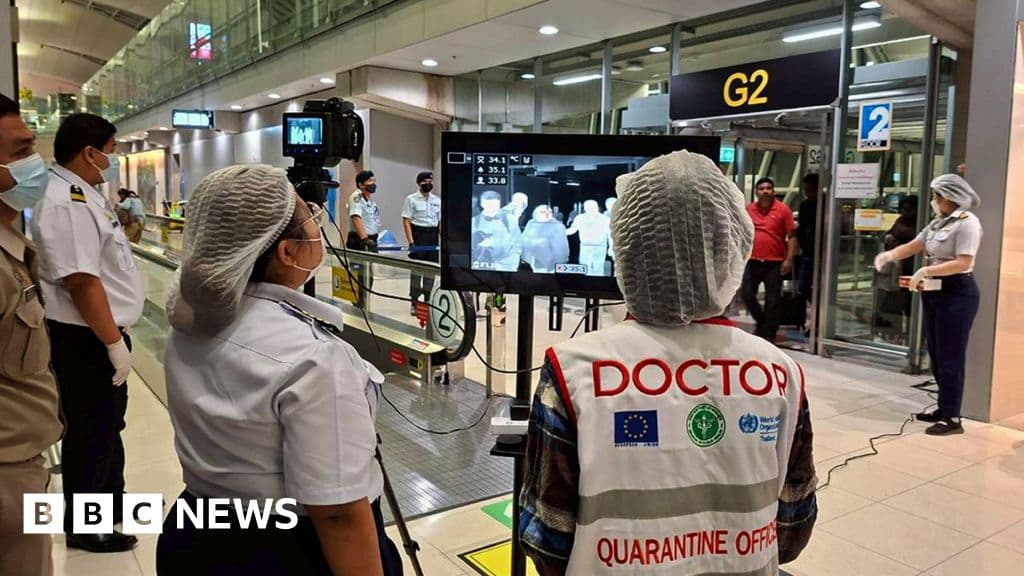
Thailand and Nepal have added health checks for passengers from West Bengal after an outbreak of Nipah virus linked to a hospital. Five cases have been confirmed and contacts quarantined.
Copy link
By Torontoer Staff
Airports in Thailand and Nepal have begun screening travellers from West Bengal following a cluster of Nipah virus infections linked to a private hospital in Barasat, India. At least five healthcare workers have tested positive and about 110 contacts are under quarantine.
Thai authorities said screening started at three international airports that receive flights from West Bengal, while Nepal has added checks at Kathmandu airport and at land border crossings with India. No cases have been confirmed outside India so far.
How Nipah spreads and who is at risk
Nipah is a zoonotic virus, transmitted from animals to people, most commonly by fruit bats and, historically, by pigs. Person-to-person transmission can occur through close contact or via contaminated food. The incubation period is typically four to 14 days.
Symptoms range from mild fever and headache to cough, vomiting and sore throat. Severe cases can progress to drowsiness, altered consciousness, pneumonia and encephalitis, inflammation of the brain that can be fatal. Reported case fatality rates vary from about 40 percent to 75 percent. There are no approved vaccines or specific antiviral treatments.
Details of the current West Bengal cluster
State health authorities have confirmed multiple cases linked to a private hospital in Barasat. Five healthcare workers tested positive, and two nurses were reported in intensive care. Local reports said one patient remained in very critical condition.
Health officials placed roughly 110 people who had close contact with the confirmed cases under quarantine as part of contact tracing and containment efforts. Authorities continue to monitor secondary infections among contacts.
Regional airport and public health responses
Thailand began screening passengers arriving on flights from West Bengal at airports in Bangkok and Phuket, and asked travellers from those flights to complete health declarations. The parks and wildlife department also tightened screenings at natural attractions. Nepal introduced screening at Kathmandu airport and at land border points with India.
Thai authorities are fairly confident about guarding against an outbreak in Thailand.
Jurai Wongswasdi, Department for Disease Control, Thailand
Taiwan has proposed listing Nipah as a Category 5 disease, a classification for emerging infections that require immediate reporting and special control measures. Other countries and territories are monitoring the situation and reviewing entry and reporting protocols.
Past outbreaks and impact
Nipah was first identified in Malaysia in 1998 among pig farmers, and that outbreak spread to Singapore. More than 100 people died and authorities culled about a million pigs to contain transmission. Bangladesh has reported sporadic outbreaks since 2001, with over 100 deaths recorded.
In India, outbreaks have occurred in West Bengal and in the southern state of Kerala. Kerala reported 19 cases in 2018, 17 of which were fatal, and six confirmed cases in 2023, two of which resulted in death. The pattern of outbreaks has driven research into vaccines and therapeutics, but none have yet been approved for routine use.
Practical guidance for travellers and contacts
- If you arrive from, or recently visited, areas reporting cases, monitor your health for 14 days and report any fever, headache, cough or neurological symptoms to local health authorities.
- Follow screening instructions at ports of entry and complete any required health declarations.
- Avoid close contact with people who are visibly ill and do not handle sick animals or animal carcasses.
- Do not consume food that may be contaminated by bats, and follow local public health advice on food safety.
Health agencies recommend that contacts and healthcare workers follow infection prevention protocols, including appropriate personal protective equipment and isolation of suspected cases, to reduce the risk of spread.
What to watch next
Authorities in India are continuing contact tracing and laboratory testing. Regional health agencies have increased surveillance at airports and border points. International health bodies are monitoring developments, with a focus on early detection and containment.
For now, the risk to travellers outside affected areas is low, but public health officials say vigilance and timely reporting remain essential to limit transmission.
Nipahpublic healthairport screeningIndiaThailand