Aspect Biosystems deepens partnership with Novo Nordisk to develop 3-D printed diabetes therapy
Vancouver’s Aspect Biosystems will incorporate Novo Nordisk’s stem-cell islet cells and immune-protection tech into its 3-D live tissue implants, with further investment and research funding from Novo.
Copy link
By Torontoer Staff
Vancouver biotech Aspect Biosystems has expanded its partnership with Danish pharmaceutical company Novo Nordisk to incorporate key biological materials and immune-protection technologies into its 3-D printed tissue implants for type 1 diabetes. Novo will also make an additional equity investment and fund research to advance the therapies, while Aspect will lead development, manufacturing and commercial work.
The move builds on a 2023 agreement that gave Novo exclusive rights to develop up to four diabetes or obesity products using Aspect’s platform, a deal that could be worth up to US$2.6 billion in milestone payments plus royalties. Novo paid US$75 million up front as part of that earlier arrangement.
What the expanded deal covers
Under the expanded partnership, Aspect gains rights to use Novo’s stem-cell derived islet cells and cell engineering approaches designed to prevent immune rejection of implanted tissue. Aspect will remain the lead on product development, manufacturing and commercialisation, while Novo retains defined rights to expand its role in later-stage work and will receive royalties and milestone payments on any future product sales.
- Access to stem-cell derived islet cells supplied by Novo Nordisk
- Incorporation of immune-evasion cell engineering technologies
- Additional, undisclosed equity investment from Novo
- Novo funding of research to advance therapies
- Aspect retains primary responsibility for development, manufacturing and commercialisation
How the technology works
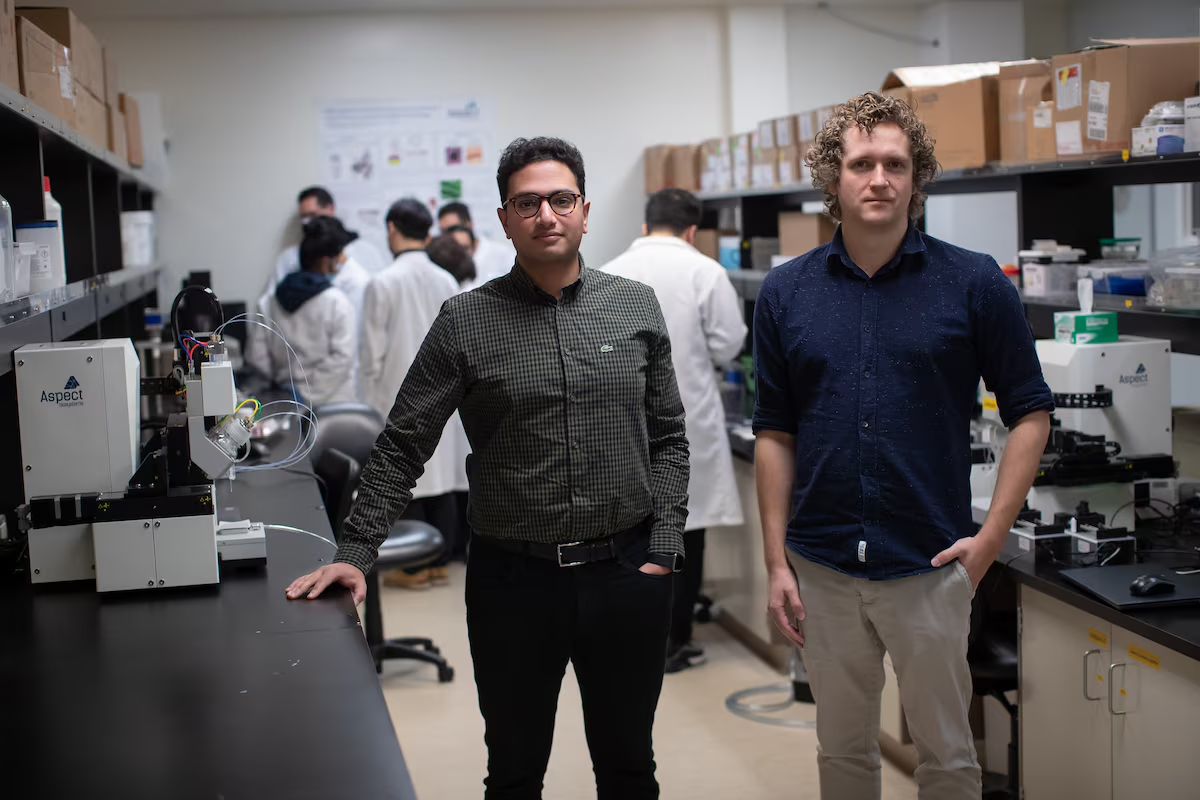
Aspect’s platform combines specialised 3-D printers, living cells derived from stem cells and hydrogel polymers to produce synthetic tissues intended for implantation. The company says printed constructs fuse with a patient’s circulatory system, allowing implanted islet cells to sense blood glucose and release insulin, potentially restoring the pancreas’s critical function.
Aspect also uses artificial intelligence to design tissues and control printing processes. The new use of Novo’s cell engineering is meant to keep implanted cells from being attacked by the immune system, a central challenge in treating type 1 diabetes where a patient’s immune response destroys the pancreas’s islet cells.
This is a cure, and I can’t state that enough because not many in our industry get to say they are working on a potential cure. This would replace the critical function of the pancreas. This will be a cure for diabetes.
Tamer Mohamed, CEO and cofounder, Aspect Biosystems
Funding, scale-up and Canadian ambitions
Aspect, a University of British Columbia spinout founded 13 years ago, has raised more than US$250 million from investors including Radical Ventures, Pangaea Ventures and Breakthrough T1D, alongside previous funding from Novo Nordisk. The company employs more than 110 people and has secured $72.75 million in federal and British Columbia government commitments in 2024 toward a planned $200-million project that includes building a Canadian manufacturing facility for clinical materials.
Aspect and other Vancouver biotech firms have voiced ambitions to create a vertically integrated life sciences company based in Canada, an objective observers see as significant given that Canada is the only G7 country without a domestic giant that develops, produces and commercialises innovative medicines at scale.
Aspect brings tremendous expertise and capabilities in cellular medicines, and we are proud of our partnership with them to progress transformative cell therapies toward clinical development and potentially generating a functional cure for people living with diabetes.
Jacob Sten Petersen, senior vice-president of global research, Novo Nordisk
Outlook and remaining steps
Aspect’s implants have shown diabetes treatment effects in rodent studies, but they have not yet been tested in humans. The company must complete preclinical work, enter clinical trials and scale manufacturing, while regulators assess safety and efficacy. Immune protection strategies will be a key determinant of whether implanted tissues can survive long term without immunosuppression.
If successful, the approach could shift diabetes treatment from lifelong management with injected insulin toward a functional cure that replaces lost islet cell function. Timelines remain uncertain, and high development, regulatory and manufacturing hurdles must be overcome before patients could access such therapies.
What this means for patients and the sector
For people living with type 1 diabetes, a reliable implanted source of insulin-producing cells that is shielded from immune attack would be transformative. For Canada’s life sciences sector, a successful product developed and manufactured domestically would mark a rare homegrown advance in a market currently dominated by multinational firms.
The expanded deal brings deeper technical collaboration and more capital to Aspect, while preserving the company’s lead role. It positions both companies to accelerate preclinical work and move toward clinical testing, even as concrete timelines and commercial outcomes remain to be determined.
Aspect BiosystemsNovo NordiskdiabetesbiotechVancouver