Bessent tells Carney to avoid a fight as CUSMA review approaches
U.S. Treasury official Scott Bessent warned Prime Minister Mark Carney that public criticism of U.S. policy could complicate the upcoming CUSMA review, even as trade exceptions limit Canada’s exposure.
Copy link
By Torontoer Staff
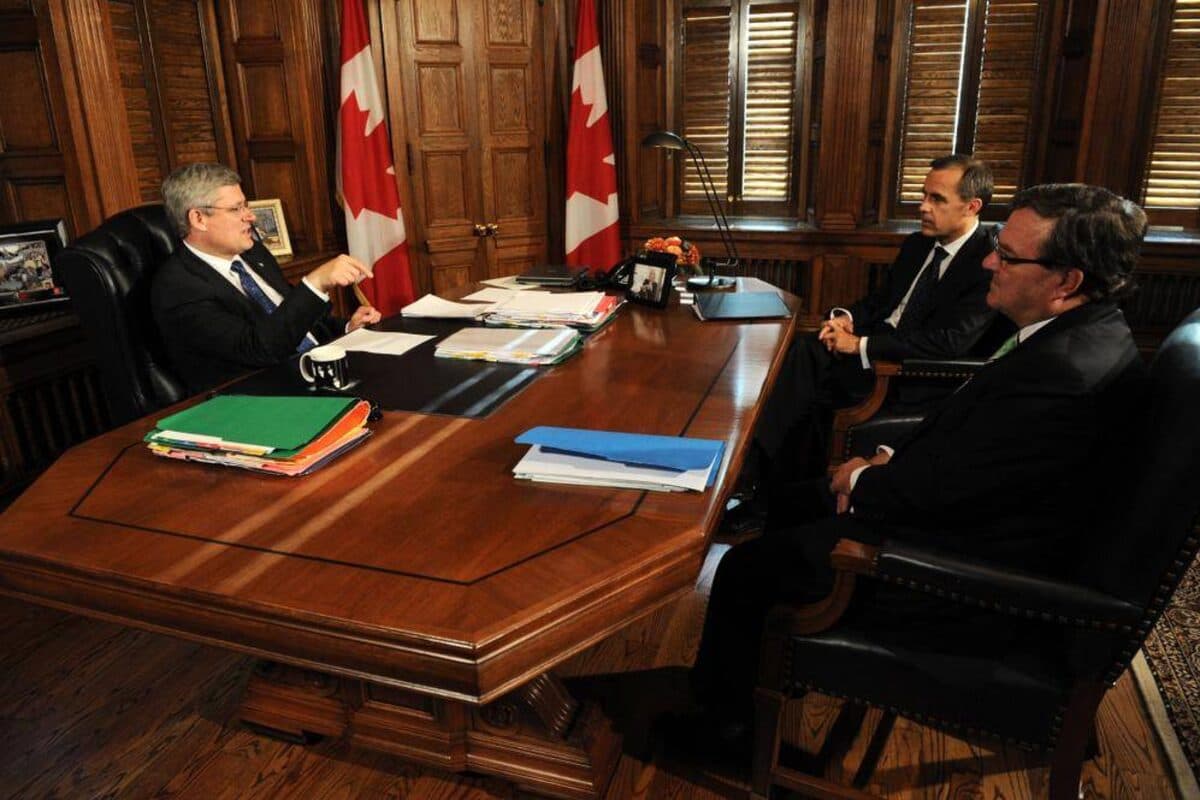
U.S. Treasury official Scott Bessent warned Prime Minister Mark Carney that public criticism of U.S. trade policy could backfire as Canada enters the formal review of the Canada-United States-Mexico Agreement, known as CUSMA in Canada and USMCA in the United States. Bessent said Ottawa should avoid provoking Washington ahead of talks, while trade exceptions in the agreement limit Canada’s exposure to the most severe tariff measures.
The comments follow Carney’s speech at the World Economic Forum in Davos, where he criticised economic coercion by powerful states. President Donald Trump responded with a threat to impose a 100 per cent tariff on certain Canadian imports over Canada’s trade discussions with China. The exchange has raised concerns about how political signalling could affect an already sensitive trilateral review process.
What Bessent said
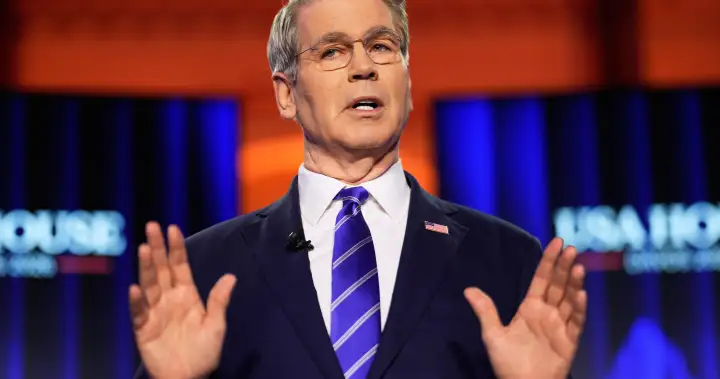
On CNBC, Bessent advised caution, saying: “I would not pick a fight going into USMCA to score some cheap political points — either you’re working for your own political career or you’re working for the Canadian people.” He added that technocrats who try to pivot into partisan politics rarely fare well, an apparent reference to Carney’s background as a central banker.
“I’ve seen what happens when a technocrat tries to pivot and become a politician. It never really works out well.”
Scott Bessent
Bessent tempered his warning by saying he expected talks to reach a workable outcome, though he acknowledged the path could be uneven. He later told Fox News that Carney had been walking back some of his Davos remarks after a phone call between Carney and President Trump.
Carney’s response
Carney rejected the suggestion that he had softened his stance. Speaking to reporters after the call with Trump, he said: “To be absolutely clear, and I said this to the president, I meant what I said in Davos.” His Davos remarks focused on defending smaller countries from economic pressure by larger powers.
How CUSMA’s exceptions limit risk
CUSMA includes provisions that constrain unilateral tariff actions between member countries. Those exceptions make it difficult for the United States to impose sweeping duties without triggering dispute-resolution steps, providing Canada with protections that reduce the likelihood of the most severe economic fallout from a retaliatory U.S. tariff.
Still, targeted measures or political escalation could affect particular sectors. Businesses tied to cross-border supply chains, such as automotive and agriculture, are sensitive to tariff uncertainties. Analysts say the agreement’s dispute mechanisms offer a structured route for resolving disagreements, but that process can be slow and politically charged.
Political dynamics and business implications
The exchange highlights the intersection of diplomacy, domestic politics and trade policy. Carney, who moved from central banking to political leadership, has taken a public stance on international economic coercion, a move Bessent characterised as political theatre. Ottawa will now have to balance public positioning with behind-the-scenes diplomacy to preserve trade stability.
For Canadian businesses, the immediate takeaway is that formal protections in CUSMA reduce the odds of a blanket tariff shock, but they do not eliminate risk. Companies with exposure to U.S. markets should maintain contingency plans, review supply-chain vulnerabilities and monitor dispute developments closely.
Where talks may go from here
Officials on both sides indicated an expectation of a negotiated outcome. Bessent said he thought discussions would eventually yield a good result, “may not be a straight line.” The coming weeks will likely focus on technical consultations under CUSMA’s review procedures, combined with diplomatic engagement aimed at lowering political temperature.
- CUSMA’s dispute-resolution mechanisms limit unilateral tariff action.
- Targeted U.S. measures could still affect specific Canadian sectors.
- Diplomatic engagement will be important to avoid escalation.
- Businesses should assess supply-chain exposure and contingency plans.
The public back-and-forth is unlikely to disappear while domestic politics remain active on both sides of the border. How Ottawa manages its messaging and negotiation posture during the formal review will shape the extent to which the disagreement becomes a technical trade dispute or a broader political stand-off.
“I think we will end up in a good place — may not be a straight line.”
Scott Bessent
Canada’s protections under CUSMA provide a cushion, but the episode underscores that trade agreements do not fully insulate relations from political dynamics. Officials and businesses will watch the review closely as talks move forward.
CUSMAtradeMark CarneyScott BessentCanada-US relationstariffs