Calgary’s water shutdown highlights national infrastructure shortfall
Calgary restored treated water after repairs, but repeated failures and years of ignored warnings expose a wider problem: ageing pipes and chronic underinvestment across Canada.
Copy link
By Torontoer Staff
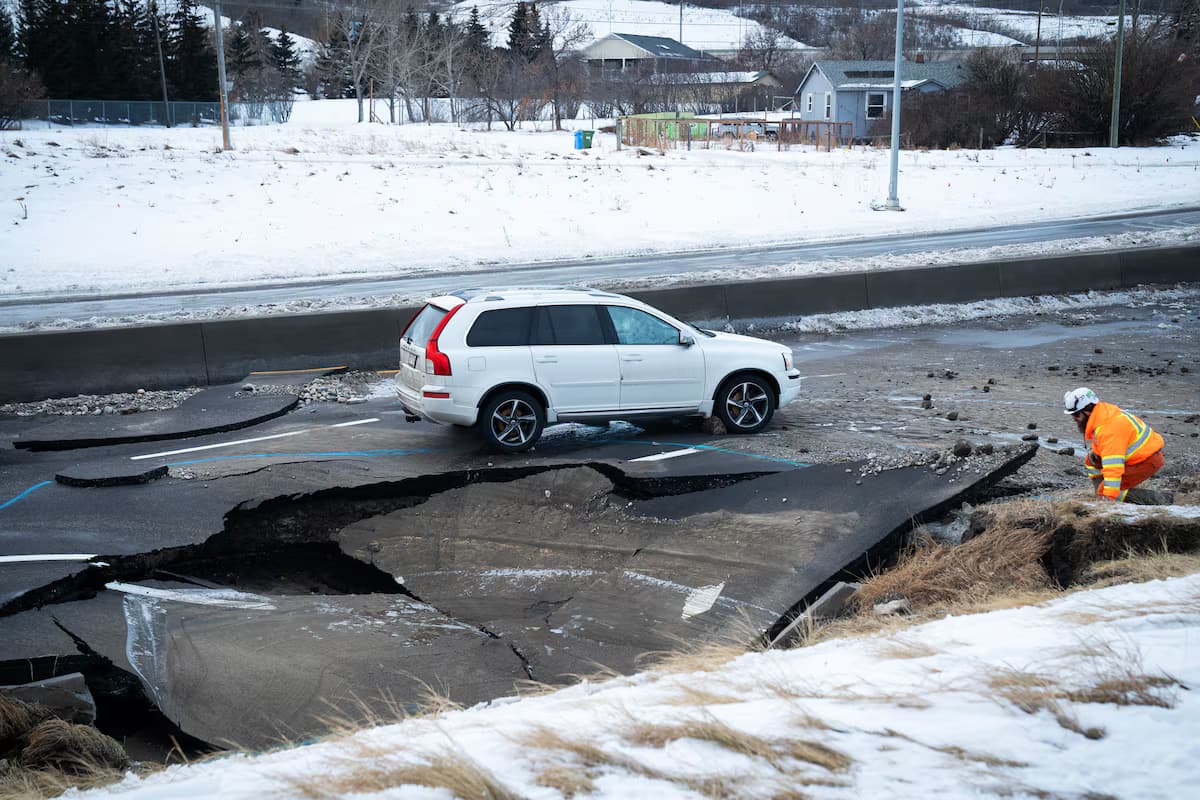
Calgary restored treated water to the city last week after tests on the Bearspaw South Feeder Main came back clear and officials lifted conservation restrictions. The main supplies about 60 per cent of the city’s treated water and its rupture on Dec. 30 prompted sweeping limits on showers, laundry and toilet use for roughly 1.6 million residents.
City officials called the reopening a relief, but the episode exposed deeper problems. The same main failed less than two years ago, and a recent third-party report concluded Calgary ignored two decades of warnings about the pipe’s vulnerability. The provincial government has opened its own inquiry.
What went wrong in Calgary
Investigators found records and engineering notes that flagged the Bearspaw main as at risk as far back as 2004. Repairs and temporary fixes followed previous ruptures, but officials did not prioritise a comprehensive replacement. The result was a system that remained exposed to failure under winter conditions and age-related wear.
Mayor Jeromy Farkas thanked residents for complying with restrictions while crews worked on repairs. The event sparked criticism of municipal planning and governance, with attention on decisions made by successive administrations that deferred large capital projects.
Calgary is a wake-up call. We need to do something about this underground infrastructure, otherwise things like this are going to keep happening.
Alireza Bayat, engineering professor, University of Alberta
How Canada compares
Break rates for water mains in Canada are higher than in the United States. A 2024 Utah State University study calculated about 11 breaks per 100 kilometres of pipe annually in Canada, versus 6.9 per 100 kilometres in the U.S. Researchers attribute part of that gap to colder weather and more corrosive soils, which accelerate pipe deterioration.
Climate and soil conditions raise maintenance needs, but infrastructure performance also reflects investment decisions. Municipalities face competing priorities and tight budgets, and many lack funding to replace aging assets at scale.
The funding gap
Statistics Canada estimates governments need to budget about $42 billion to rehabilitate potable water systems, based on 2022 assessments. Actual capital spending on drinking water in 2022 was roughly $4.3 billion. That leaves a persistent shortfall that forces cities to delay replacements or rely on temporary repairs.
We now have what I would call true intergenerational inequity. If municipalities do not start ramping up spending on upgrades, we are going to kick it down the road for someone else to deal with.
Carl Yates, former engineer at Halifax Water
Municipal funding shortfalls are compounded by political cycles. Councils often prioritise visible, short-term projects within four-year terms, while infrastructure replacement requires long-range planning and steady capital commitments.
What needs to change
- Adopt multi-decade asset management plans that schedule replacements based on risk and condition, not on annual budgets.
- Increase dedicated capital funding for water infrastructure at municipal, provincial and federal levels to close the estimated funding gap.
- Use risk-based prioritisation to target mains that serve large populations or are critical to system resilience.
- Improve data collection and third-party audits so warning signs are documented and acted upon.
- Consider regulatory incentives or matching funds from higher orders of government to encourage long-term municipal spending.
Experts say the bear case from Calgary is preventable. The Globe and Mail editorial board argued the city effectively kept rolling the dice by postponing decisive action on a known risk. Provincial and federal support, paired with local governance reforms, would reduce the chance that other cities face similar crises.
The provincial inquiry will examine decision-making and oversight in Calgary, but the broader lesson applies nationally. Municipalities will need sustained funding, clearer accountability and better asset management to keep tap water reliable for future generations.
Calgary’s recent outage ended with water back in taps, but the episode should change how cities plan and pay for essential underground infrastructure. Without that shift, similar disruptions are likely to recur in other communities across Canada.
Calgarywaterinfrastructuremunicipal financepublic policy