Canada aims to sell more oil, LNG and uranium to India to reduce U.S. dependence
Energy Minister Tim Hodgson said exporting 98% of Canada’s energy to the U.S. was a “strategic blunder,” and Ottawa is exploring new trade with India in crude, LNG and uranium.
Copy link
By Torontoer Staff
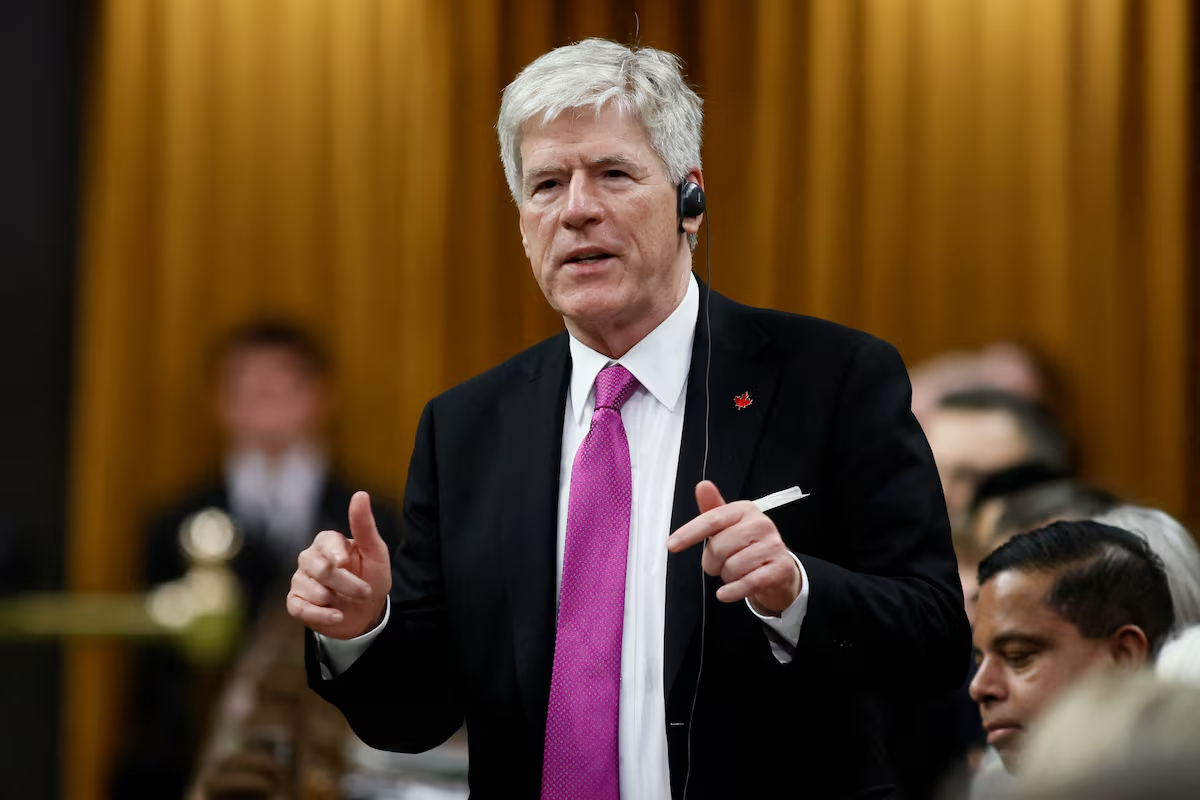
Canada is looking to expand energy exports to India as part of a strategy to reduce reliance on the United States, Energy Minister Tim Hodgson said at the Indian Energy Week conference. Hodgson called sending 98 per cent of Canada’s energy to a single market a “strategic blunder,” and said New Delhi represents a major growth opportunity.
Hodgson identified crude oil, liquefied natural gas and uranium as potential exports, and noted that Canada is building additional pipeline capacity to the West Coast to enable shipments to Asian markets.
What Canada is proposing
At the conference, Hodgson framed India as the fastest-growing source of energy demand worldwide, and said Canada can be a reliable supplier. Ottawa’s pitch focuses on three main commodities: crude oil, LNG and uranium, each of which would require different logistics and commercial arrangements to reach Indian buyers.
- Crude oil: Canada produces heavy and light crude that could be sold to refiners in India, but no regular exports to India currently exist.
- LNG: Canada has growing LNG capacity in development, but most Indian imports now come from Qatar and other Middle Eastern suppliers.
- Uranium: India is expanding its nuclear generation, creating potential demand for Canadian uranium if commercial and non-proliferation agreements are in place.
Canada used to provide 98 per cent of its energy to one customer. We are committed to diversifying our supply. We see the opportunity to work with India.
Tim Hodgson, Energy Minister
Trade patterns and market context
Canada currently sends almost all of its energy exports to the United States. By comparison, India imports crude mainly from Russia, Iraq and Saudi Arabia, while its LNG has been supplied largely by Qatar. Analytics firm Kpler reports that India’s oil imports grew on average 2.5 per cent over the last three years, while LNG cargoes shipped in fell 6.3 per cent in 2025.
Shifting those trade flows would require commercial agreements, shipping capacity and new export infrastructure in Canada. Hodgson said Canada has completed three pipelines to the West Coast and is considering more to facilitate shipments to Asia.
We’re now building pipelines to the West Coast. We have three pipelines built here, looking at building more.
Tim Hodgson, Energy Minister
Barriers and practical challenges
Diversifying buyers is not simply a matter of supply. Crude oil and LNG require export terminals and shipping arrangements that match Indian refinery and regasification needs. Uranium sales involve additional regulatory steps and bilateral nuclear cooperation agreements to meet safeguards and non-proliferation requirements.
Price competitiveness will be a major factor. India’s current suppliers can offer long-term contracts and logistical advantages. Canadian producers will need to negotiate terms that account for transport time, handling costs and any new infrastructure investment.
Next steps and political signals
Ottawa is signalling a desire to deepen energy ties with India as part of broader efforts to diversify trade. Officials will need to coordinate federal export policy, provincial resource regulation and private-sector contracts to translate that ambition into shipments.
Observers expect diplomatic and commercial talks to continue. Reports have suggested a high-level Canadian visit to India could be planned in coming months as part of these efforts.
What it means for consumers and industry
For Canadian producers, opening access to India could create new markets and pricing options. For consumers in Canada and India, changes are less direct; any impact on domestic energy prices will depend on how new export agreements affect global supply balances and on domestic policy decisions.
Industry groups and analysts will be watching the timeline for pipeline projects, export permits and any bilateral agreements on uranium. Those elements will determine how quickly Canadian energy can reach Indian buyers.
Canada’s push to diversify energy customers reflects a broader shift in trade strategy. Translating that shift into regular exports to India will require coordinated policy, infrastructure and commercial deals between governments and private companies.
energyIndiaCanadaLNGuraniumtrade