Canada becomes launch pad for generic Ozempic as semaglutide exclusivity ends
Canada is the first major market where generic semaglutide is legal after Novo Nordisk’s protections expired. Six companies have applied to make generics, promising lower prices and wider access.
Copy link
By Torontoer Staff
At the start of 2026, market protections on semaglutide expired in Canada and generic versions became legal. The move opens the door to competition for Ozempic and Wegovy, drugs that together earned about $3.5-billion in Canada in 2025.
Six companies have filed applications with Health Canada to make generic semaglutide, and industry analysts expect at least one or two approvals by spring, with many more by the end of the year. The change could lower costs, broaden access, and influence global rollout strategies.
Why Canada matters now
Canada is the first major market where generics for semaglutide are legal. That matters because demand for GLP-1 weight-loss and diabetes drugs is projected to surge, with Morgan Stanley analysts estimating the global market could top $150-billion annually by the early 2030s.
Canadian sales underline the size of the opportunity. Ozempic alone earned $2.9-billion in 2025, and Wegovy brought in $635-million. More than a million Canadians are on semaglutide, and public health plans and private purchasers may now be able to negotiate much lower prices.
Patents, exclusivity and how we got here
Public records show Novo Nordisk’s main patent on semaglutide expired after a missed maintenance payment in 2020. A separate protection, data exclusivity, expired on Jan. 5, 2026. The company has not detailed why protections lapsed when they did, prompting industry speculation about regulatory and pricing considerations in Canada.
If these products are taken up widely, we are going to see them become more accessible and more widely available.
Evan Seigerman, managing director and head of healthcare research, BMO Capital Markets
Who is lining up to make generics
Health Canada records and company disclosures show six applicants: Dr. Reddy’s Laboratories, Sandoz Canada, Apotex, Taro Pharmaceuticals, Aspen Pharmacare Canada and Teva Canada. None of the submissions has been approved yet.
Industry observers expect initial approvals in the spring and broader rollout through 2026. A pricing framework negotiated between the pan-Canadian Pharmaceutical Alliance and the Canadian Generic Pharmaceutical Association would set generic semaglutide prices at about 35 per cent of Ozempic’s list price once at least three products are available, with potential for deeper public-plan discounts.
Manufacturing and a Canadian entrant
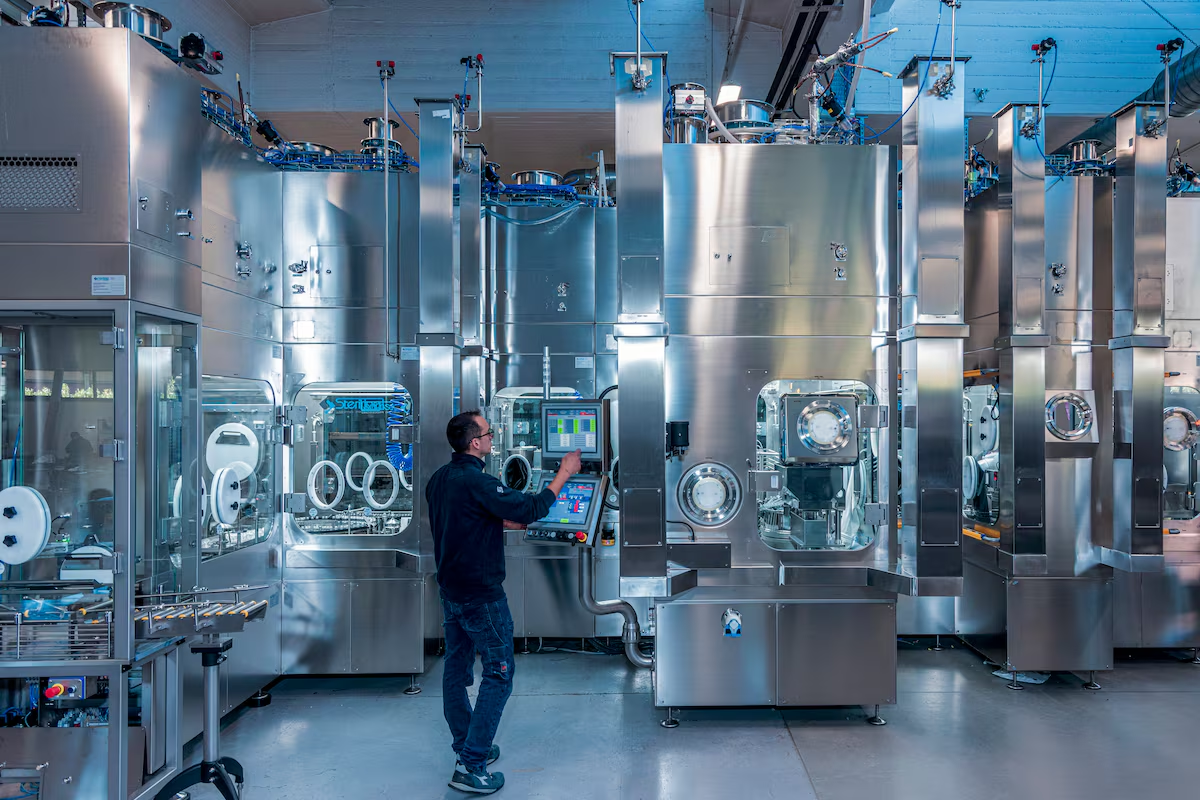
A new Canadian supplier, Vimy Pharma, plans to manufacture generic semaglutide at an Edmonton facility using a large robotic filling line built in Italy. The company was founded by former Novo Nordisk executives and intends to submit its Health Canada application shortly.
It won’t be a zero-sum game, the market is large enough for brand and generic competitors to grow.
Dave Suchon, co-founder and CEO, Vimy Pharma
Generic makers are developing chemically synthesised versions of semaglutide, while Novo Nordisk produces the peptide from yeast. Canada may serve as a testing ground for those manufacturing processes before companies take products to other markets.
Retail, telehealth and patient access
Pharmacies and virtual-care companies are preparing for more customers. Loblaw, parent of Shoppers Drug Mart, has launched a virtual-care service for weight-loss prescriptions and expects sales growth even at lower prices.
So many customers now, they will have access to that drug, which is good for us, good for customers and good for health care in Canada.
Per Bank, CEO, Loblaw Companies Ltd.
Canadian telehealth platforms report rising demand. Felix Health says GLP-1 prescription requests on its platform have doubled, with about 85 per cent of clients paying out of pocket. Other services, including Maple and Pocketpills, have moved into the space and are anticipating broader generic availability.
Competition, product features and what comes next
Brand-name manufacturers are adapting. Novo Nordisk has registered additional trade names for semaglutide and continues clinical work on new indications, including recent approval for certain liver conditions. Eli Lilly is promoting tirzepatide drugs Mounjaro and Zepbound and cut list prices late in 2025 to sharpen competitiveness.
Pill forms of GLP-1s are another front. Canada already has approval for Rybelsus, the oral semaglutide, and companies expect more oral options to gain regulatory clearance in the coming months, which could further change uptake patterns.
Investors and industry analysts see a long runway for growth. How quickly prices fall and how public and private payers respond will shape the market, but the immediate effect is clear: more manufacturers are preparing to sell semaglutide in Canada and to learn how their processes scale for other countries.
What patients should expect
- Lower prices are likely as generics enter the market, with further discounts possible through public-plan negotiations.
- More dispensing channels will appear, including expanded virtual-care and home delivery options.
- Product choice will increase: branded injectables, generics, and oral formulations are all competing for patients and prescribers.
Canada’s early opening to generic semaglutide positions the country as a testing ground for manufacturing, pricing and distribution strategies. That could accelerate access for patients here and inform how generics roll out globally.
Ozempicsemaglutidepharmaceuticalshealthcaregeneric drugs