Canada-China tariff deal, Trump’s pressure on the Fed, and National Bank’s new Dubai office
A weekly roundup of key business and investing stories: a Canada-China tariff swap on EVs and canola, political pressure on the U.S. Fed, shifting immigration patterns, and National Bank’s Dubai opening.
Copy link
By Torontoer Staff
This week’s business round-up covers a Canada-China tariff agreement on electric vehicles and canola, mounting political pressure on U.S. Federal Reserve chair Jerome Powell, a continuing shift in where new immigrants choose to settle in Canada, and National Bank of Canada’s first office in the United Arab Emirates.
Taken together, these items reflect trade realignment, geopolitics influencing monetary institutions, demographic shifts that affect regional economies, and Canadian finance making a larger push into global markets.
Canada and China reach tariff deal on EVs and canola
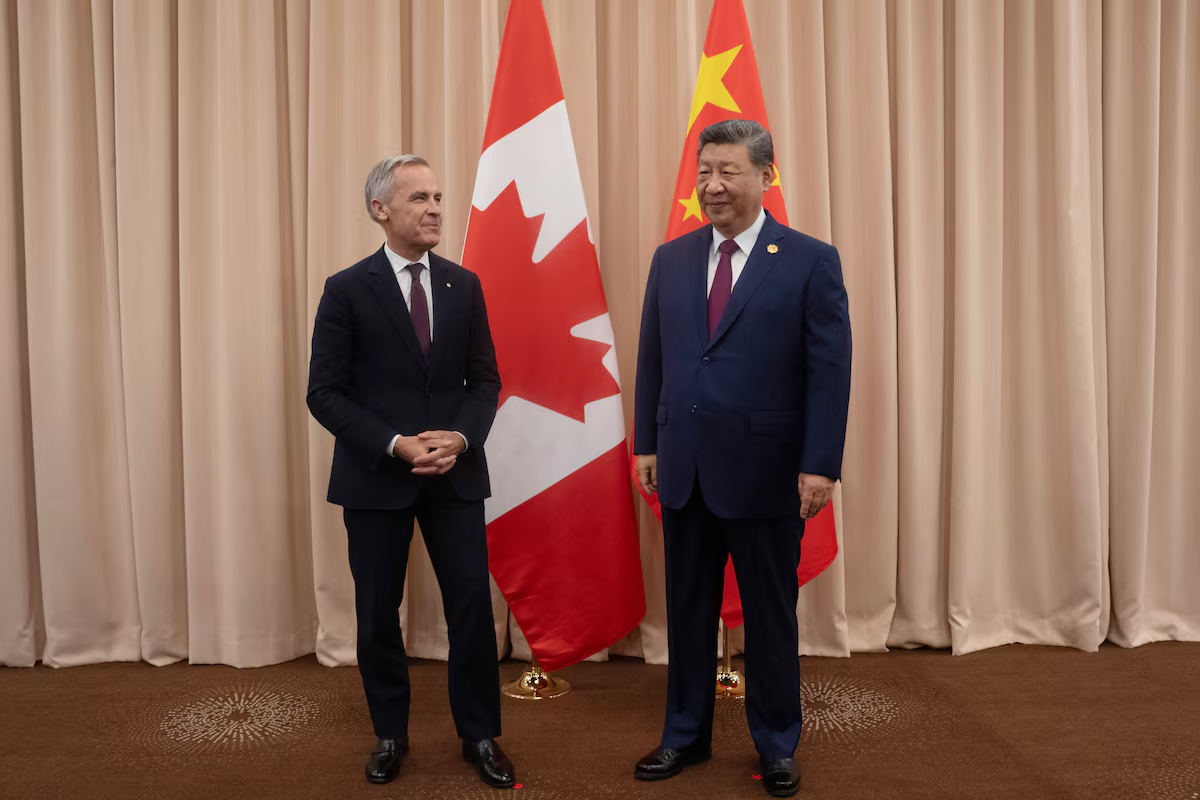
Canada announced a tariff arrangement with China that allows nearly 50,000 Chinese-made electric vehicles into the Canadian market at a reduced tariff rate. In return, Beijing agreed to major cuts to levies on canola seed and pledged to remove tariffs on a range of other products.
The move was announced following a four-day official Canadian visit to China, the first prime ministerial trip there since 2017. Ottawa also signalled it would welcome increased Chinese investment in Canadian energy sectors, including the oil sands, as part of a broader effort to diversify export markets amid global protectionist pressures.
Political pressure on the Fed intensifies
Federal Reserve chair Jerome Powell said the U.S. Justice Department served subpoenas that threatened a criminal indictment tied to renovation cost overruns on two Fed buildings in Washington. Powell described the threat as a pretext aimed at influencing the Fed’s independence on monetary policy.
The threatened criminal indictment was a "pretext" to gain more influence over the central bank and monetary policy.
Jerome Powell
Fourteen former central bankers and senior officials issued a statement criticising the administration’s actions, and Bank of Canada governor Tiff Macklem publicly backed Powell, saying, "Chair Powell is doing a very good job under difficult circumstances, guiding the Fed to take monetary policy decisions based on evidence, not politics." The dispute highlights the risks when political pressure and monetary policy intersect.
Immigration shifts away from Toronto, Vancouver and Montreal
Statistics Canada reports that Toronto, Vancouver and Montreal together accounted for 46 percent of new immigrants in the 12 months ending mid-2025, down from nearly 80 percent about two decades earlier. Nationally, new immigrant arrivals fell 6.2 percent between 2023-24 and 2024-25 as federal rules tightened.
The Globe and Mail’s Decoder series explores why newcomers are choosing different destinations. Factors include provincial nominee programs, housing and affordability challenges in large cities, and targeted settlement strategies by smaller metropolitan areas that are actively recruiting immigrants to meet labour needs.
National Bank opens its first Dubai office
National Bank of Canada has opened an office in Dubai, the bank’s first presence in the United Arab Emirates. The launch coincides with an Ottawa economic mission aimed at expanding trade ties with the UAE and comes after similar moves by other Canadian firms into the Middle East market.
National Bank already maintains international offices in London, Dublin, Paris and Hong Kong. Negotiations between Canada and the UAE on an economic partnership agreement are scheduled to begin next month, and the new Dubai office positions the bank to support clients as those talks progress.
Churchill port expansion draws renewed strategic interest
Plans to expand the port of Churchill, Man., have drawn fresh attention after public comments by U.S. political leaders about Greenland. Arctic Gateway Group’s proposed multibillion-dollar expansion aims to enable increased exports through Arctic routes for commodities such as critical minerals, fertilizer and energy products.
I have long viewed the town as a place of significance when it comes to national security and sovereignty.
Joe Stover, Churchill resident
Residents and local stakeholders are weighing both economic opportunity and questions about how a larger port might affect the community and Canada’s Arctic sovereignty posture in a more congested geopolitical environment.
What to watch and how to follow
Key items to monitor in the coming weeks include implementation details of the Canada-China tariff package, the outcome of any legal or congressional actions related to Powell, federal immigration policy adjustments that could further shift settlement patterns, and how Canada-UAE trade talks affect financial services expansion in the Gulf.
- Tariff implementation and market impact on Canadian auto and agriculture sectors
- Any further actions that could affect the Fed’s independence
- Provincial settlement programs that redirect newcomers to smaller cities
- Commercial activity stemming from National Bank’s Dubai office
The Globe also ran a weekly business and investing quiz and launched a Business Brief newsletter offering a daily summary of market-moving stories. Sign-up details are available through the paper’s newsletter listings.
Taken together, this week’s items underscore how trade deals, political pressure on institutions, demographic trends and targeted international expansion by Canadian firms are reshaping business and investment priorities at home and abroad.
Canada-ChinaFederal ReserveimmigrationNational BankChurchilltradebusiness