Canada’s China strategy is hedging, not pivoting
Ottawa is expanding trade with China to reduce U.S. dependence, while imposing security guardrails to avoid overreliance on either superpower.

Copy link
By Torontoer Staff
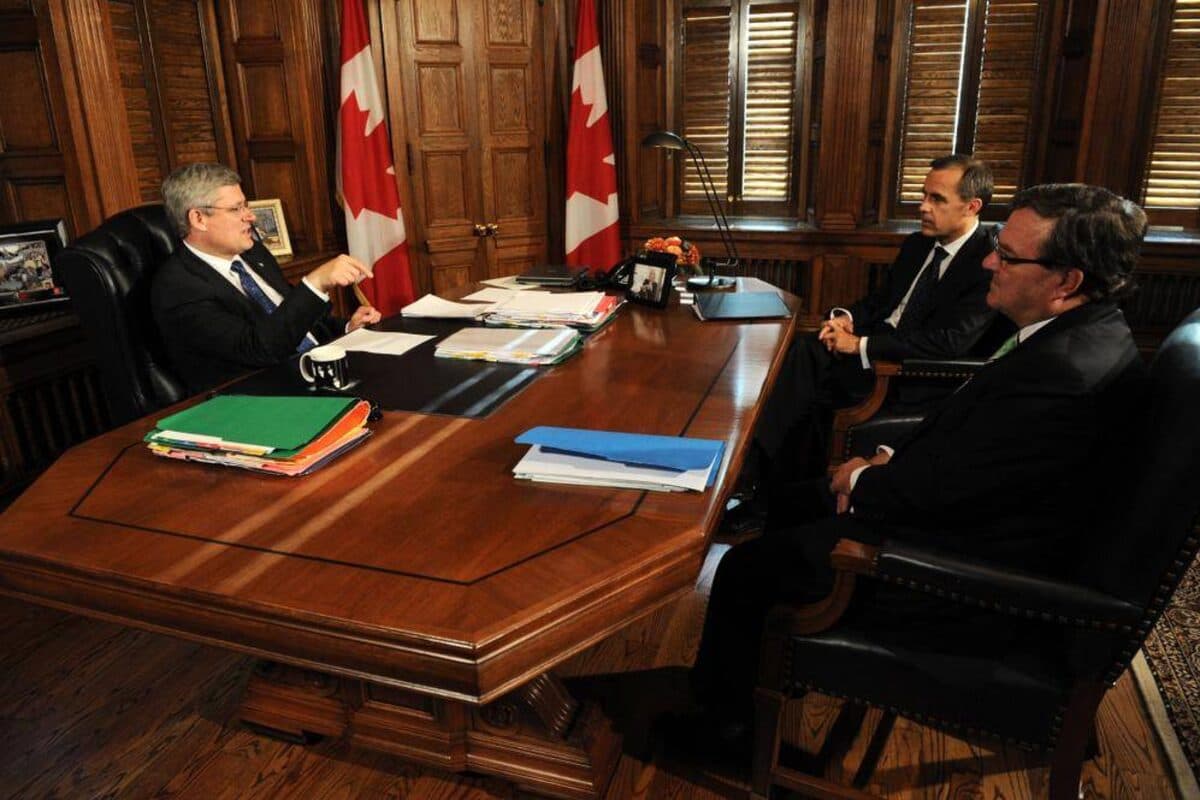
Prime Minister Justin Trudeau led a trade mission to Beijing this week, the first Canadian prime minister to visit China since 2017. Ottawa is pursuing deeper commercial ties with China to reduce economic dependence on the United States, while signalling safeguards on security-sensitive sectors.
The policy is deliberate hedging, not a strategic pivot. Ottawa’s stated aim is to diversify export markets and investment partners, while preserving the ability to defend national security and human-rights positions independently.
Why Canada is diversifying
Canada’s trade relationship with the United States remains the largest and closest, but recent U.S. policy volatility has forced a recalculation. The return of Donald Trump to the White House, and his repeated use of tariffs and other trade instruments for political ends, has convinced many Canadian officials that supply-chain and market concentration risk are now strategic vulnerabilities.
Expanding commerce with China, and with other markets, is presented as a way to limit those vulnerabilities. Government officials emphasise that trade expansion will be accompanied by defined 'guardrails' to protect technology, critical infrastructure and investments in strategic sectors.
Lessons from past engagement with China
Canada’s earlier optimism about commercial engagement with China, which assumed trade would liberalise Beijing, has been moderated by events. The detention of two Canadians abroad and evidence of foreign interference led Ottawa to characterise China as an 'increasingly disruptive global power.' That history shapes current caution.
Officials say any commercial opening will be selective. Ottawa will continue to press for market access and reciprocal treatment, while preparing for the possibility that concessions by Canada may not be durable.
Ottawa and Beijing signed a memorandum of understanding on 'strengthening energy co-operation.'
Memorandum of understanding, Ottawa and Beijing
Guardrails and red lines
Senior officials outline three core elements to the approach: protect security-sensitive assets, limit exposure in strategic supply chains, and retain the freedom to criticise human-rights abuses and to act on intelligence threats. That framework is intended to allow economic engagement without ceding leverage.
- Screen foreign investment in critical infrastructure and technologies
- Diversify export markets to lower single-market risk
- Maintain independent positions on human rights and international security
- Advance intelligence and cyber-defence cooperation with partners
Critics warn of two risks. One is complacency: economic ties can be used as leverage to extract political concessions. The other is overreaction: making trade policy subordinate to short-term political disputes would undermine Canadian prosperity and alliances.
Strategic environment and the risk of pressure
The strategic picture has become more complex. Ottawa now faces a world where economic partners can also be strategic competitors, and where traditional security umbrellas may be less reliable. That profile increases the danger of 'Finlandization,' a Cold War term used here to describe a small power’s informal subordination to a neighbouring superpower, even while retaining formal independence.
The United States retains overwhelming military and economic weight. It also has a wide range of non‑military instruments to pressure allies and trading partners. Ottawa’s strategy therefore seeks to avoid excessive dependence on any one external actor, while sustaining NATO and other alliances that provide collective defence and diplomatic leverage.
What Ottawa must get right
Short-term statecraft will demand balancing acts: keep relations with the United States workable, expand markets in Asia and beyond, and protect sensitive technologies and sectors. That requires clear screening rules, timely legislation on foreign interference and foreign-agent transparency, and a robust industrial strategy for critical minerals and advanced manufacturing.
Longer term, policymakers argue that Canada should strengthen its capacity to act independently, through investments in defence, resilience in supply chains and deeper diplomatic coalitions. The objective is not to choose between great powers, but to reduce the likelihood any single power can dictate Canada’s economic or security choices.
Canada’s current course is pragmatic hedging: expand trade where it is in the national interest, impose firm guardrails where security demands, and shore up alliances and domestic capacity so Ottawa can make independent decisions in a turbulent era.
ChinaCanadatradeforeign policyUnited States