Carney frames Canada as model of pluralism and unity as U.S. official criticizes China overtures
At a cabinet planning session in Quebec City, Mark Carney urged national unity and defended Canadian pluralism, while a top U.S. official warned his China outreach could jeopardize trade ties.
Copy link
By Torontoer Staff
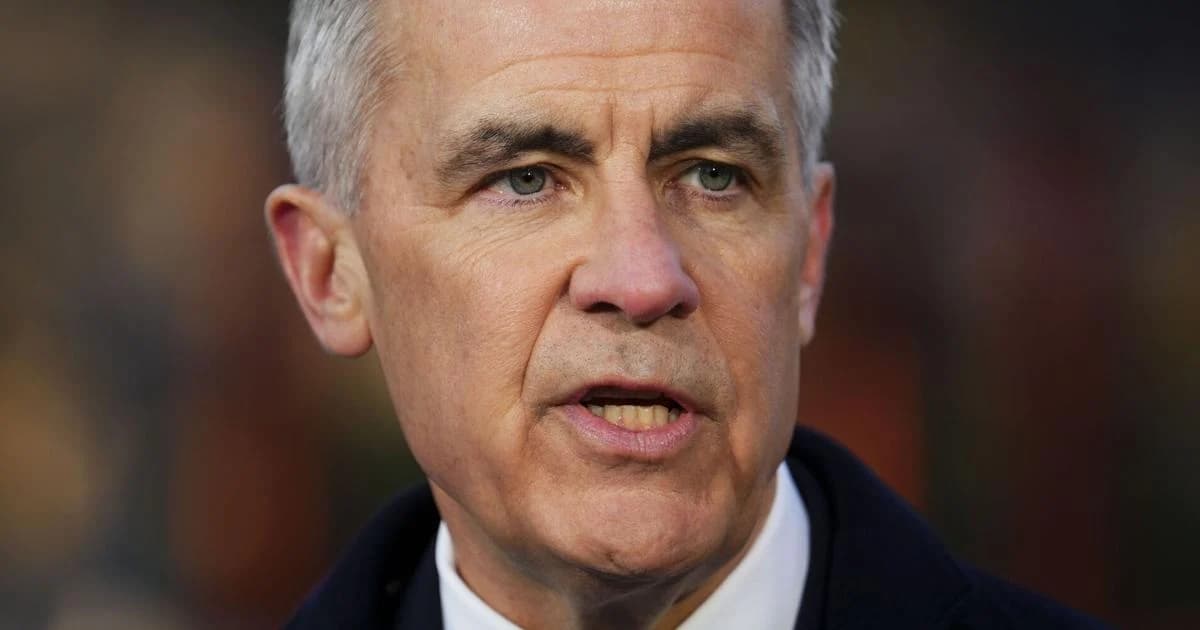
Mark Carney used a wide-ranging address in Quebec City to position Canada as a model of pluralism and shared prosperity, and to call for national unity as his government lays out a vision for less reliance on the United States. Speaking from inside the fortified citadel at the start of a two-day cabinet planning session, Carney framed Canadian values around coexistence and partnership between English and French Canada.
The speech came after Carney drew strong international attention at Davos for proposing a reset of Canada’s foreign policy, including a liberal approach to Chinese-made electric vehicles. That outreach prompted criticism from U.S. Commerce Secretary Howard Lutnick, who told Bloomberg the moves could complicate North American trade talks.
U.S. reaction and Ottawa’s response
Lutnick said Canada’s policy shift toward China was “arrogant” and dismissed trade diversification efforts as “political noise,” warning the approach may affect Canada’s leverage in upcoming negotiations on the Canada-U.S.-Mexico trade accord. He specifically pointed to a proposed plan to reduce tariffs and allow 49,000 Chinese-made electric vehicles into the Canadian market as evidence Ottawa was diverging from U.S. policy.
Finance Minister François-Philippe Champagne, who said he met Lutnick at a private Davos dinner, defended the government’s strategy. He described the Davos speech as blunt and necessary, and reaffirmed Ottawa’s intent to diversify trade relationships while maintaining close economic ties with the United States.
The prime minister said a lot of things that people thought, and he had the courage to say it loud.
François-Philippe Champagne
Unity and the values Carney emphasised
Carney opened his remarks by tracing Canada’s identity to historical cooperation between English and French communities, pointing to the Plains of Abraham, outside the citadel, as a symbolic site. He acknowledged painful chapters in Canadian history, including dispossession of Indigenous Peoples and treaty violations, and characterised the nation as a project of imperfect but ongoing progress.
Near the end of his speech, Carney added a line that appeared directed at the United States and at President Donald Trump’s earlier comments following Davos. He emphasised economic and cultural partnership with Washington, then asserted Canada’s independence in tone and purpose.
Canada doesn’t live because of the United States, Canada thrives because we are Canadian.
Mark Carney
Policy priorities and political context
Carney described a government agenda built around strengthening defence, speeding up major project approvals, and preserving social programs introduced under the Trudeau administration, such as public dental coverage and national child care. He argued these measures are part of a larger effort to show the world that democratic, pluralistic societies can deliver prosperity.
Conservative Leader Pierre Poilievre praised aspects of Carney’s Davos address, while warning Ottawa must tackle immediate domestic pressures including a large budget deficit, high food and housing costs, and military personnel shortfalls. Poilievre also cautioned against what he called reckless engagement with China, citing past diplomatic crises and allegations of foreign interference.
Of course, we have to trade with China, as we always have, but without losing our compass or national security.
Pierre Poilievre
Risks ahead and what Ottawa is preparing for
The Carney government faces immediate domestic and international tests as Parliament returns next week. Issues ranging from the ongoing trade war to pipeline policy, climate action, and public safety are on the agenda. The government is also monitoring separatist momentum in Alberta and Quebec ahead of provincial campaigns this year.
Cabinet ministers and outside speakers, including economists, the mayor of Quebec and the head of Food Banks Canada, were scheduled to contribute to closed-door sessions that focus on economic growth and affordability. Champagne said those issues are a central concern for the government.
- Carney positioned Canada as a pluralistic alternative to rising authoritarian trends, and stressed the need to defend shared values.
- U.S. criticism followed Carney’s Davos remarks, centred on expanded engagement with China and trade diversification.
- Ottawa intends to push defence spending, expedite major projects and protect social programs while pursuing new trade partners.
Carney framed Canada’s role as limited but significant: the country cannot solve all global problems, he said, but it can demonstrate that a different path remains possible, one oriented to inclusion and democratic values. The address was both a domestic appeal for unity and a public statement of the government’s strategic direction as it balances close ties with the United States and broader global engagement.
Mark CarneyCanadaforeign policytradeQuebec City