Carney says he can handle Trump’s insults, doubles down on Davos remarks and NATO defence
Prime Minister Mark Carney shrugged off Donald Trump’s insults and threats, defended NATO troops’ service in Afghanistan, and framed U.S. rhetoric as part of trade negotiations.
Copy link
By Torontoer Staff
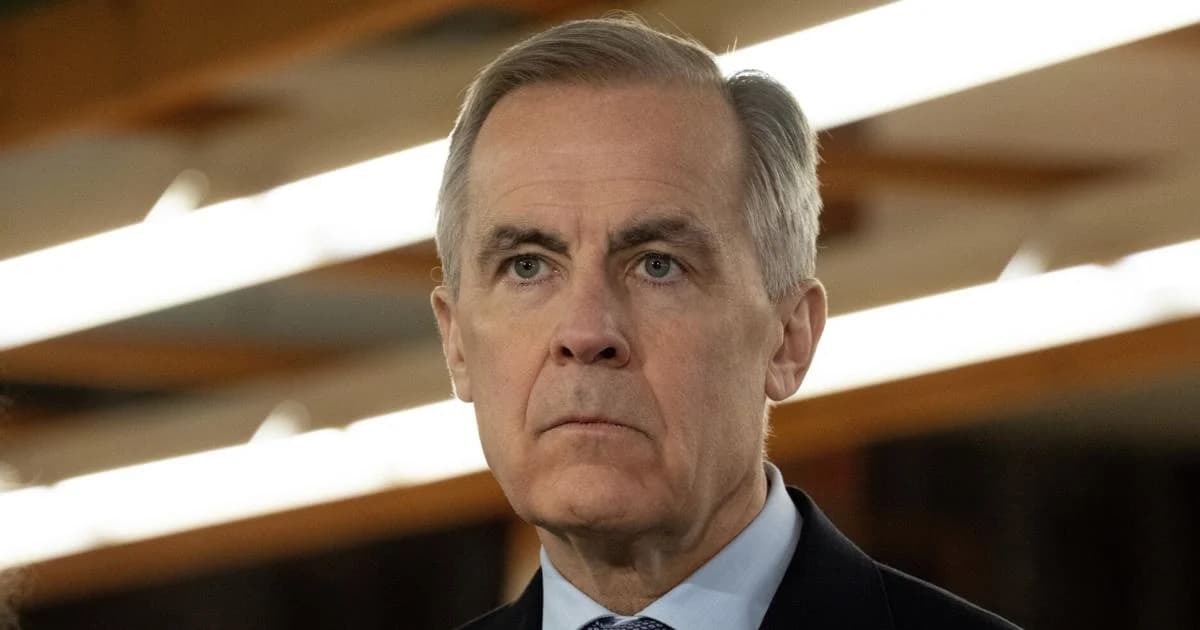
Prime Minister Mark Carney dismissed President Donald Trump’s recent insults and tariff threats on Monday, saying he did not regret a word of his Jan. 20 speech in Davos and that the U.S. rhetoric should be viewed as part of broader negotiations. Carney also offered a pointed defence of NATO troops’ service in Afghanistan after the American president characterised some allied contributions as minimal.
Speaking in both English and French at his first full news conference in 10 days, Carney called the 100 per cent tariff threat a negotiating posture and reaffirmed that Canada has not and will not pursue a free-trade agreement with China.
How he responded to Trump’s comments
Carney said the U.S. president is a strong negotiator and that some of the public positioning should be understood in that light. He noted that being the target of jabs is part of the job. "So I can handle it," he told reporters after being asked whether he was offended by Trump referring to him as "governor."
I did not regret a word of my Jan. 20 speech in Davos.
Mark Carney
Carney said the tariff threat, posted by Trump on Truth Social, is one element of what he expects will be "a robust review" of the Canada-United States-Mexico Agreement. He repeated that Canada will make clear what it has and has not committed to in its recent tariff discussions with China.
Defending NATO and Canada’s contribution in Afghanistan
Carney pushed back against the characterization of NATO troops as marginal contributors in Afghanistan. He outlined Canada’s role since 9/11, saying the country sent support to New York City, deployed about 40,000 troops over 13 years, and lost 158 soldiers and one diplomat.
Everyone should recognize that.
Mark Carney
He highlighted Canadian soldiers who received U.S. Bronze Stars for combat service and cited injuries and other sacrifices made by NATO partners. Carney did not mention Trump by name when condemning the slur against allied troops, and he declined to say whether he would demand an apology.
Trade, China and the limits of the tariff deal
The government has been doing damage control after Trump and others interpreted Canada’s tariff-reduction deal with China as something larger. Carney and senior officials insisted the arrangement is narrowly focused and not a pathway to a free-trade pact with Beijing.
It was a very focused and surgical agreement that was largely, or almost exclusively, designed to de-escalate some tariff escalation that had happened over the past year and a bit.
Kirsten Hillman, outgoing ambassador to the U.S.
Trade Minister Dominic LeBlanc told U.S. officials the China deal is "a very targeted agreement" aimed at lowering recently imposed tariffs. Carney echoed that Canada will follow the CUSMA provision that bars parties from signing free-trade agreements with non-market economies, adding that if Canada had been considering such a move it would have given notice as the agreement requires.
Davos speech, alliances and the path forward
Carney defended his Davos address, which called on middle powers to build new trade alliances in response to shifting global dynamics. The speech, which won praise and a standing ovation at the World Economic Forum, argued that some great powers are using integration as a tool of coercion.
He framed Canada’s tariff deal with China in that context, saying the agreement helps diversify trade partners while also protecting domestic interests. The deal allows 49,000 Chinese electric vehicles to be imported for sale in Canada this year, a cap Carney said could be revisited if Chinese automakers invest in EV production in Canada.
- Carney says he stands by his Davos remarks and was not offended by Trump’s comments.
- He characterised Trump’s tariff threat as negotiating strategy and expects a robust CUSMA review.
- Carney defended Canada’s Afghanistan contributions and highlighted Canadian sacrifices.
- Officials described the China tariff deal as targeted, not a step toward a free-trade agreement.
- The EV import cap is set at 49,000 this year, with potential for growth tied to investment in Canada.
What to watch next
Attention will now turn to the CUSMA review and bilateral discussions in Washington, where Canadian ministers will press allies on the scope of the China tariff deal and seek to limit further escalation. Observers will also watch whether U.S. rhetoric on NATO and trade continues to influence those talks.
Carney closed Monday by returning to a central point of his Davos address, saying honesty about global change is necessary. "We have to be honest," he said, and he stood by his description of the challenges facing Canada and its partners.
Mark CarneyDonald TrumptradeNATOChina