Carney says he did not walk back Davos remarks after U.S. aide's claim
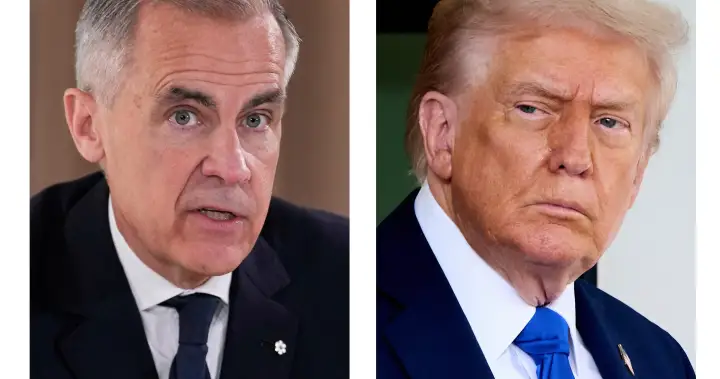
Prime Minister Mark Carney denied softening his Davos speech in a call with President Trump, after U.S. Treasury Secretary Scott Bessent said Carney 'aggressively' walked back his comments.
Copy link
By Torontoer Staff
Prime Minister Mark Carney told reporters in Ottawa he did not retract the message from his World Economic Forum speech during a phone call with U.S. President Donald Trump, responding directly to a U.S. aide who said otherwise.
Carney said he stood by the speech that warned of a rupture in the rules-based global order, and that the president understood Canada’s response to changing U.S. trade policy.
Carney: I meant what I said
Asked about a media report citing U.S. Treasury Secretary Scott Bessent, Carney said, 'To be absolutely clear, and I said this to the president, I meant what I said in Davos.' He added that Canada had been among the first to recognise a shift in U.S. trade policy and that Ottawa was reacting accordingly.
To be absolutely clear, and I said this to the president, I meant what I said in Davos.
Prime Minister Mark Carney
Carney described the call with Trump as a 'very good conversation' that covered a wide range of issues. He said the president understood Canada’s position and that he explained Canada’s trade arrangements with China.
What Bessent told U.S. media
Hours earlier, Scott Bessent suggested a different account. Speaking on Fox News’ Hannity, Bessent said Carney had 'aggressively' walked back remarks from his Davos speech while speaking with the president in the Oval Office.
I was in the Oval with the president today. He spoke to Prime Minister Carney, who was very aggressively walking back some of the unfortunate remarks he made at Davos.
Scott Bessent, U.S. Treasury Secretary
Bessent framed the exchange in the context of Canada’s dependence on U.S. markets and warned that higher tariffs would be disastrous for Canada, echoing concerns from the White House about Ottawa’s trade ties with China.
Context and fallout from Davos
Carney drew a rare standing ovation in Davos when he urged nations to acknowledge the end of a rules-based global order. He did not name the U.S. in the speech, but he argued that middle powers must act together to avoid being sidelined.
Trump reacted sharply after the speech. He rescinded Canada’s invitation to participate in what he called a Board of Peace, and he threatened to impose a 100 per cent tariff on Canadian goods if Ottawa moved ahead with a trade deal with China.
The controversy follows Carney’s recent diplomatic outreach to China, where Canada reached a trade arrangement meant to stabilise a strained bilateral relationship. That deal has drawn public criticism from the White House.
What was discussed on the call
- The situation in Ukraine
- Developments in Venezuela
- Arctic security concerns
- Canada’s trade relationship with China and the new trade arrangement
Carney said the call covered these topics and more. He characterised the exchange as constructive, and he stood by his Davos message while describing Canada’s approach to evolving global dynamics.
Where things stand
The two accounts remain at odds. Carney says he reaffirmed his Davos remarks in his conversation with Trump. Bessent says Carney walked back those remarks in the Oval Office. Both versions frame the same call as significant for Canada’s foreign and trade policy.
U.S. threats of tariffs and the revocation of the Board of Peace invitation underscore the tensions that followed the Davos speech. Ottawa has signalled it will continue to pursue trade ties and security discussions while responding to shifts in U.S. policy.
For now, the prime minister’s office and the White House offer competing narratives about a phone call that turned into a public test of diplomatic messaging and trade vulnerability.
Mark CarneyDonald TrumpDavosCanada US relationstrade