Carney still weighing a seat on Trump’s 'Board of Peace' despite Putin invitation
Prime Minister Mark Carney has not committed to joining the U.S.-led Board of Peace for Gaza reconstruction, citing unresolved details even after Vladimir Putin received an invitation.
Copy link
By Torontoer Staff
Prime Minister Mark Carney remains undecided about taking a permanent seat on the U.S.-led "Board of Peace" for Gaza reconstruction, the Prime Minister’s Office said, even after Russian President Vladimir Putin was reportedly invited to join.
Officials travelling with Carney told reporters the board’s charter and key terms are still under discussion. Carney has signalled an intent to participate in talks, in order to shape the board’s structure from within, but Canada has not yet committed to any financial contribution.
Details still being worked out
Audrey Champoux, a spokesperson for the Prime Minister’s Office, said on Monday that "there are still details needed to be appropriately worked out to formalize the next steps" before Canada decides on its role. Officials with Carney in Davos added that the proposed charter is under active negotiation and many terms and conditions remain unresolved.
A U.S. official has told media that permanent board members would be expected to contribute about US$1 billion. A Canadian official said Canada has not been asked to pay and will not pay at this time.
Canada’s position and obligations
Carney and his delegation have framed Canada’s involvement around humanitarian access and practical outcomes. Speaking in Doha, Carney said Canada "will explore every avenue" to address the humanitarian crisis in Gaza, and that ensuring unimpeded aid flows at scale remains a precondition for moving forward.
I haven’t gone through, we haven’t gone through all the details of the structure, how it’s going to work, what financing is for, et cetera. And so we will work through those in the coming days,
Prime Minister Mark Carney
Canada has supported Ukraine since Russia’s first incursions in 2014 and significantly expanded assistance after the 2022 invasion. Ottawa has pledged about $6.5 billion in military aid since 2022 and maintains broad economic sanctions against Moscow. Those commitments complicate any decision about sharing a diplomatic platform with Putin.
Who else has been invited
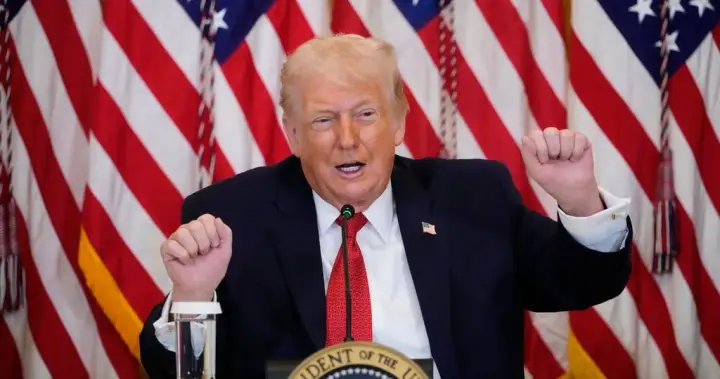
U.S. President Donald Trump publicly announced the board last week, presenting it as a technocratic body to oversee a new Palestinian administration, disarm Hamas, and coordinate an international security force. Invitations reportedly extend to a number of high-profile leaders.
- Vladimir Putin, whose participation raises questions given Canada’s sanctions and Russia’s invasion of Ukraine
- Belarusian President Alexander Lukashenko, who has signalled he will take part
- The European Commission, which has said it wants to contribute to a comprehensive plan but has not formally accepted an invitation
A Kremlin spokesperson, Dmitry Peskov, said Russia is "studying the details" and seeks clarity on the proposal’s nuances. It is not publicly clear when Putin received the invitation.
Russia is studying the details of this proposal and requires clarity on all the nuances,
Dmitry Peskov, Kremlin spokesperson
Political context and controversy
Trump framed the board as a high-profile mechanism to bolster a fragile ceasefire between Israel and Hamas, and a reference in his invitation suggests the group could have ambitions beyond Gaza. Some observers have read those lines as an attempt to create an alternative to the United Nations Security Council.
The plan has generated immediate debate, partly because of the optics of inviting leaders whose policies clash with those of potential members. The mix of actors raises questions about legitimacy, coherence, and how sanctions or competing national interests would be reconciled within a single body.
Next steps in Davos and beyond
Trump’s board is expected to be discussed at the World Economic Forum in Davos this week, where Carney, Trump and other world leaders are meeting. Canadian officials say they will keep negotiating the board’s mandate, membership rules, and financing before making any formal commitment.
Officials travelling with Carney told reporters he "indicated his intent" to accept the invitation so Canada can influence the board’s terms from the inside. That posture leaves room for Canada to withdraw or condition participation if core concerns, particularly around humanitarian access and alignment with allied positions, are not addressed.
Key points to watch
- Whether the board’s charter explicitly protects humanitarian access and aid flows into Gaza
- How membership rules handle countries under sanctions or engaged in active conflict
- Any formal requests for financial contributions from permanent members
- Responses from the European Commission and other potential members at Davos
Canada’s final decision will depend on how those questions are answered in the coming days. For now, Carney’s approach is cautious: stay involved in the negotiations, press for unimpeded humanitarian aid, and reserve judgement on financial or long-term commitments.
Mark CarneyBoard of PeaceGazaCanadaTrumpPutinDavos