Davos exposes the limits of accommodating Donald Trump
World leaders at Davos are reassessing how much to yield to an unpredictable U.S. president, with Greenland, tariffs and trade coercion testing alliances.
Copy link
By Torontoer Staff
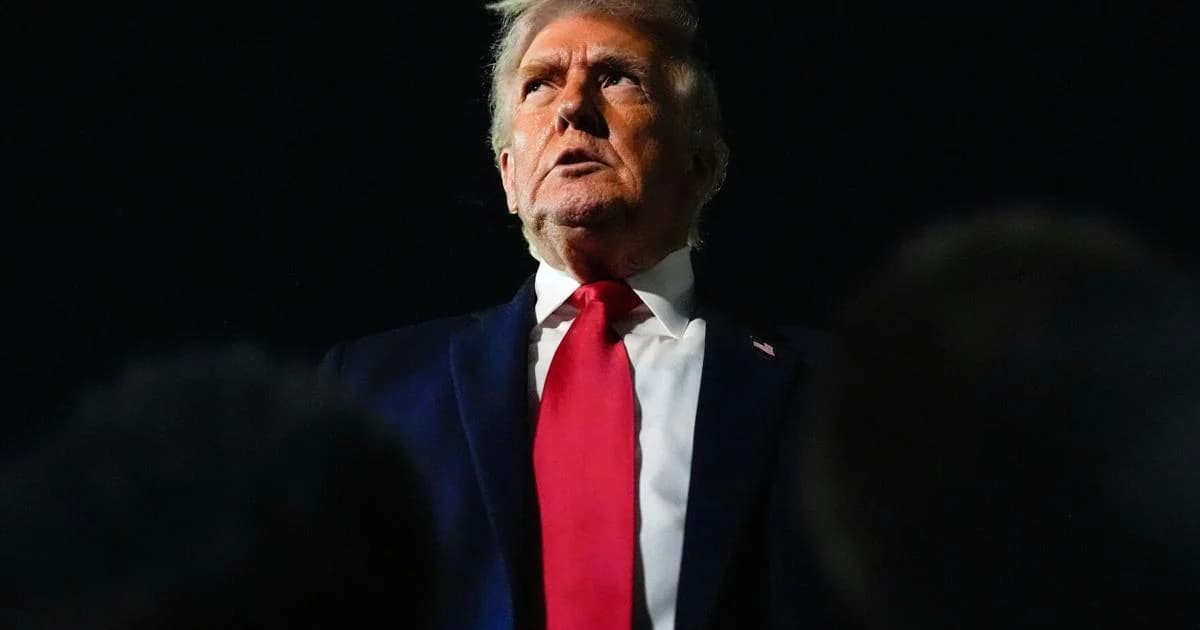
At the World Economic Forum in Davos, an immediate diplomatic test is unfolding: how far should allied governments go to placate an unpredictable U.S. president, Donald Trump. His mix of public taunts, tariff threats and territorial posturing is forcing leaders to choose between concession and coordinated pushback.
Greenland has become a focal point. The issue is not only about the Arctic island's sovereignty, it is also a practical probe of whether economic and security alliances can withstand unilateral pressure from Washington.
A brittle strategy of engagement
European capitals have tried a mix of diplomacy and deterrence. France sent troops to Greenland as a symbolic show of support for European resolve. Paris has also balked at joining a U.S.-led "Board of Peace" seen by some as an attempt to sideline the United Nations, a move that drew a swift, public rebuke from the White House in the form of tariff threats on French wine and champagne.
I do not understand what you are doing on Greenland. Let us try to build great things.
Emmanuel Macron
Macron's public posture has been tested by private pressure. The pattern is familiar: visible European resistance followed by American threats of punitive economic measures. Those threats are intended to remind partners of Washington's leverage, and to encourage a private softening of public stances.
Pressure and countermeasures
European institutions are responding in kind. France and Germany have endorsed the European Union's anti-coercion instrument, a set of trade measures designed to deter and punish economic intimidation. The aim is to create a collective shield against unilateral economic coercion, rather than leaving individual democracies to face tariff threats alone.
That approach requires political will and coordinated action. For countries with deep trade and security ties to the United States, including the United Kingdom, the calculus is complicated. Leaders must weigh immediate costs, such as tariffs or tariff threats, against longer-term risks to the rules-based order.
Historical echoes and the danger of concession
Several commentators at Davos warned against short-term concessions that could invite further demands. American political scientist Francis Fukuyama argued that giving ground on Greenland would not satisfy Trump, but rather encourage additional demands.
What makes any European think that conceding Greenland will mollify Trump? He will simply come back for more later.
Francis Fukuyama
The argument evokes pre‑war lessons about appeasement, with pundits citing the 1938 Munich agreement as a cautionary example. Franklin D. Roosevelt's wartime admonition is often recalled in this context.
No man can tame a tiger into a kitten by stroking it.
Franklin D. Roosevelt
Mixed responses from allies
Responses from allied leaders have varied. British prime minister Keir Starmer described the United Kingdom and the United States as "close allies and close partners," signalling a preference for restrained diplomacy even as London supports Greenland's sovereignty. That measured line drew an immediate rebuke on social media from Mr. Trump, who labelled a separate British decision on the Chagos Islands "an act of great stupidity."
There is no doubt that China and Russia have noticed this act of total weakness. These are international powers who only recognize strength.
Donald Trump
The inconsistency of Trump’s public positions adds to the challenge. He has alternated between threats and apparent endorsements on related issues, undermining predictability and making it harder for partners to find stable grounds for cooperation.
Paths forward
Allies have a limited set of options: accept concessions to avoid immediate economic pain, mount coordinated countermeasures through the EU and other multilateral forums, or pursue a hybrid approach combining firm legal and economic responses with calibrated diplomacy.
- Use collective trade tools, like the EU anti-coercion instrument, to deter unilateral economic threats
- Coordinate diplomatic messaging and legal challenges through international institutions
- Maintain defensive postures in strategic areas, including increased presence in disputed regions
- Preserve channels for private diplomacy while preparing public countermeasures
Each option carries risks. Collective action can blunt coercion but requires unity. Concessions may buy time but could undermine long-term norms governing sovereignty and trade.
Davos has laid bare how much of contemporary diplomacy now revolves around managing relations with a single, volatile power. The choices leaders make in the coming weeks will shape whether alliances adapt to deter coercion, or whether they accept new norms of transactional power politics.
Donald TrumpDavosGreenlandEuropetrade