Davos, once a caricature, is relevant again
This year’s World Economic Forum shed its LinkedIn fair reputation after polarizing interventions from world leaders, notably U.S. President Donald Trump. The result was renewed attention and sharper debate.
Copy link
By Torontoer Staff
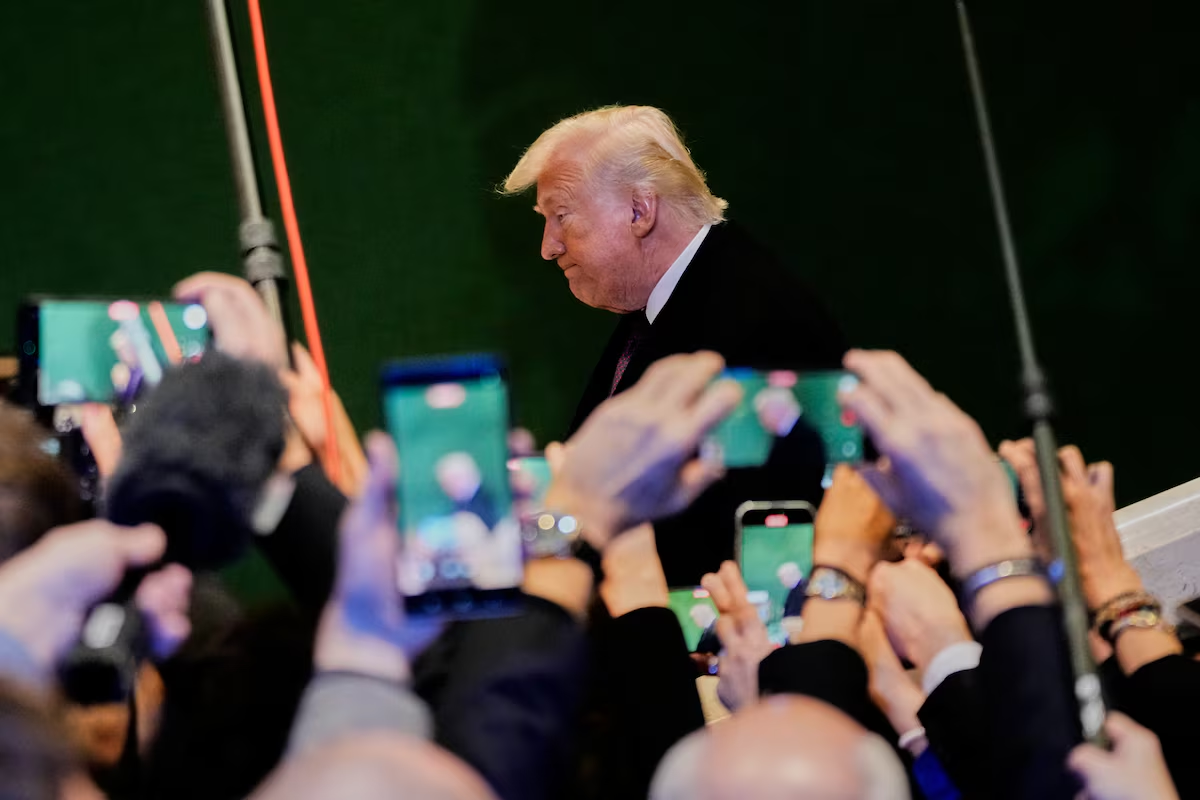
The World Economic Forum in Davos returned to the centre of international attention this year after a string of forceful interventions from world leaders, most notably U.S. President Donald Trump. What had become a predictable cycle of panels and networking turned into a forum for blunt geopolitical signalling and debate.
Trump’s remarks, including repeated references to territorial acquisition and pointed comments about traditional allies, forced more direct responses from other leaders. That friction, rather than polished consensus-building, gave the conference its heft for the first time in years.
Davos as a platform, then a caricature
In recent years Davos had settled into a routine many described as more spectacle than substance. Executives and officials treated the forum as an exposure exercise, prioritising visibility over policy. Programming too often favoured broad themes and feel-good rhetoric. High-profile celebrity appearances reinforced the sense that the event was about image as much as ideas.
Delegates compared the gatherings to a global networking festival, with private lunches and after-hours receptions that often generated more gossip than meaningful outcomes. Coverage from business and mainstream media frequently amplified that impression, presenting the forum as a cultural moment rather than a site of consequential decisions.
A sharper, more confrontational agenda
This year’s tone changed because the subjects addressed were harder and more immediate. Discussions shifted from aspirational manifestos to questions of sovereignty, security and the rules that govern trade and alliances. That pivot came through in exchanges on stage and in bilateral meetings throughout the week.
We must act together, because if we’re not at the table, we’re on the menu.
Mark Carney
Those words from Mark Carney captured the new urgency. The line crystallised concerns among middle-power countries that the established order is being contested, and that collective responses are necessary to protect shared interests.
How Trump refocused attention
President Trump’s presence and statements did more than provoke headlines. By openly discussing territorial questions and revisiting old assumptions about alliances, he forced leaders and markets to re-evaluate risks. Delegates reacted not because of theatricality but because the remarks hinted at concrete policy shifts and potential challenges to long-standing norms.
The immediate result was heavier, more sustained coverage and a sense that the discussions in Davos mattered beyond the week-long event. That attention flowed from both a media appetite for drama and a genuine need among governments and businesses to assess strategic consequences.
Perspectives from regular attendees
People who have attended Davos over many years noticed the difference quickly. Where once the forum felt like a series of well-attended social gatherings layered over a modest conference programme, attendees this year were focused on substance: parsing policy language, testing alliances and seeking practical responses.
That shift did not eliminate the networking and optics that define Davos. Senior executives still pursued visibility. But conversations increasingly moved toward contingency planning and engagement strategies rather than performance and profile.
What this means going forward
- Davos will be judged more on concrete outcomes and less on celebrity or spectacle.
- Middle powers may coordinate more visibly to protect shared economic and security interests.
- Businesses will use the forum to test policy scenarios and adjust global strategies.
- Media coverage is likely to emphasise geopolitical stakes over lifestyle reporting.
Renewed relevance brings responsibility. If Davos is to remain more than a theatrical stage, organisers, political leaders and corporate delegates will need to sustain the shift from optics to outcomes. That means clearer agendas, follow-through on pledges and a willingness to engage in sustained diplomacy outside the resort’s short timeframe.
For now, the forum’s renaissance looks pragmatic rather than celebratory. The presence of a polarising figure highlighted vulnerabilities in the international order and produced clearer debate. Whether that leads to durable policy change remains to be seen, but Davos has at least reclaimed a role as a place where the world’s tensions meet concrete discussion.
DavosWorld Economic ForumDonald TrumpMark Carneyglobal politics