Doug Ford backtracks after praising Brampton firm’s armoured vehicles sale to ICE
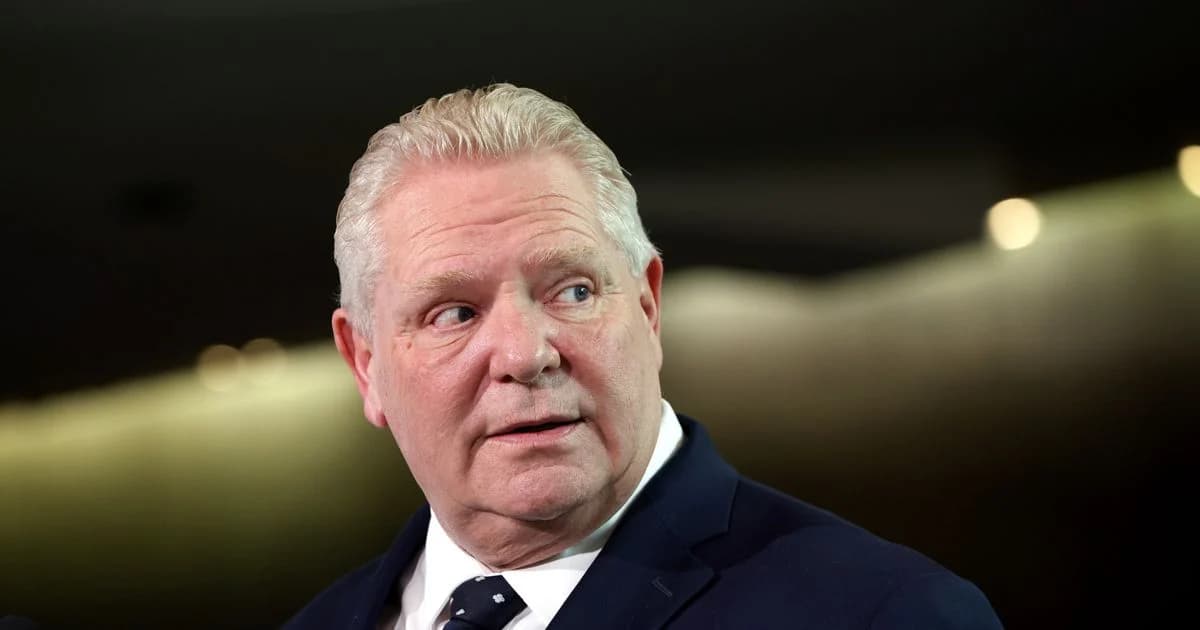
Premier Doug Ford has shifted his response after praising a Brampton defence contractor for selling armoured vehicles to US Immigration and Customs Enforcement.
Copy link
By Torontoer Staff
Premier Doug Ford has softened his response after praising a Brampton defence contractor that landed a late‑2025 contract to supply armoured vehicles to US Immigration and Customs Enforcement. The company, Roshel, reportedly received a roughly $10‑million order for 20 vehicles, a contract first reported by the CBC in December.
The sale has drawn criticism from opposition politicians and activists because ICE has recently carried out high‑profile enforcement operations in which civilians were killed or detained. Those incidents, widely reported in US media, have amplified concern over Canadian companies supplying equipment used by US immigration enforcement.
How Ford’s comments evolved
When the contract was first reported in December, Ford described the news as “fantastic” and said, “I love that,” remarks that drew swift criticism given the context. On Tuesday, after renewed scrutiny and questions from Ontario NDP leader Marit Stiles, Ford sought to walk back his comments.
I had nothing to do with it. I am going to correct this story once and for all. I heard it on the news. I don’t direct companies to go sell military vehicles down south or around the world.
Premier Doug Ford
Ford also criticised social media coverage of the issue, saying, "It is on social media and that. We all know that everything that is on social media is 100 per cent accurate. It is a terrible, terrible thing, that social media."
Why critics have pushed back
Critics say the provincial government should be more attentive to the ethical implications of Ontario businesses exporting equipment used in domestic enforcement abroad. The concern intensified after a series of US immigration operations resulted in deaths and high‑profile detentions, including the fatal shooting of poet and mother Renee Nicole Good, the fatal shooting of intensive‑care nurse Alex Pretti, and the abduction of preschooler Liam Conejo Ramos.
Marit Stiles has called on the provincial government to end contracts that in effect serve ICE, and asked the premier to clarify his stance. She framed the issue as one of accountability and provincial oversight, noting that Ontario companies benefit from local supports while selling equipment used in controversial enforcement actions.
What the government and company say, and what they cannot do
Provincial governments do not typically authorise private companies to export defence or security equipment. Exports are governed by federal rules, including export controls and licensing oversight through Global Affairs Canada and federal legislation. Ford emphasised that the province does not direct companies to sell goods abroad.
Roshel has not issued a public statement in the reporting cited here. The CBC reported the company was contracted to supply 20 armoured vehicles to ICE in a rapid procurement last year. Questions from opposition parties and community groups have focused on transparency, the role of local suppliers, and whether additional scrutiny of defence exports is warranted.
Local reaction and the broader debate
The controversy has prompted community vigils and public statements in Toronto and elsewhere, as activists and residents express concern about how equipment built in Canada may be used by US agencies. Opposition politicians have used the episode to press for clearer guidelines and greater oversight of Ontario businesses involved in defence manufacturing.
- CBC reported Roshel received a roughly $10‑million, 20‑vehicle contract for ICE in late 2025.
- Ford initially called the contract “fantastic” and later said he had nothing to do with it.
- Ontario NDP leader Marit Stiles asked the premier to end provincial contracts that serve ICE and to clarify his position.
- Export and licensing of defence equipment falls under federal jurisdiction, not the province.
The episode highlights the limits of provincial influence over private defence sales, and the political sensitivity when equipment made in Ontario is linked to controversial enforcement actions abroad. Opposition parties and advocacy groups are likely to continue pressing for formal responses, and for clarity on what, if any, role provincial governments should play in guiding ethical business practices in the defence sector.
For readers, the immediate takeaway is straightforward: a Brampton defence firm supplied armoured vehicles to ICE, the premier praised the company before backtracking, and the debate over oversight and accountability is ongoing.
Doug FordRoshelICEBramptonOntario politicsdefence exports