Doug Ford demands Danielle Smith denounce Alberta separatists: 'Either you’re with Canada or you’re not'
Ontario’s premier says Alberta must repudiate separatist organisers after reports they met U.S. officials. The State Department called the talks routine.
Copy link
By Torontoer Staff
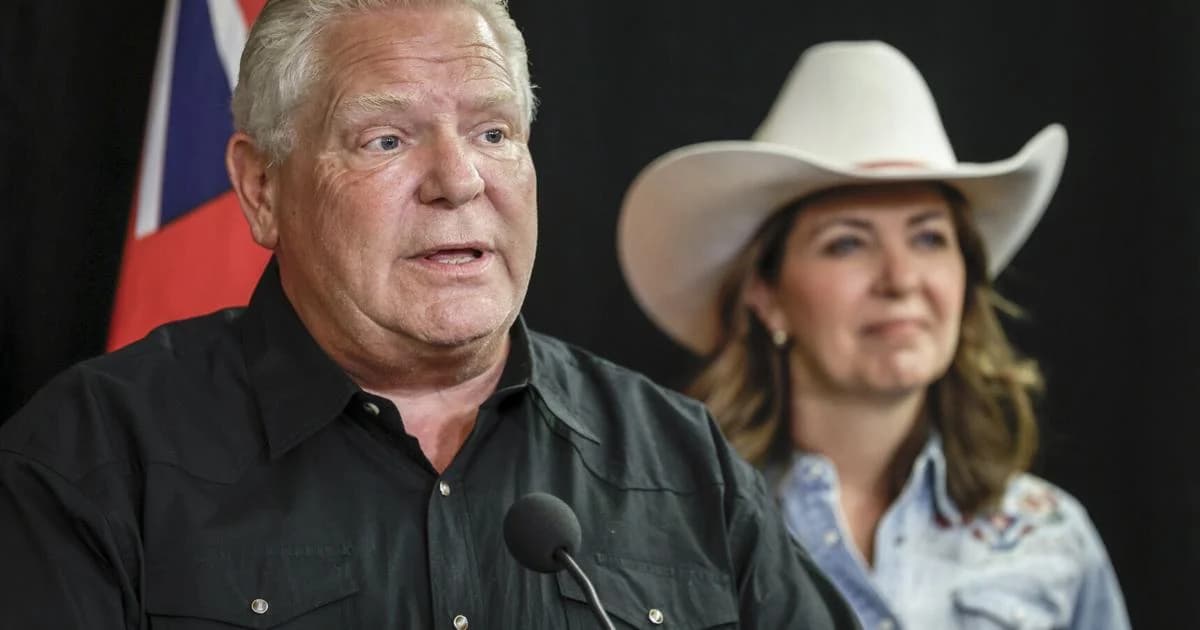
Ontario Premier Doug Ford urged Alberta Premier Danielle Smith to explicitly repudiate separatist organisers after reports that activists met with U.S. officials. The U.S. State Department confirmed the meetings, calling them routine and saying no commitments were made.
The exchanges surfaced as provincial premiers gathered on Parliament Hill with the prime minister to discuss trade, defence and other policy challenges. The meetings added to tensions already fuelled by a trade dispute with the United States and renewed attention to separatist movements in Alberta and Quebec.
What the U.S. and activists said
In an emailed statement the State Department said, “The Department regularly meets with civil society types. As is typical in routine meetings such as these, no commitments were made.” Spokespeople from the U.S. embassy in Ottawa did not immediately respond to further questions.
A prominent figure in the Alberta separatist movement, Jeffrey Rath, who represents the Alberta Prosperity Project, told the Star he attended meetings with “senior” U.S. officials he would not identify. Rath said the officials were “very enthusiastic” about Alberta independence, and cited American security concerns and what he described as growing Chinese influence in Ottawa. He denied any American funding for the movement.
Premiers push back
Ford said the meetings were unacceptable and called on Smith, whose government passed legislation that opens the door to a possible separation referendum, to condemn the talks. “This is an opportunity for Premier Smith to stand up and say is enough is enough. Either you’re with Canada or you’re not with Canada,” Ford said, adding that negotiating behind Canada’s back is unacceptable.
To ask for assistance in breaking up Canada: there’s an old-fashioned word for that, and that word is treason.
David Eby, B.C. premier
British Columbia Premier David Eby delivered the strongest denunciation, calling the meetings tantamount to treason and pledging to raise the issue during discussions with other premiers. Eby characterised the pro-referendum group as a small faction that does not reflect Albertans broadly.
The federal government framed unity as a priority. Speaking before closed-door talks, the prime minister cited Canada’s first prime minister, saying he believed “our nation’s strength lay in its unity.” The government has said it will respond to international coercion by deepening partnerships outside the United States, increasing defence spending by 2030 and fast-tracking major projects to strengthen the economy.
Political context and stakes
The revelations come amid a larger political backdrop. Ford recently said a Parti Québécois victory in Quebec would be a “disaster” for Canada. He also pointed to repeated comments by former U.S. president Donald Trump about wanting to incorporate Canada into the United States, and noted that a high-level Trump administration official had described Alberta as a “natural partner.”
Those comments have heightened sensitivities about foreign involvement in domestic political debates. Provincial leaders said they respect citizens’ rights to free expression and to hold referendums, but most drew a line at seeking assistance from foreign governments to alter the country’s constitutional order.
What separatist organisers say they want
Rath, representing the Alberta Prosperity Project, said the group is gathering signatures to trigger a referendum that could be held as soon as this year. He described their outreach as grassroots and said U.S. officials received them warmly. Rath declined to name the American officials but described them as being “very senior” within the State Department.
Separatist organisers frame their push around provincial autonomy, resource control and concerns about national security. Their claims have drawn swift rebukes from other provincial leaders and amplified calls for clear positions from elected officials in Alberta.
Where things stand
The State Department’s description of the meetings as routine has not quelled political fallout. Premiers at the meeting emphasised national unity and signalled they would push back against any foreign attempts to influence internal constitutional matters. Ford’s call for Smith to denounce the activists underscores how separatism, already a live issue in parts of the country, can quickly become a federal-provincial flashpoint.
As premiers continue closed-door talks on trade and defence, the question of how to address foreign engagement with domestic political movements is likely to remain on the agenda. The premiers urged clear public positions from provincial leaders and said they would take steps they believe necessary to protect Canada’s unity and security.
Doug FordDanielle SmithAlberta separatismU.S.-Canada relationsprovincial politics