Doug Ford urges boycott of Chinese-made EVs after federal trade deal with China
Ontario Premier Doug Ford urged Canadians to avoid Chinese-made electric vehicles after a federal trade agreement will allow up to 50,000 into Canada annually. Industry and unions say the deal threatens jobs.
Copy link
By Torontoer Staff
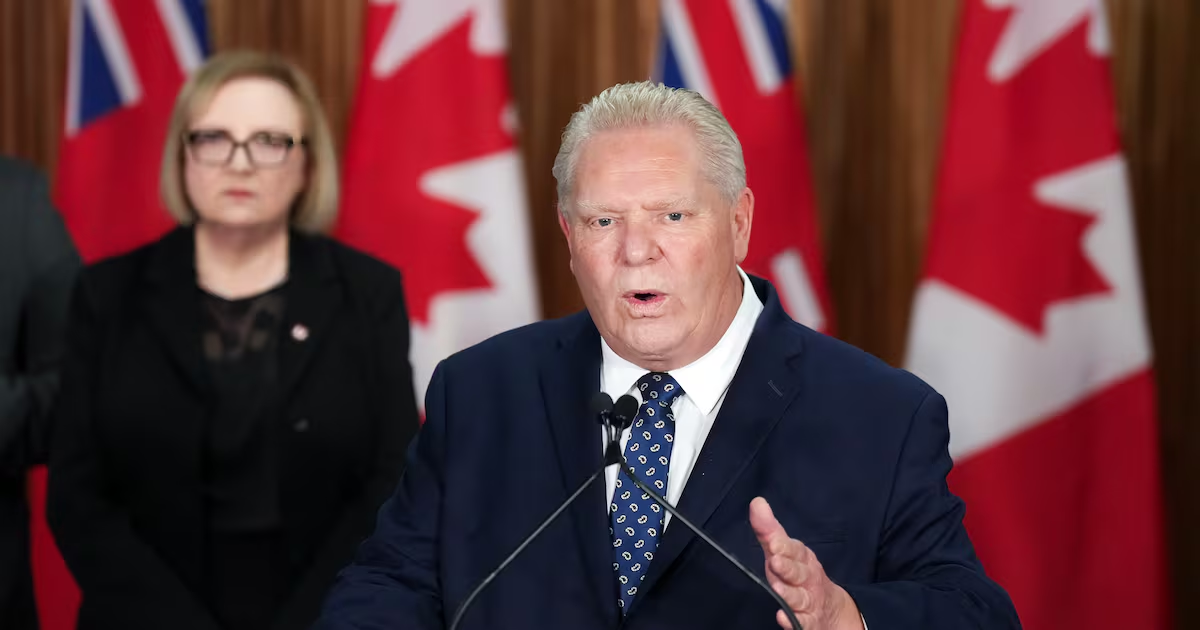
Ontario Premier Doug Ford urged Canadians to boycott Chinese-made electric vehicles on Wednesday, framing the move as a defence of local jobs after a new federal trade agreement with China. Ford spoke at Queen's Park alongside auto industry leaders and union officials, saying the deal risks Ontario's existing manufacturing base.
Prime Minister Mark Carney announced the agreement last week. It would permit nearly 50,000 Chinese-made EVs a year to enter Canada, in exchange for substantially reduced tariffs on Canadian agricultural exports.
What the agreement allows and why it matters
Under the deal, Canada will lift the 100 per cent tariff it has kept in step with the United States since 2024, opening the market to Chinese electric vehicles. Federal officials say the agreement reflects a shifting U.S. approach to North American trade and a need to diversify export destinations for Canadian producers.
Ford said the change threatens Ontario's auto supply chain and called on consumers to support domestic manufacturing. "Boycott the Chinese EV vehicles. Support companies that are building vehicles here," he said at the news conference.
Industry and union leaders push back
Representatives from the Canadian Vehicle Manufacturers' Association, the Automotive Parts Manufacturers' Association and Unifor stood with Ford to outline their concerns. They said the deal could displace production, weaken North American integration and cost jobs in assembly and parts plants.
There is no industry without U.S. access and North American integration. Diversification is not an option for automotive as markets in Europe and Asia are better served by assembly plants in those regions.
Brian Kingston, Canadian Vehicle Manufacturers' Association
We are in the fight of our lives here fending off Trump's tariffs, and that fight just got a little harder. We must collectively come together to stabilize and protect the auto sector we have so we can actually have a future one.
Lana Payne, National President, Unifor
Unifor says nearly 4,000 members are already without work, and that another 1,000 could be affected by a shift elimination at General Motors in Oshawa. Auto parts leaders warned that 50,000 vehicles is equivalent to the output of a full plant shift, and that sourcing parts from abroad would deliver limited local economic benefit.
- Industry asks for federal support to protect current manufacturing
- Calls to scrap federal EV mandates and fees that add to vehicle costs
- Demand for policies that favour local supply chains and Canadian-made content
Political response and next steps
Ford said he plans to meet with Carney and other premiers next week to press for measures to protect Ontario workers. He said the province will listen to federal proposals before deciding on a response, and repeated that assembling vehicles in Canada without a Canadian supply chain would not be enough.
Ford also revived earlier concerns he has voiced about security and supply chain dependencies, calling for Canadian research and development, and the use of domestic steel and aluminium in future production.
Opposition and policy proposals
Ontario Green Leader Mike Schreiner urged the province to expand incentives and infrastructure to boost demand for Ontario-made EVs. He recommended rebates, investment in charging stations across the province and procurement programs for public fleets to support local manufacturing and vehicle uptake.
The debate highlights competing priorities in the transition to electric vehicles, with agricultural exporters and some federal officials seeking market access while provincial leaders and industry groups press for protections for existing manufacturing jobs.
Ford said he will assess the federal plan after meeting with premiers and federal officials, and then announce the province's position. Industry groups said they expect concrete supports if Canadian manufacturing is to remain competitive.
The coming weeks will set the terms for how Ottawa and provincial governments balance trade diversification with domestic industrial policy, and whether incentives and procurement can blunt potential job losses in Ontario's auto sector.
Doug Fordelectric vehiclestradeautomotive industryOntario