Eby calls U.S. outreach by Alberta separatists 'treason' after Financial Times report
B.C. Premier David Eby condemned reported meetings between Alberta separatists and U.S. officials, calling foreign assistance to break up Canada 'treason.' The group reportedly sought a $500-billion credit facility.
Copy link
By Torontoer Staff
British Columbia Premier David Eby said seeking foreign help to advance Alberta independence amounts to "treason," after the Financial Times reported that an Alberta separatist group has met with U.S. officials and may seek a $500-billion credit facility to support a breakaway province if a referendum succeeds.
Eby was careful to defend Canadians' right to political expression and referenda, but he said asking another country to assist in weakening or breaking up Canada crosses a line. His comments came as provincial and federal leaders reacted to the Financial Times and Edmonton Journal accounts.
What the reports say
The Financial Times reported that members of the Alberta Prosperity Project, an advocacy group pushing for an Alberta independence referendum, have met multiple times with U.S. State Department officials. The FT said the group planned a fourth meeting and would ask Washington to provide a $500-billion credit facility to "bankroll the province" if a referendum succeeded.
The Edmonton Journal also reported three meetings between the group and U.S. officials, citing Jeffrey Rath, a lawyer working with the advocacy group. Both the White House and the State Department told the Financial Times that it is routine for U.S. officials to meet civil society groups and that no commitments were made.
Reactions from provincial leaders
Eby used blunt language in Ottawa on Thursday. "There’s an old-fashioned word for that, and that word is 'treason,'" he told reporters, while stressing the distinction between legitimate political debate and seeking foreign assistance to break up Canada.
There’s an old-fashioned word for that, and that word is 'treason.'
David Eby
Ontario Premier Doug Ford also denounced the reports, calling the conduct "unacceptable" and "unethical." He added, "Either you’re with Canada or you’re not with Canada. I’m with Canada, right across the board."
Either you’re with Canada or you’re not with Canada. I’m with Canada, right across the board.
Doug Ford
Legal context
Canadian criminal law distinguishes between treason and high treason. Under the Criminal Code, treason includes using force or violence to overthrow a government or providing military or scientific information to a foreign power that could undermine Canada’s safety or defence. High treason involves offences such as murder or attempted murder of the head of state, or assisting an enemy during wartime.
Where things stand in Alberta
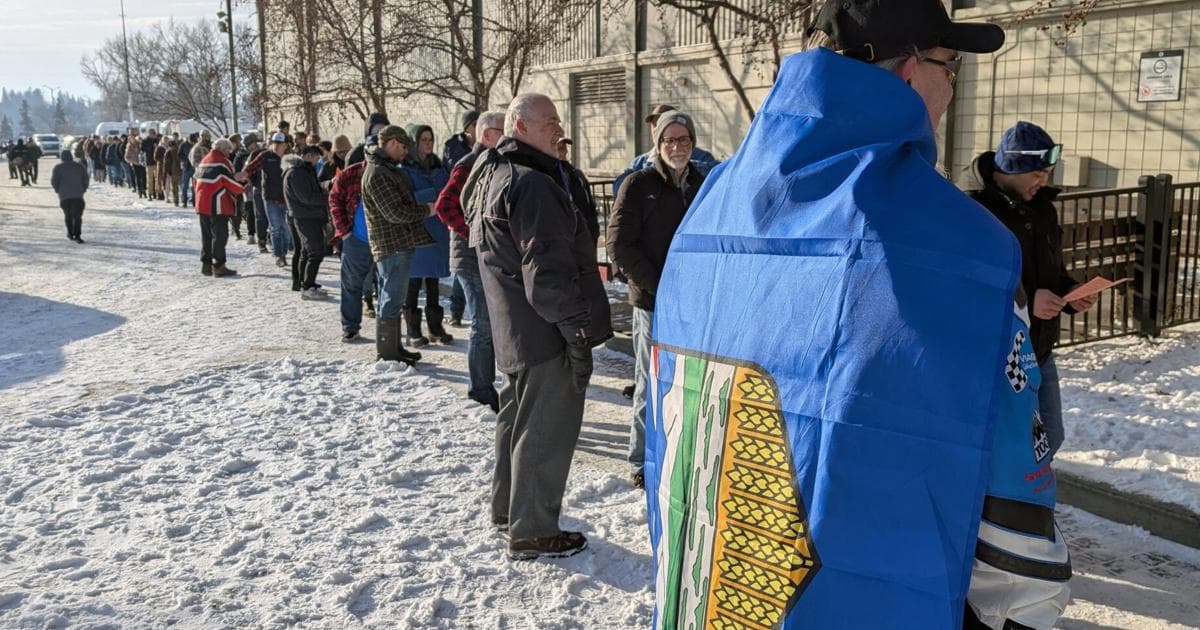
There are no official plans for an independence vote in Alberta. No party in the Alberta legislature currently advocates secession. Provincial law passed last year allows citizen initiatives to trigger province-wide referenda if organizers collect signatures equal to 10 per cent of the population who voted in the previous provincial election. For Alberta, that means 177,732 signatures.
The Alberta Prosperity Project is canvassing for those signatures. Polling remains far from decisive: a recent Ipsos survey found only about three in 10 respondents would support Alberta independence.
U.S. engagement and the claims of organisers
Organisers linked to Alberta's sovereignty movement have previously said they met American officials, though details have been sparse. The Financial Times said the first reported meeting occurred in April 2025. U.S. officials told the FT they routinely meet civil society groups and made no explicit pledges or offers of financial support.
One American commentator quoted by the Financial Times and other outlets framed Alberta as a potential natural partner for the United States because of the province’s resource base and independent streak. Those remarks fuelled concern among Canadian politicians about the optics of foreign engagement on an internal constitutional matter.
Broader political picture
Alberta Premier Danielle Smith has pointed to a recent federal-provincial deal easing energy regulations and opening the possibility of a pipeline to the British Columbia coast as a measure that could reduce separatist sentiment. Meanwhile, separatist sentiment is not limited to Alberta; Quebec continues to have an active sovereigntist movement, with the Parti Québécois polling strongly in recent surveys.
- No party in Alberta’s legislature supports secession.
- Organisers need 177,732 signatures for a citizen-initiative referendum.
- An Ipsos poll shows roughly 30% support for Alberta independence.
- U.S. officials say meetings with civil society groups are routine and no support was pledged.
The Financial Times' reporting prompted swift political comments but did not produce any legal action. The matter highlights tensions between provincial political movements, federal unity, and how foreign engagement is perceived in Canadian public life.
For now, the process remains domestic: signature gathering, public debate and the legal thresholds set by provincial statute. Any move toward a referendum would bring these questions into sharper relief and likely prompt deeper federal and legal scrutiny.
AlbertaDavid EbyseparatismCanada politicsAlberta Prosperity Project