EU chief questions Trump’s trustworthiness after Greenland tariff threat
At Davos, EU leaders condemned President Trump’s plan for 10% tariffs on goods tied to Greenland tensions, and outlined possible retaliatory measures.
Copy link
By Torontoer Staff
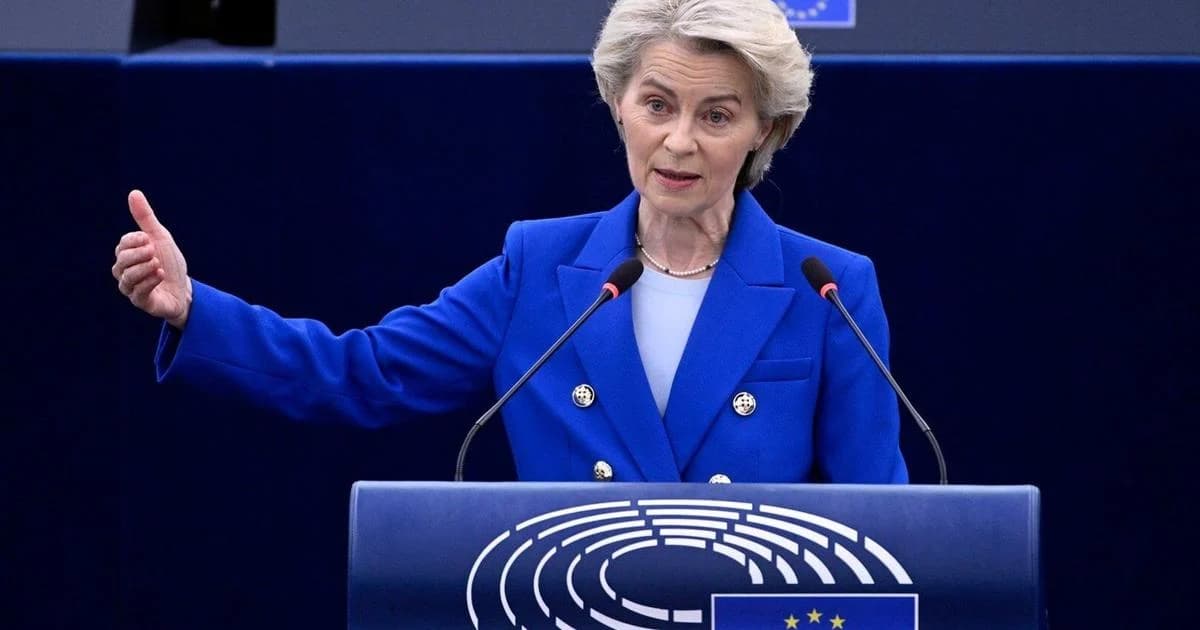
European Commission president Ursula von der Leyen on Tuesday called U.S. President Donald Trump’s planned new tariffs over Greenland “a mistake especially between long-standing allies” and raised questions about his trustworthiness. Her remarks came at the World Economic Forum in Davos as European leaders signalled they would respond firmly and in concert if Washington follows through.
Trump has threatened to impose a 10 percent import tax starting in February on goods from eight European countries that backed Denmark amid his renewed calls for the United States to take over Greenland, a semi-autonomous Danish territory. The threat has prompted a flurry of diplomatic responses and discussions of potential countermeasures in Brussels and across Europe.
Davos reaction and EU stance
Von der Leyen framed the tariff threat as a breach of political and commercial trust. She pointed to a trade agreement reached last July between the EU and the U.S., and said that agreements should be honoured. She warned that escalating tensions would benefit strategic competitors rather than allies.
A deal is a deal. And when friends shake hands, it must mean something. We consider the people of the United States not just our allies, but our friends.
Ursula von der Leyen
Von der Leyen added that the EU’s response would be "unflinching, united and proportional," signalling coordinated action if the U.S. proceeds.
Tools on the table
European leaders outlined three main instruments they could use to pressure Washington: new tariffs on U.S. goods, suspension of parts of the U.S.-EU trade agreement, and the bloc’s Anti-Coercion Instrument, an enforcement mechanism sometimes referred to informally as the "trade bazooka."
- Impose retaliatory tariffs on selected U.S. imports
- Suspend or scale back aspects of the U.S.-EU trade agreement
- Activate the Anti-Coercion Instrument to sanction individuals or entities exerting undue pressure
French president Emmanuel Macron urged readiness to use the anti-coercion tool, calling it a powerful instrument appropriate to a tough geopolitical environment.
The anti-coercion mechanism is a powerful instrument and we should not hesitate to deploy it in today’s tough environment.
Emmanuel Macron
U.S. response and messaging
U.S. Treasury Secretary Scott Bessent sought to calm transatlantic concerns at Davos, saying relations with Europe remain strong and urging partners to give tensions time to play out. The White House defended the move on security grounds, citing concerns about potential Chinese or Russian activity in the Arctic.
I think our relations have never been closer,
Scott Bessent
President Trump also used social media to publicise discussions with other leaders and shared a message from Macron proposing a gathering of G7 members in Paris. His posts included doctored images showing Greenland under U.S. control, a move that drew criticism and highlighted the unusual tone of the dispute.
Regional fallout and security implications
Denmark and Greenland have pushed back. Danish prime minister Mette Frederiksen warned that "the worst may still be ahead of us," stressing Denmark sought cooperation rather than conflict. Thousands of Greenlanders protested recent suggestions that Greenland could be transferred or its sovereignty altered, underscoring local opposition.
Northern European NATO members discussed bolstering European security in the High North, with Swedish officials saying reconnaissance visits are under way to assess infrastructure and exercise needs. Those talks reflect broader concern about Arctic stability as interest from global powers grows.
Russia denied any intention to threaten Greenland and described the situation in historical terms, while Britain defended its own recent foreign policy decisions in the face of U.S. criticism.
Voices from outside Europe also weighed in. California governor Gavin Newsom criticised Europe’s response as weak and called on leaders to stand up to the United States, comments that fed into transatlantic debate about how best to respond.
What comes next
Diplomatic engagements in the coming days and weeks will determine whether the dispute remains a series of public threats or escalates into concrete measures. EU leaders have signalled they will act together, and Washington’s next moves will shape whether relations cool or recover.
For now, the episode has raised questions about predictability in U.S. policy and about how allies manage disputes that touch on security and sovereignty. European officials described a window for negotiation, but they also prepared options to defend trade and political commitments.
The situation remains fluid, with diplomatic meetings and policy reviews expected after the Davos forum. Observers say the coming weeks could clarify whether the rhetoric will give way to diplomacy or to retaliatory measures that reshape transatlantic trade relations.
TrumpGreenlandEuropean UniontariffsDavosUrsula von der Leyen