Europe calls Trump tariff threat over Greenland a risk to transatlantic ties
Eight European countries condemned President Trump’s threat of a 10% tariff after they deployed troops to Greenland for training, saying the move could trigger a dangerous downward spiral.
Copy link
By Torontoer Staff
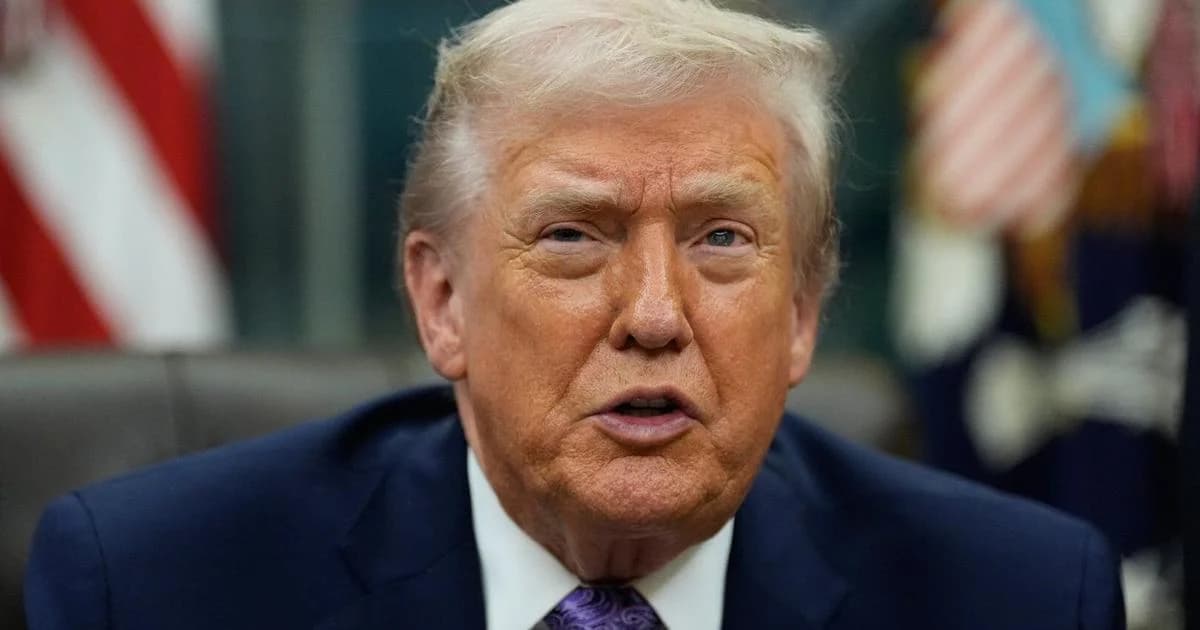
Eight European governments on Sunday issued a joint rebuke of U.S. President Donald Trump after he threatened a 10 percent tariff on countries that opposed American control of Greenland. Denmark, Norway, Sweden, France, Germany, the United Kingdom, the Netherlands and Finland said the tariff threat undermines transatlantic relations and risks a dangerous downward spiral.
The statement followed Mr. Trump’s announcement the previous day and came as some of the same countries were sending small numbers of troops to Greenland for a Danish military training exercise called Arctic Endurance, which officials insisted posed no threat to anyone.
What prompted the row
The spat began after President Trump said he might impose a 10 percent tariff on eight European countries that he accused of opposing U.S. interests in Greenland. Trump has signalled he wants greater U.S. influence over the semiautonomous territory, which is part of the Kingdom of Denmark and is strategically important in the Arctic.
European officials said the targeted troop deployments were routine training and defensive in nature. Danish Foreign Minister Lars Løkke Rasmussen said a dialogue with the United States had opened last week and that Copenhagen would continue to seek talks.
Tariff threats undermine transatlantic relations and risk a dangerous downward spiral.
joint statement from Denmark, Norway, Sweden, France, Germany, the United Kingdom, the Netherlands and Finland
European leaders push back
Leaders and foreign ministers responded swiftly. Norway’s foreign minister, Espen Barth Eide, said the countries would not be pressured and that tariff threats between close allies were unacceptable. EU Council President Antonio Costa said the bloc’s leaders agree tariffs would undermine relations with the United States and are incompatible with existing trade arrangements.
EU foreign policy chief Kaja Kallas warned that divisions between Europe and the United States would benefit China and Russia. She added that any security concerns about Greenland could be addressed within NATO structures.
We stand in full solidarity with the Kingdom of Denmark and the people of Greenland, building on the process begun last week, we stand ready to engage in a dialogue based on the principles of sovereignty and territorial integrity that we stand firmly behind.
joint statement
Diplomatic and legal questions
It was unclear how the White House could legally implement tariffs against the EU, since six of the targeted countries are part of the EU single market. The U.S. has emergency economic powers that a president could cite, but those powers are currently the subject of a U.S. Supreme Court challenge.
Analysts said the move blurred lines between trade policy and territorial disputes. Rasmus Søndergaard, a researcher at the Danish Institute for International Studies, called the announcement unprecedented because tariffs typically arise from trade disputes, not disagreements among allies over territory.
Political fallout at home and abroad
The tariff threat attracted criticism from across the political spectrum. U.K. Prime Minister Keir Starmer told Mr. Trump that applying tariffs on allies over collective security decisions was wrong. Dutch Prime Minister Mark Rutte said he had spoken with Trump and would continue to engage with him in person at upcoming events.
Former U.S. officials and lawmakers also pushed back. Senator Mark Kelly warned the policy would make Americans pay more, and former vice-president Mike Pence said he supported U.S. interest in Greenland but questioned the constitutionality and wisdom of unilateral tariff and military threats.
Even some of Mr. Trump’s European political allies reacted negatively. Italian Prime Minister Giorgia Meloni called the tariffs a mistake and said the troop deployments aimed to provide security against unspecified actors, not to threaten the United States.
How NATO fits in
Officials emphasised NATO as the forum for addressing security questions in the North Atlantic. Several European statements noted that joint exercises in Greenland were compatible with collective defence arrangements and posed no threat to any nation.
- Arctic Endurance is a Danish-led exercise involving small deployments from allied countries.
- European leaders said the deployments were defensive and did not target the U.S.
- EU leaders have signalled readiness to defend against coercion, including economic measures.
What comes next
EU officials plan to meet this week at a leaders’ summit to discuss the issue further. Meanwhile, diplomatic contacts are continuing between Washington and European capitals. The dispute raises broader questions about how allies manage strategic interests in the Arctic while maintaining trade and security cooperation.
For now, the incident has prompted unusually direct language from longtime U.S. partners and set up a diplomatic test of whether economic pressure can be used to influence territorial discussions among allies.
The coming days will show whether the dispute deescalates through talks, or whether Europe moves to countermeasure options through the EU, including potential reciprocal tariffs if the United States pursues economic penalties.
TrumpGreenlandEUDenmarktariffsNATOtransatlantic