Federal compensation program logs 22,251 firearms in first week
Public Safety Canada reports 22,251 firearms declared in the first week of the federal program. Owners must declare interest by end of March; disposal deadline is Oct. 30.
Copy link
By Torontoer Staff
Public Safety Canada says gun owners reported 22,251 firearms to the federal government in the first week of a compensation program for banned firearms. The program offers compensation to owners who turn in or permanently deactivate firearms Ottawa has outlawed since 2020.
Officials say the declarations mark the first public tally of participation since the program opened. Owners of prohibited firearms have a series of deadlines to meet before the government’s amnesty period ends in October.
Program snapshot
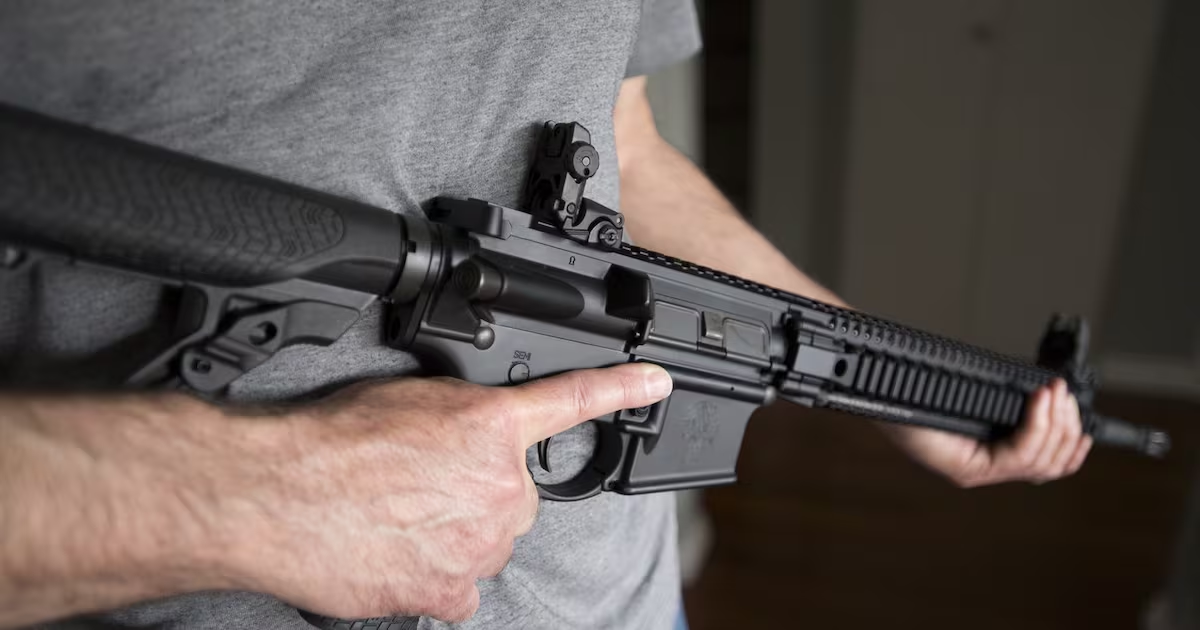
The compensation program covers firearms that were added to Canada’s prohibited list starting in May 2020, about 2,500 types in total. The federal government has characterised many of the newly prohibited models, including the AR-15, as weapons that belong on a battlefield rather than in civilian hands.
Gun owners reported 22,251 firearms in the first week of the program.
Public Safety Canada
Funding and expected take-up
Almost $250 million has been set aside to compensate participants. Federal officials estimate that the funding will cover compensation for about 136,000 firearms. The initial week’s declarations represent roughly 16 percent of that anticipated total.
The government has framed the financial envelope as sufficient to meet expected demand, but actual costs will depend on how many owners choose to surrender firearms, opt for permanent deactivation, and on the mix of models submitted.
Key deadlines and options
Owners of firearms added to the prohibited list must declare their interest in the compensation program by the end of March. After declaring, participants can either turn their firearms in to authorities or permanently deactivate them. The amnesty period requires that prohibited firearms be disposed of or deactivated by Oct. 30.
Public Safety Canada has said the program aims to provide a structured path for compliance. Details on how declarations are processed, how compensation will be calculated, and the logistics of surrender or deactivation are available through federal channels.
What gun owners should know
- Declare interest in the compensation program by the end of March to participate.
- Decide whether to turn in the firearm or permanently deactivate it ahead of the Oct. 30 amnesty deadline.
- Follow federal guidance on documentation and steps required to complete a surrender or deactivation.
- Expect timelines for compensation to follow completion of administrative checks and program processing.
Owners seeking clarity should consult official Public Safety Canada resources or contact designated program channels. The government has indicated it will provide operational details to ensure compliance and to process compensation claims.
Implications and next steps
The early participation numbers suggest considerable engagement from owners of prohibited firearms, but the program’s full scale will only be clear as declarations continue through March. The government’s approach combines financial incentives with an amnesty window designed to reduce the prevalence of newly prohibited models in civilian hands.
Lawmakers, municipal officials, and community groups will be watching how the program unfolds, including whether funding proves adequate and whether administrative processes are efficient. The outcomes will influence both public safety discussions and future policy decisions.
This report is based on figures released by Public Safety Canada and reporting by The Canadian Press.
gunspublic safetyfederal governmentpolicycompensation program