Ford backs federal auto strategy, says Ontario will take part after meeting with Joly
Premier Doug Ford said Ontario will be part of the federal auto strategy after meeting Industry Minister Mélanie Joly, who announced an Ottawa–Ontario auto task force.
Copy link
By Torontoer Staff
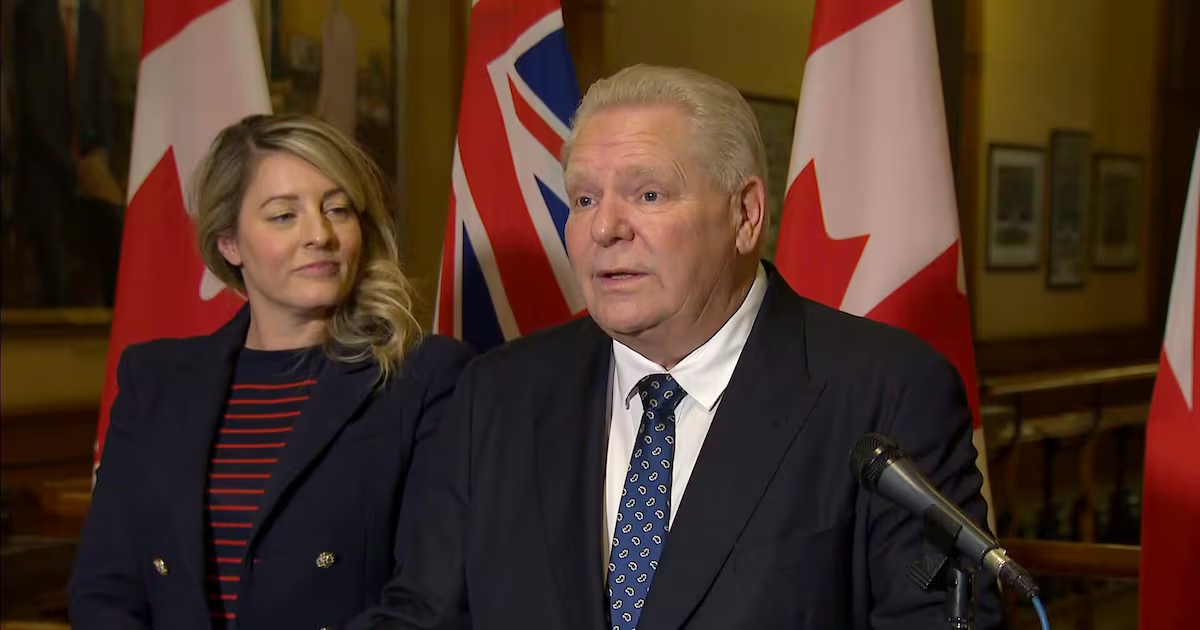
Ontario Premier Doug Ford said Monday that the province will be part of the federal government’s auto strategy after a meeting with Industry Minister Mélanie Joly at Queen’s Park. Ford praised the plan as "great" while signalling conditions for any foreign-built vehicles entering Canada.
Joly announced the creation of an "auto task force" to coordinate policy and investment between Ottawa and Ontario, and said the federal government will aim to protect manufacturing jobs as trade pressures reshape the sector.
Ford sets conditions: jobs, parts and technology must stay in Canada
Ford said he supports the strategy so long as it protects existing Canadian auto workers and encourages production in the province. "If companies are going to come in, no matter if it’s from China or over in Europe or over in Asia there, we have one request; build the vehicles here, protect the auto sector," he said. "Make sure you get your parts here. Make sure we get the technology here. Make sure you follow the guidelines."
His remarks amount to a softened stance after he publicly criticised a recent federal trade deal that would allow a significant number of Chinese-made electric vehicles into Canada. Ford has repeatedly said he wants to avoid outcomes that cost Canadian manufacturing jobs.
Federal plan: an auto task force and targeted coordination
Joly described the task force as a mechanism to identify strategic investments and ensure coordination between Ottawa and Ontario. She framed the effort around protecting the workforce and making trade rules work for workers.
The idea of this Auto Task Force will be about looking at future strategic investments and making sure also that we protect our workforce, and particularly our unionized workforce, and also making sure that trade works for workers and that they don’t feel that it’s going against them.
Mélanie Joly
Joly also pointed to external pressures on the sector, citing U.S. tariffs and other international developments as factors that increase the need for domestic coordination.
Background: the China deal and earlier tensions
Last week Prime Minister Mark Carney announced a trade agreement with China that would allow up to 49,000 Chinese-made electric vehicles into Canada each year in exchange for eased tariffs on canola and other Canadian exports. The announcement drew sharp criticism from Ford, who said the deal risked Canadian jobs and that he had not been consulted.
At a separate news conference with industry representatives Ford questioned whether Chinese manufacturers would ever build those vehicles in Ontario. His position prompted a brief public rift with the federal government ahead of Monday’s meeting.
A thaw in relations, and next steps
Relations between Ford and the federal government appeared to ease before the Queen’s Park meeting. Ford and Carney met informally in Etobicoke and were photographed sharing pizza, an encounter Ford said underlined that they disagree at times but agree on most issues.
We have disagreements from time to time, but agree on 99 per cent of matters.
Doug Ford
Joly said the specific conditions for allowing Chinese-made electric vehicles into Canada will be announced in the coming weeks, and that the auto task force will play a role in shaping those conditions and future investments.
- Federal government to create an auto task force to coordinate Ottawa and Ontario.
- Ford supports federal strategy so long as vehicles, parts and technology are produced in Canada.
- The China trade deal would permit 49,000 Chinese-made EVs per year in exchange for eased tariffs.
- Details and conditions for allowing imported EVs will be released in the coming weeks.
The coming weeks will be key for unions, manufacturers and provincial officials who want assurances that investment and jobs will remain in Canada as trade policy and global supply chains shift. Both levels of government said Monday they intend to work together on those priorities.
Doug FordMélanie Jolyauto industryelectric vehiclestradeOntario