Ford says he got only hours' notice on federal China EV deal, warns of harm to Ontario auto workers
Ontario’s premier says he learned of Ottawa’s agreement to allow about 50,000 Chinese EVs only hours before it was announced and warns it risks jobs and competitiveness in the province.
Copy link
By Torontoer Staff
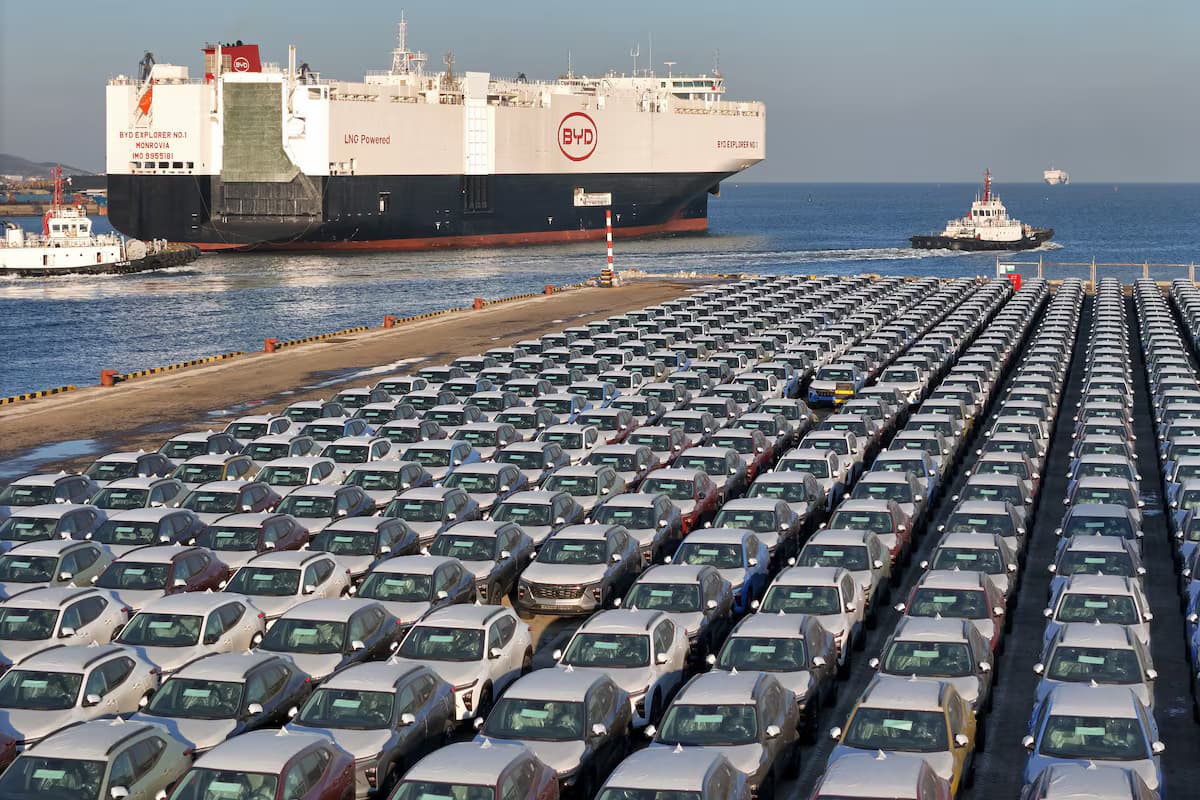
Ontario Premier Doug Ford says he and the province’s auto sector had only a few hours' notice before the federal government announced a deal to allow nearly 50,000 Chinese-made electric vehicles into Canada at a reduced tariff rate. Ford said he has not spoken directly with the Prime Minister about his concerns and continued to warn the move will hurt Ontario’s auto workers over the long term.
The federal deal pairs preferential access for Chinese EVs with significant tariff concessions from Beijing on canola seed and promises to drop levies on other Canadian products. While Western and Atlantic provinces have signalled benefits for agriculture and seafood, Ford has framed the agreement as a threat to Ontario’s manufacturing base.
What Ottawa announced
The federal government announced that it will allow roughly 50,000 Chinese-made electric vehicles to enter Canada at a low tariff rate. In return, China agreed to major reductions in duties on canola seed and to remove tariffs on several other Canadian exports. Officials have said the move is part of a broader effort to diversify markets and attract investment.
A senior Canadian official indicated the government plans to reserve preferential access in the domestic market for foreign automakers that build vehicles under a new policy due out in February. The official also said Washington received advance notice of Canada’s Jan. 16 decision to lower tariffs on Chinese EVs that had previously been aligned with U.S. measures.
Ford’s reaction and concerns
At a Rural Ontario Municipal Association conference, Ford said he and auto companies were briefed only hours before the federal announcement and called the lack of consultation unacceptable. "So much for the partnership," he told reporters, adding he had spoken to senior federal ministers and officials but not to the Prime Minister personally.
"We get nothing but potential job losses in our factories, right across the board,"
Doug Ford
Ford said Chinese EVs are substantially cheaper than Canadian-made models and warned that price advantages and lower labour costs abroad will put Ontario plants at risk. He highlighted that the 50,000 vehicles make up about one third of EV sales in Canada, and argued that the short-term import volume could have outsized effects in a market that is still small overall.
Federal response and provincial conversations
The Prime Minister’s Office directed questions about Ford’s remarks to Intergovernmental Affairs Minister Dominic LeBlanc’s office. Gabriel Brunet, a spokesperson for Mr. LeBlanc, framed the federal approach around economic diversification, saying the government is working with provinces and territories to accelerate major projects and attract investment that will support workers and create high-paying careers.
"That’s why we are working in partnership with provinces and territories, including with Ontario, to accelerate the construction of major projects and attract massive investment that will grow our economy, support workers and their families, and create high-paying careers,"
Gabriel Brunet, spokesperson for Dominic LeBlanc
Ford said he has raised his opposition repeatedly and reiterated his call for Ottawa to permanently scrap the federal EV mandate, a policy that would require 20 per cent of new vehicle sales to be zero-emission. The mandate has been paused for the current year, but the federal government has not cancelled it.
Implications for Ontario’s auto sector
Ontario employs more than 500,000 people in the auto sector directly and indirectly. Ford argued that foreign automakers must reach large production volumes in Canada to break even, and said he does not expect Chinese manufacturers to produce at that scale in Ontario anytime soon. He also questioned whether the tariff concessions will translate into meaningful, long-term investment in Canadian manufacturing.
Industry leaders and provincial officials now face the task of balancing near-term export wins for agriculture with the potential costs to domestic manufacturing. The federal government has signalled it will use policy levers to favour companies that invest in local production, but details of those measures remain to be seen when the new auto strategy is released.
- About 50,000 Chinese-made EVs will be allowed into Canada at a reduced tariff rate.
- The move accompanies significant tariff reductions from China on canola seed and other products.
- Ford says Ontario’s auto workers and manufacturers face increased risk, citing price and labour-cost gaps.
- The federal government plans a policy to favour automakers that build vehicles domestically, expected in February.
The public split between the provincial leader and the federal government marks a notable shift in tone after a period of relatively warm relations. Ford said the row centres on communication and partnership, and he sought to make Ontario’s position clear as Ottawa prepares to publish its auto policy guidance.
For now, the debate will centre on whether Ottawa’s trade-offs produce broader economic gains that offset risks to manufacturing, and on whether promised policy measures will be enough to keep significant auto production and jobs in Ontario.
Doug Fordelectric vehiclesOntario auto sectorChina tradetariffs