Former Canadian Olympic snowboarder Ryan Wedding arrested in Mexico, to face U.S. drug and murder charges
Ryan Wedding, a former Olympic snowboarder, was arrested in Mexico and brought to the U.S. to face drug trafficking and murder charges linked to a transnational network tied to the Sinaloa Cartel.
Copy link
By Torontoer Staff
Ryan Wedding, a Canadian who competed in snowboarding at the 2002 Winter Olympics, was arrested in Mexico City and transferred to the United States to face federal charges, U.S. officials said. Wedding, 44, is accused of running a transnational cocaine trafficking network and of ordering multiple murders tied to his alleged organisation.
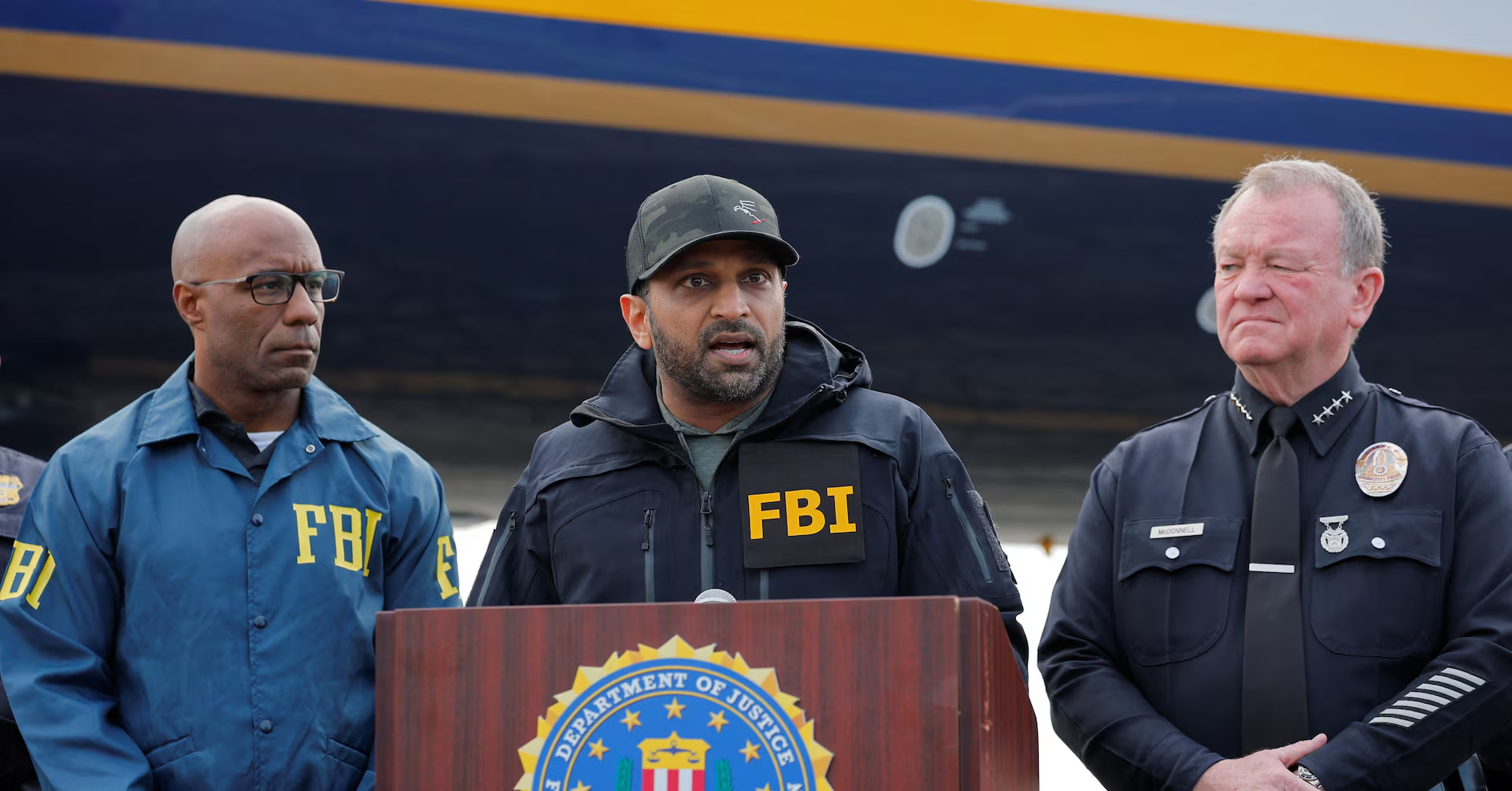
The arrest, announced at a press briefing near Los Angeles, follows a years-long international investigation that placed Wedding on the FBI's Ten Most Wanted list. U.S. authorities say the network trafficked hundreds of kilograms of cocaine from Colombia through Mexico into the United States and Canada, and that the operation generated more than $1 billion in annual proceeds.
Charges and allegations
The U.S. Department of Justice has charged Wedding with overseeing a criminal enterprise and multiple drug trafficking offences. Officials also allege he ordered several drug-related killings, including the murder of a U.S. federal witness in Colombia in January 2025, as well as multiple homicides in Canada in 2023 and 2024 related to stolen shipments and drug debts.
"This individual and his organization and the Sinaloa Cartel poured narcotics into the streets of North America, and killed too many of our youth and corrupted too many of our citizens. That ends today."
FBI Director Kash Patel
Arrest and cooperation with Mexican authorities
U.S. officials said the FBI worked with Mexican authorities to apprehend Wedding, but did not disclose operational details. Mexico's security ministry said in a statement that a Canadian citizen voluntarily surrendered at the U.S. embassy in Mexico City on Thursday. U.S. officials later confirmed he was brought to Los Angeles for processing.
"A Canadian citizen voluntarily surrendered at the U.S. embassy in Mexico,"
Mexico's security ministry
Scope of the alleged organisation and investigation
The Justice Department and the FBI say Wedding's organisation worked with Mexico's Sinaloa Cartel and moved large shipments of cocaine from Colombia through Mexican territory into North America. U.S. officials have estimated the group generated more than $1 billion a year in illegal drug proceeds. The U.S. government had offered a $15 million reward for information leading to Wedding's arrest or conviction.
As part of the investigation, law enforcement agencies have arrested 36 people connected to the alleged organisation and seized drugs, cash, weapons, vehicles, artwork and jewellery valued at millions of dollars, authorities said. The FBI named additional suspects still being sought and offered a $2 million reward for information leading to further arrests.
"We are still seeking multiple individuals wanted for their roles in this organization,"
Akil Davis, assistant director of the FBI’s Los Angeles field office
Legal process and next steps
Wedding is expected to remain in custody in Los Angeles and make an initial appearance in U.S. District Court. The charges include directing killings related to drug shipments and debts, and federal prosecutors will outline the case against him at upcoming hearings. Canadian authorities have been notified and investigators in both countries are coordinating on evidence and potential extradition matters concerning parallel or related charges in Canada.
At this stage, U.S. officials have not said whether the reward will be paid, and details about how investigators identified and tracked key members of the organisation remain under seal as the case progresses.
From athlete to alleged trafficker
Wedding represented Canada in snowboarding at the 2002 Winter Olympics in Salt Lake City. The transition from athlete to a figure accused of leading a major drug trafficking operation has drawn attention because of his sporting past and the scale of the alleged criminal enterprise. Defence counsel, if entered, is expected to challenge aspects of the prosecution's evidence as the legal process moves forward.
Authorities say investigations into transnational drug trafficking networks remain a priority for law enforcement in the region, with coordinated operations between Canadian, U.S. and Mexican agencies producing arrests and seizures in recent years.
The case will proceed through the U.S. federal court system, where prosecutors must prove the charges beyond a reasonable doubt. Wedding remains presumed innocent until proven guilty.
Ryan WeddingFBISinaloa Carteldrug traffickingCanada