Governments cautious after Trump invites allies to new 'Board of Peace' for Gaza, diplomats warn it could weaken UN
Foreign capitals reacted cautiously to President Trump’s invitation to join a lifetime-chaired 'Board of Peace' to oversee Gaza, with diplomats warning it could undermine the UN.
Copy link
By Torontoer Staff
Governments responded cautiously after U.S. President Donald Trump invited about 60 countries to join a new "Board of Peace" that would begin by overseeing Gaza and could expand to other conflicts, diplomats said. Only Hungary publicly accepted, and several officials warned the plan could undercut the United Nations.
The invitations began arriving in European capitals on Saturday. A letter and draft charter seen by Reuters describe a board chaired for life by Trump, with initial authority limited to Gaza but an apparent aim to broaden its remit. Diplomats and rights advocates raised questions about legal authority, political impartiality and the absence of Palestinian representation.
How the proposed board would work
The proposal, circulated by the White House, says the board would start by addressing the Gaza conflict and then be expanded to other disputes. Member states would serve three-year terms unless they paid $1 billion each to fund the board’s activities, in which case they would qualify for permanent membership, the letter says.
The White House framed the fee as a way to reward countries that show "deep commitment to peace, security, and prosperity," posting the line on X. The document also states there is a perceived need for a "more nimble and effective international peace-building body," language that diplomats said appeared to challenge the U.N. system.
Who has been invited and who is already named
The invitations reportedly went to the leaders of France, Germany, Italy, Hungary, Australia, Canada, the European Commission and several Middle East powers. Hungary was the only government to give an unequivocal public acceptance. Italian Prime Minister Giorgia Meloni said her country was "ready to do our part," while Canadian Prime Minister Mark Carney said he had agreed in principle, with details still being worked out.
- White House-named board members include U.S. Secretary of State Marco Rubio, special envoy Steve Witkoff, former British prime minister Tony Blair and Jared Kushner.
- A separate 11-member Gaza Executive Board was also announced, with names such as Turkish Foreign Minister Hakan Fidan, U.N. Middle East peace co-ordinator Sigrid Kaag, and officials from Qatar and the United Arab Emirates.
- The White House has not detailed responsibilities for each member, and no Palestinians were listed among the initial names.
Diplomatic and legal concerns
Several European diplomats who spoke on condition of anonymity said the charter included with the invitation could weaken the United Nations by creating a parallel institution. Some described the proposal as a "Trump United Nations" that ignores the fundamentals of the U.N. charter.
It’s a 'Trump United Nations' that ignores the fundamentals of the U.N. charter.
European diplomat
Annalena Baerbock, president of the United Nations General Assembly, warned of the risks to the multilateral system and said the United Nations remains the only institution with the legal and moral mandate to convene all nations. She added that it is up to individual states to decide how to respond.
The United Nations was the only institution with the moral and legal ability to bring together every nation, big or small. And if we question that, we fall back into very, very dark times.
Annalena Baerbock, president of the United Nations General Assembly
Human rights experts and advocates criticised the concept of an international body supervising the governance of Gaza, saying oversight without local representation resembles a colonial model. Tony Blair’s inclusion drew particular criticism because of his association with the Iraq war and the region’s colonial history.
What this could mean for Gaza
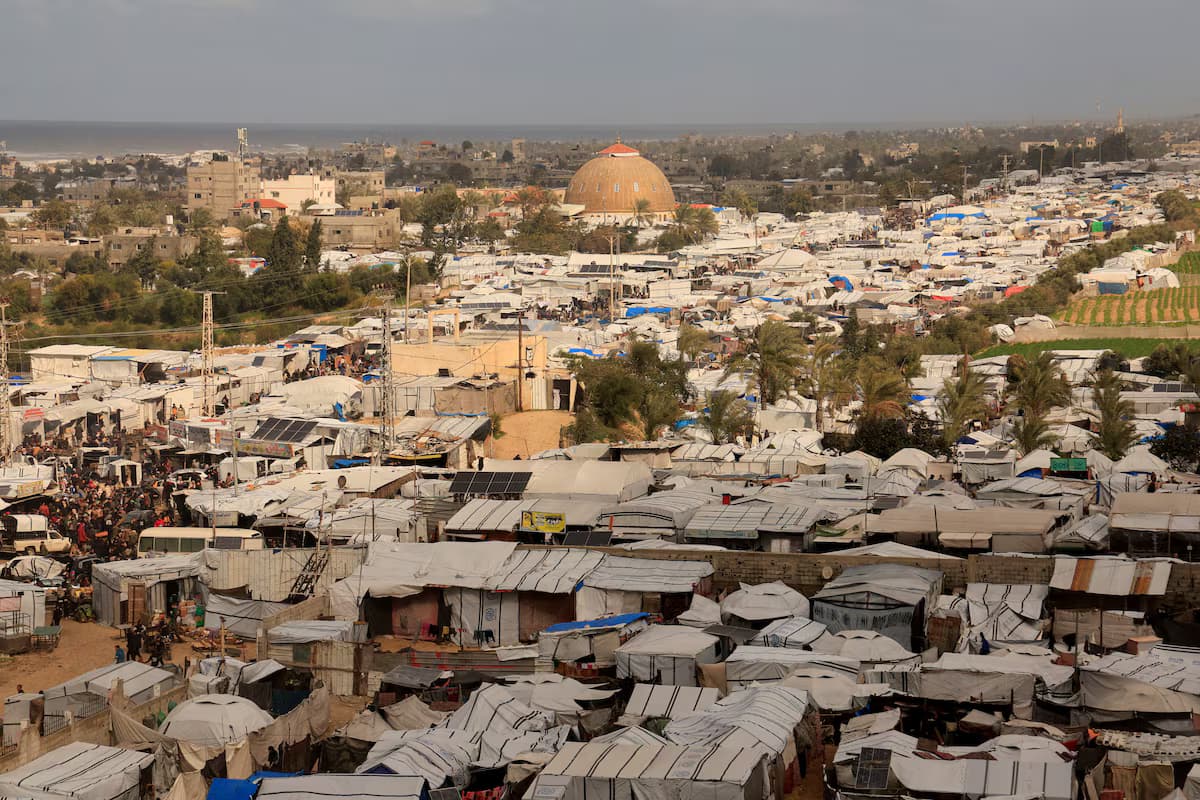
The proposal would transfer temporary governance of Gaza to a technocratic Palestinian administration overseen by the international board, under a fragile ceasefire that has been authorised by the U.N. Security Council through 2027. The White House said Israel and Hamas had agreed to the plan, and described the arrangement as an effort to create pragmatic, common-sense solutions.
Israeli officials and some regional actors expressed reservations. Israel’s prime minister’s office said the composition of the executive board had not been coordinated with Israel and that some inclusions contradicted its policy, a statement that appeared to reference Turkey’s role.
This board will be one of a kind, there has never been anything like it!
President Donald Trump
Trump told Reuters he expected the board to "start with Gaza and then do conflicts as they arise." That ambition, if acted on, would broaden the institution’s reach well beyond its initial mandate and amplify concerns about competing authorities on international peace-building.
Next steps and political calculations
Diplomats said many capitals were studying the draft charter and consulting legal advisers before making public statements. The White House said more board members would be announced in the coming weeks. For countries weighing participation, the calculations include legal authority, diplomatic optics, financial costs and the politics of endorsing a body chaired for life by a single national leader.
The plan presents a test of how traditional allies balance support for new diplomatic initiatives against commitments to multilateral institutions. It also raises questions about accountability, representation and the long-term governance of Gaza.
For now, most governments are keeping their responses low key, while legal and diplomatic reviews continue. The White House is moving ahead with publicising the proposal and naming initial participants, but the extent of international buy-in remains unclear.
TrumpUnited NationsGazadiplomacyinternational relations