Greenland dispute deepens transatlantic rift as tariff threats inflame Europe
Tariff threats tied to President Trump’s push to acquire Greenland have provoked strong backlash from European leaders and NATO partners, raising concerns about the alliance’s future.
Copy link
By Torontoer Staff
Donald Trump’s public pursuit of Greenland and his threat to raise tariffs on NATO allies that oppose the move have intensified a diplomatic crisis between the United States and Europe. European capitals responded with unusually direct criticism and contingency plans for countertariffs after the President suggested higher duties for countries that did not back his plan to acquire the semiautonomous Danish territory.
The dispute centres on a social-media post in which Mr. Trump warned he could increase tariffs on imports from key allies, a move that would reverse recent trade negotiations and risk broader economic retaliation from the European Union. The immediate fallout has included emergency meetings in Brussels and public condemnations from leaders across the continent.
Why Greenland matters now
Greenland, home to roughly 57,000 residents, has gained strategic importance as Arctic access and resources attract renewed attention from major powers. The island’s status as a semiautonomous part of Denmark makes any proposal to transfer its control politically sensitive for NATO allies. Mr. Trump’s comments about possibly buying Greenland, and even taking it by force, escalated tensions that were already present because of increased military and geopolitical activity in the Far North.
European response and trade stakes
Denmark and other European governments reacted swiftly. Danish Prime Minister Mette Frederiksen said, "Europe won't be blackmailed," as the European Union convened an emergency meeting to assess countermeasures. EU diplomats discussed retaliatory tariffs equivalent to about €93-billion in U.S. imports, aiming to deter any unilateral escalation on trade policy tied to the Greenland issue.
The tariffs under discussion would roll back recent concessions negotiated with the U.S. The EU had previously worked for months to reduce some duties to around 15 per cent. Under the President’s threat, those levels could rise above previous concessions, reversing delicate trade compromises and adding economic risk to already strained relations.
Military exercises and alliance tensions
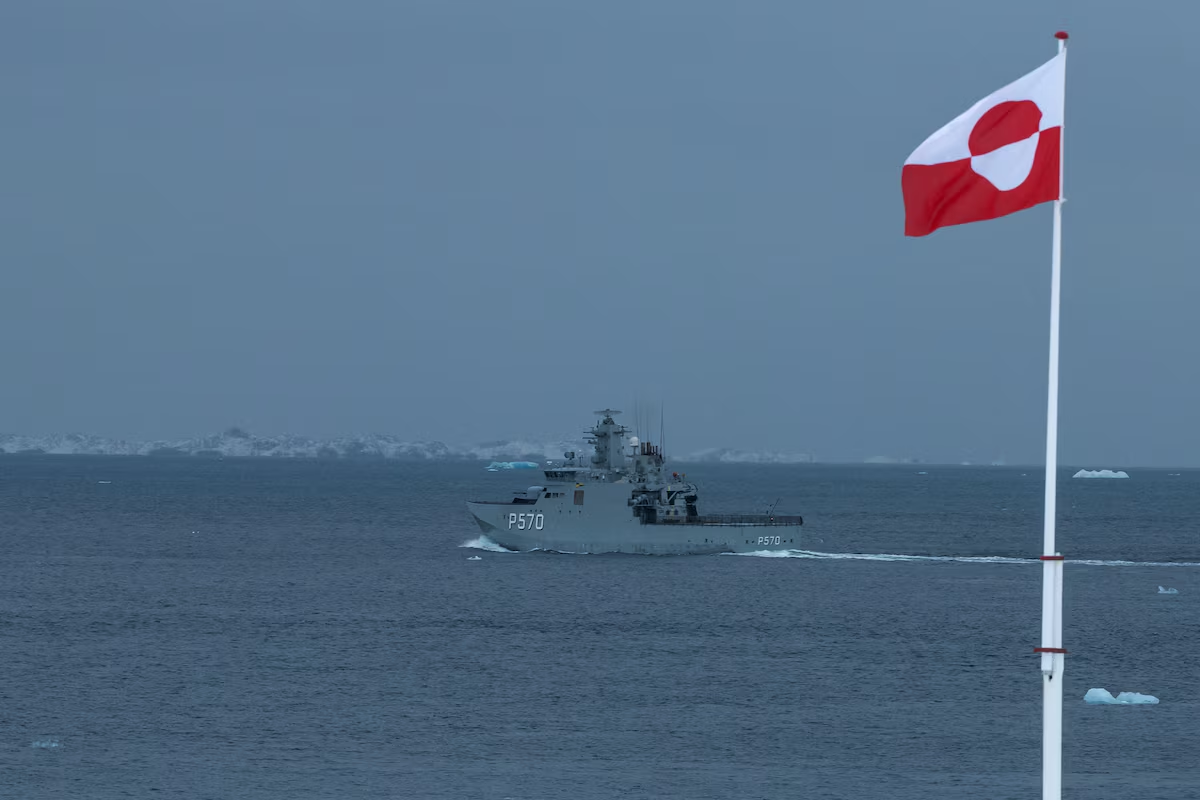
The immediate trigger for much of the anger was a planned NATO exercise, Operation Arctic Endurance, which involved eight European partners and had been scheduled well before the recent public statements. In his post, Mr. Trump questioned why allied troops were in Greenland and labelled their presence concerning. The exercise, which involved a limited number of troops, focused on improving allied readiness in the Arctic.
Tariff threats undermine transatlantic relations and risk a dangerous downward spiral.
Joint statement by Britain, Denmark, Finland, France, Germany, the Netherlands, Norway and Sweden
Allies say the operation was routine and invited, and some participants were already rotating out as planned. Rear Admiral Stefan Pauly of Germany described the visit as productive and cooperative, and he emphasised that NATO’s work in the Far North aims to address strategic challenges posed by Russia and China.
The Americans are our allies. They’re the strongest ally, and we always could rely on this.
Rear Admiral Stefan Pauly
Despite such reassurances, officials in several capitals voiced deeper concerns. Norway’s foreign minister stressed NATO’s role in protecting territorial integrity. Lawmakers in Denmark warned that a U.S. move to seize Greenland would unravel the alliance, signalling the seriousness with which European leaders regard threats linked to sovereignty.
Local reaction in Greenland
Greenlanders responded with visible public protest. Thousands gathered outside the U.S. consulate to assert that the island should remain under Greenlandic and Danish control. Demonstrators carried banners and sang traditional songs, and many expressed anger at the prospect of external interference in their future.
I think he should just shut up. Nothing good is coming out of his mouth.
Pha Kielsen, protester in Nuuk
Potential consequences and next steps
Diplomats in Brussels and national capitals are weighing responses that would signal unity without triggering a wider economic conflict. Any move to impose tariffs would carry immediate commercial consequences and could deepen political polarization within NATO. At the same time, the episode has prompted discussion about alliance cohesion and how member states manage disputes involving one member’s territory.
- EU diplomats discussed countertariffs on about €93-billion in U.S. imports.
- Operation Arctic Endurance was a planned, limited NATO exercise involving eight European countries.
- Greenlanders staged large protests asserting local control and opposing outside pressure.
Officials on both sides face a choice between de-escalation through diplomacy and reciprocal measures that could widen the rift. The outcome will shape transatlantic trade relations and the future role of NATO in managing disputes among members.
For now, Greenland’s status remains unchanged, but the controversy has highlighted how a relatively small, remote territory can become a flashpoint for larger geopolitical and economic conflicts. Alliances and trade agreements that relied on predictable cooperation are being tested, and governments will need careful diplomacy to prevent the dispute from causing lasting damage.
GreenlandNATOUS-EU relationsDenmarktrade