How Trump’s push on the Federal Reserve is affecting markets and your money
Presidential pressure on the Fed, including a DOJ probe of Chair Jerome Powell, has pushed gold up and the U.S. dollar down, raising inflation and yield risks for global investors.
Copy link
By Torontoer Staff
President Donald Trump has intensified efforts to influence the U.S. Federal Reserve, producing measurable market reactions and raising questions about inflation and investor confidence. The actions include public criticism of Fed decisions, nominations aligned with lower-rate preferences, and an unprecedented Department of Justice investigation into Fed chair Jerome Powell.
The dispute matters beyond Washington. The Fed is central to global finance: its policies shape inflation expectations, U.S. Treasury yields and the dollar’s role as the world’s reserve currency. Changes to the Fed’s independence could alter those foundations.
What the Fed does and why independence matters
The Fed sets monetary policy to keep inflation low and the economy stable. That track record has supported a vast market for U.S. Treasury debt and helped maintain the dollar’s global dominance. The Fed’s credibility rests on operational autonomy, a delegation from Congress intended to insulate policy from short-term political pressures.
When central banks are seen as independent, investors price risk and inflation expectations differently than when political influence appears likely. A perception that policy will favour lower rates regardless of inflationary pressures can raise inflation expectations and risk premiums, with real consequences in markets and everyday costs.
What Trump has done so far
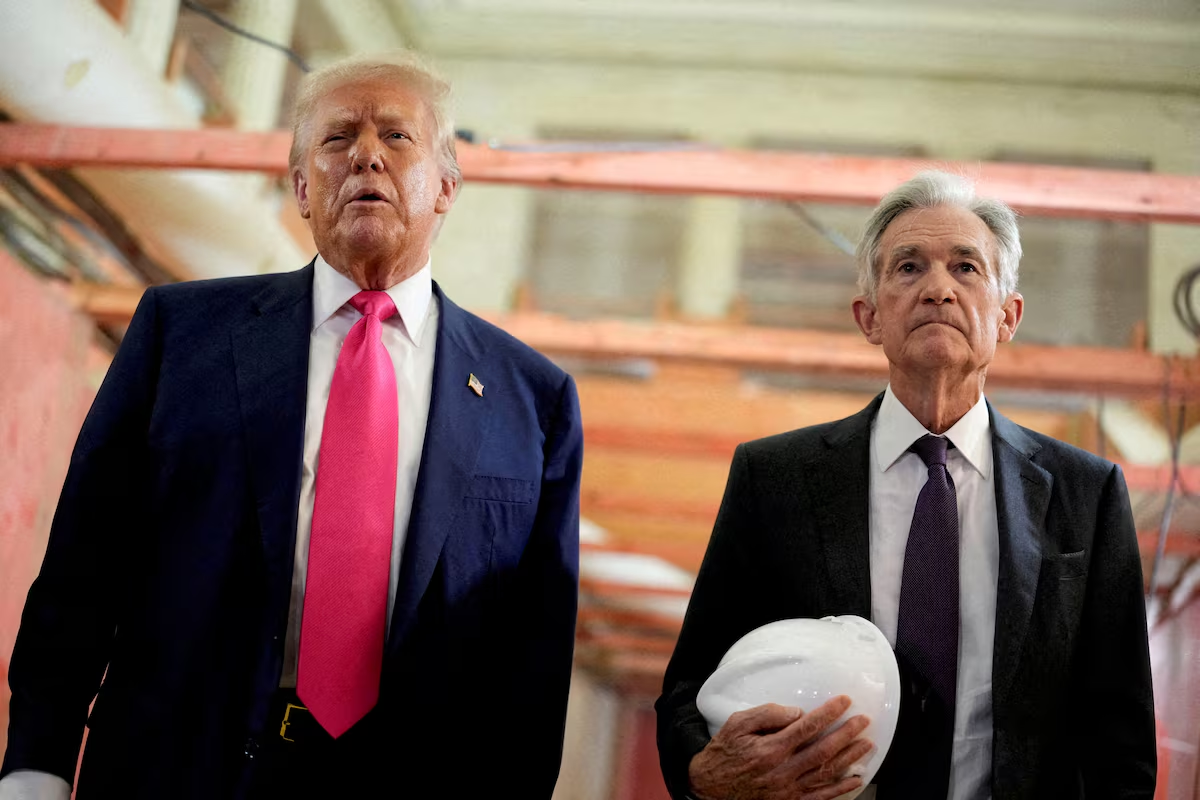
Since returning to the White House, Mr. Trump has repeatedly criticised the Fed for not cutting rates more aggressively, nominated allies who favour lower interest rates and sought to remove appointees he disagrees with. The most striking escalation is the DOJ criminal probe into Chair Jerome Powell’s congressional testimony about renovation cost overruns at a Fed facility.
Anybody that disagrees with me will never be the Fed Chairman.
Donald Trump
The probe into Powell is unprecedented and has prompted debate about whether the Justice Department is being used to exert pressure on an independent institution. Courts have already blocked one attempted removal of a Fed governor, and appeals are pending.
How markets have responded
Markets have reacted to the perceived erosion of Fed independence and to fiscal plans that could increase federal borrowing. Over the past year, gold has risen about 80 per cent and the U.S. dollar has weakened roughly 10 per cent. The 10-year Treasury yield has moved only modestly lower despite cuts to the Fed policy rate, suggesting higher inflation expectations or rising risk premiums.
- Gold up about 80 per cent, reflecting demand for inflation hedges and safe-haven assets.
- U.S. dollar down roughly 10 per cent against major currencies.
- 10-year Treasury yield little changed overall, implying higher risk premiums or shifting investor demand.
- Potential for sovereign wealth funds and major investors to reduce Treasury holdings, increasing borrowing costs.
Contributing to these moves is a proposed fiscal package that would add an estimated US$3.4 trillion to federal debt over ten years. Larger deficits, combined with a Fed perceived as politically influenced, can push investors toward assets that protect against inflation and currency risk.
What could happen next
If Mr. Trump appoints a Fed chair committed to lower rates and large budget deficits persist, the likely outcome is more upward pressure on inflation expectations, higher precious metal prices and further dollar weakness. That scenario could force longer-term interest rates higher as investors demand greater compensation for risk and inflation.
Higher yields and weaker currency can translate into higher borrowing costs for governments, businesses and households, and greater price pressure on imported goods. The timing and severity of those effects are uncertain, but history shows financial stress can build slowly and then accelerate quickly.
What this means for Canadians and everyday finances
Canadians should watch U.S. monetary and fiscal policy closely. A weaker dollar and higher U.S. yields can affect Canadian exporters, import prices and cross-border investment flows. Banks, pension funds and other institutional investors with exposure to U.S. Treasuries could see shifts in portfolio values and funding costs.
For individual households, the transmission is indirect but real. If inflation expectations rise and global yields move higher, Canadian interest rates could drift up too, increasing mortgage and borrowing costs over time.
Bottom line
Political pressure on central banks can have tangible market consequences, even before policy changes occur. The current push on the Fed has already been associated with notable moves in gold, the dollar and bond markets. The chief risks ahead are higher inflation expectations, rising yields and a potential loss of confidence among large institutional holders of U.S. debt. Those developments would affect global markets and, eventually, household finances in Canada.
Observers and investors will be watching Fed leadership decisions, DOJ developments and fiscal policy closely in the months ahead. The combination of political influence and larger deficits would likely prolong market volatility and raise the odds of higher inflation and borrowing costs.
Federal ReserveDonald TrumpU.S. economyinflationmarkets