Ignatieff: Carney recognised a new global reality and warned Ottawa of rising risks
Michael Ignatieff says Mark Carney correctly identified a changed global landscape and has tried to steer Canada through new economic and geopolitical risks.
Copy link
By Torontoer Staff
Michael Ignatieff praised Mark Carney's assessment of global change, saying Carney has correctly recognised a new world and warned Canada about the risks that come with it. Ignatieff credited Carney's public interventions for pushing Ottawa to confront trade and geopolitical challenges more directly.
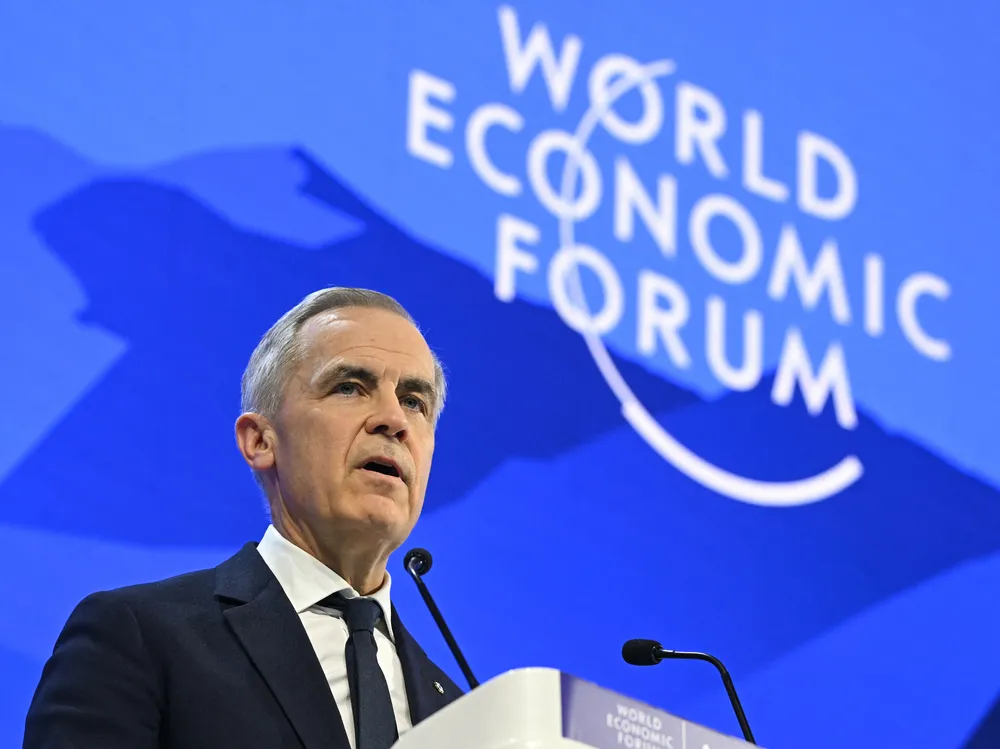
Ignatieff made his remarks following Carney's speech at the World Economic Forum in Davos on Jan. 20, 2026. The former diplomat and academic highlighted both the scale of the shifts Carney described and the practical policy consequences for Canada.
What Ignatieff said
Ignatieff summed up Carney's message as a clear signal that the post-Cold War order has changed and that Canada must adapt. He argued Carney did not overstate the risks, and that Ottawa needs to reassess economic strategy, trade relationships and national resilience in light of heightened geopolitical competition.
Carney got it right, we are in a new world.
Michael Ignatieff
Ignatieff singled out trade negotiations as an immediate area of concern. He suggested the Canada-United States-Mexico Agreement, known as CUSMA, may no longer provide the stable foundation it once did.
I think Mark Carney has decided the CUSMA negotiations are possibly dead in the water.
Michael Ignatieff
Carney's Davos address in context
At the World Economic Forum, Carney outlined risks tied to shifting trade patterns, supply-chain fragmentation, climate-related disruptions and heightened geopolitical rivalry. He framed those issues as intertwined economic and security challenges that require coordinated policy responses, from investments in resilience to clearer trade priorities.
Carney's background as a central banker and his public profile on international economic platforms give weight to his warnings. Ignatieff said that combination has compelled policymakers to treat those warnings as more than theoretical commentary.
Policy implications for Canada
If Carney's diagnosis holds, Canada will need to consider several concrete steps. Those include diversifying export markets, strengthening domestic supply chains, prioritising critical infrastructure and reassessing trade tactics with key partners. Ignatieff emphasised the need for realistic assessments of negotiating leverage and for plans that protect industries exposed to sudden global shifts.
- Re-evaluate trade priorities and contingency plans for agreements such as CUSMA
- Invest in supply-chain resilience and critical infrastructure
- Align climate and industrial policies to reduce exposure to external shocks
- Coordinate with allies on economic and security measures to manage geopolitical risk
Ignatieff noted that responding effectively will require cross-partisan dialogue and engagement with business and labour, so policy changes do not leave key sectors exposed during transitions.
What to watch next
Observers will be watching how Ottawa reacts to Carney's and Ignatieff's warnings. Key signs will include shifts in trade diplomacy, new funding for infrastructure resilience and changes to procurement and industrial strategy aimed at reducing vulnerabilities.
Markets and business groups are also likely to test how quickly government can translate broad warnings into concrete measures. The tone and timing of those responses will indicate whether Canada treats the new risks as a temporary disturbance or a structural shift requiring long-term adjustments.
What this means for Canadians
For households and firms, the short-term effects may include increased uncertainty around trade-dependent sectors, potential price volatility for some goods and a policy focus on bolstering domestic capacity in critical areas. Longer term, a more resilient economy could reduce exposure to sudden external shocks and support steadier growth.
Ignatieff framed the debate as a choice about preparedness. He argued that acknowledging a changed global order is the first step toward effective policy, and he credited Carney with making that case publicly.
Carney's speech and Ignatieff's reaction have shifted the conversation from abstract risk assessments to practical policy questions. How Ottawa answers those questions will shape Canada's economic strategy in the years ahead.
Mark CarneyMichael IgnatieffDavosCUSMACanada economy