Iran warns U.S. after official reports 5,000 killed in nationwide protests
Iran warned the United States of a harsh response after an official said about 5,000 people died in protests that began Dec. 28. Executions and internet blackouts have deepened tensions.
Copy link
By Torontoer Staff
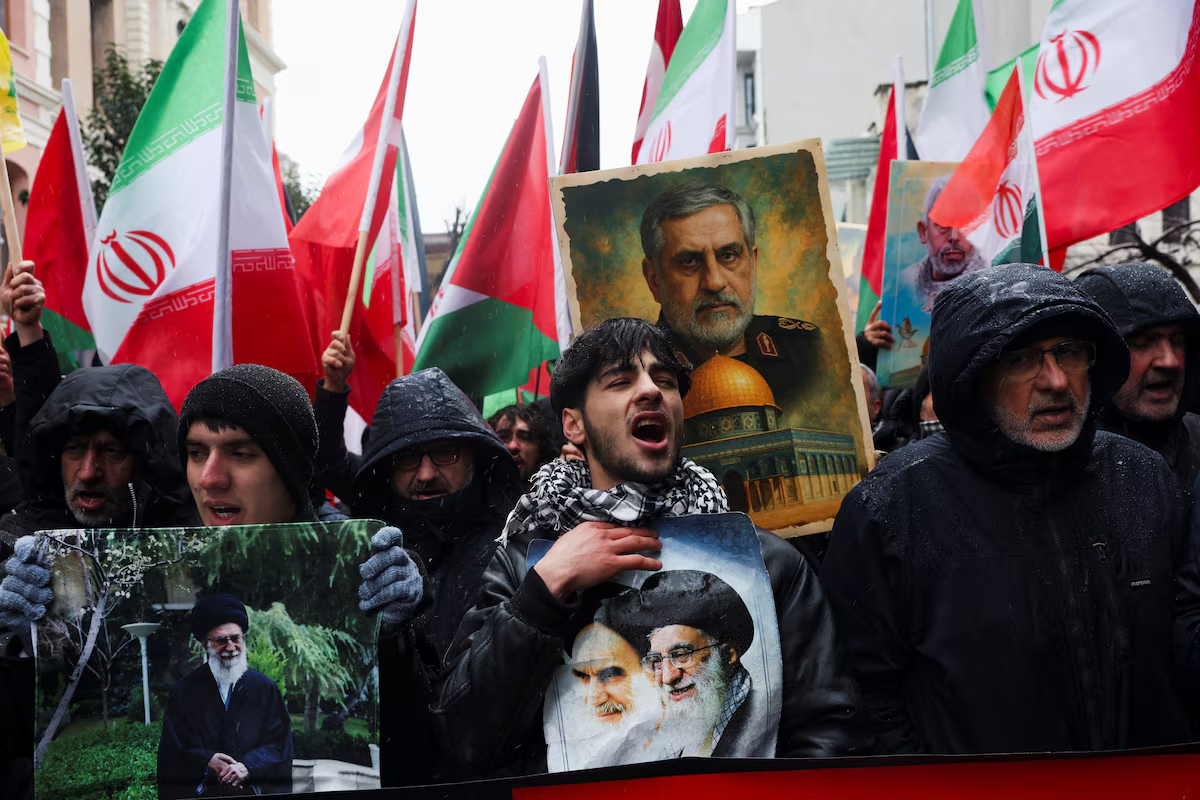
Iran’s government warned the United States that any military strike would draw a harsh response after an Iranian official said roughly 5,000 people, including about 500 security personnel, died during nationwide protests that began on Dec. 28. The unrest, which started over economic grievances, quickly broadened into calls for political change and produced the deadliest unrest since the 1979 revolution.
President Masoud Pezeshkian used social media to say Tehran would respond strongly to any “unjust aggression,” and that an attack on the country’s supreme leader would amount to all-out war. The warnings intensified after U.S. President Donald Trump said he might intervene if protesters continued to be killed or face executions.
Scope of the unrest and reported casualties
Protests began in Tehran’s Grand Bazaar and spread nationwide within days, drawing people from multiple generations and socioeconomic backgrounds. Demonstrations included shopkeepers, students and others frustrated by economic pressures and political rule. Security forces carried out a violent crackdown that, according to various groups and officials, left thousands dead and tens of thousands arrested.
U.S.-based monitoring group HRANA reported 3,308 confirmed deaths with another 4,382 cases under review, and said more than 24,000 people were detained. An unnamed Iranian official speaking to Reuters put the verified death toll at about 5,000 and said roughly 500 of the dead were security personnel. That official added the verified toll was unlikely to “increase sharply.”
Executions and legal measures
Iran’s judiciary signalled it may press ahead with capital punishments for people detained during the unrest. Judiciary spokesperson Asghar Jahangir said a “series of actions have been identified as Mohareb,” an Islamic legal term meaning to wage war against God that carries the death penalty under Iranian law.
A series of actions have been identified as Mohareb, which is among the most severe Islamic punishments.
Asghar Jahangir, judiciary spokesperson
Officials have presented alleged links between protesters and foreign groups as justification for severe charges. In public statements, Iran’s clerical leadership blamed what it described as terrorists and rioters supported by external actors, while also acknowledging that “several thousand deaths” occurred during the violence.
International responses and military posturing
President Trump said in a Politico interview that it was time to look for new leadership in Iran if protesters continued to be killed. He later thanked Iranian authorities on social media, saying they had called off scheduled executions of 800 people, and repositioned U.S. military assets in the region without specifying a course of action.
Iran’s Supreme Leader Ayatollah Ali Khamenei called Trump a “criminal” and blamed foreign enemies, including the United States and Israel, for fomenting unrest. Reuters reported intelligence suggesting armed groups and foreign elements, particularly in Kurdish border areas, had sought to exploit instability.
Communications blackout and eyewitness accounts
Internet restrictions and targeted blackouts complicated reporting and communication inside Iran. NetBlocks, an internet monitoring group, said a partial restoration of services for a few hours was followed by renewed outages. Families and foreign visitors reported difficulty contacting relatives and arranging travel.
Video footage circulating on social media, some verified by Reuters, showed security forces confronting and dispersing demonstrations. A resident in Tehran described seeing riot police shoot at groups of mostly young protesters. A visiting doctor from Lahore, Faizan Ali, said he cut short a trip because of the lack of communication with his family and described scenes of arson and street violence he witnessed in Isfahan.
I saw a violent mob burning buildings, banks and cars. I also witnessed an individual stab a passerby.
Faizan Ali, visiting doctor
Where tensions might go from here
Iran’s combination of domestic repression, legal measures against detainees and public warnings against foreign intervention has increased the risk of escalation. The authorities’ emphasis on charges like Mohareb and the reported death toll have added urgency to calls from international rights groups for independent investigations and greater transparency.
For now, protests appear to have subsided following the crackdown, but the political and humanitarian fallout continues to shape regional diplomacy and the debate over how outside governments should respond to unrest inside Iran.
Iran’s warning to the United States came as officials, rights groups and international observers wrestle with conflicting casualty figures, restricted reporting, and the potential for further legal punishments. The next steps by Tehran, Washington and regional actors will determine whether tensions ease or deepen.
Iranprotestsinternational-relationshuman-rightsinternet-restrictions