Kimberly-Clark beats profit estimates as cost cuts and essential-product demand lift sales
The consumer goods company beat fourth-quarter profit estimates after cost reductions and steady demand for essentials, while pushing affordable, premium-featuring ranges.
Copy link
By Torontoer Staff
Kimberly-Clark reported adjusted fourth-quarter earnings per share of US$1.86, beating analyst estimates of US$1.81 as cost cuts and steady demand for essentials supported margins. Organic sales rose 2.1 percent, driven by a 2.7 percent increase in volumes as shoppers bought larger value packs at warehouse-style club stores.
Shares were up about 2 percent in pre-market trading after a challenging 2025, when the stock lost roughly 23 percent of its value. Net sales for the quarter ended Dec. 30 were US$4.08 billion, narrowly below the US$4.09 billion analysts expected.
What helped results
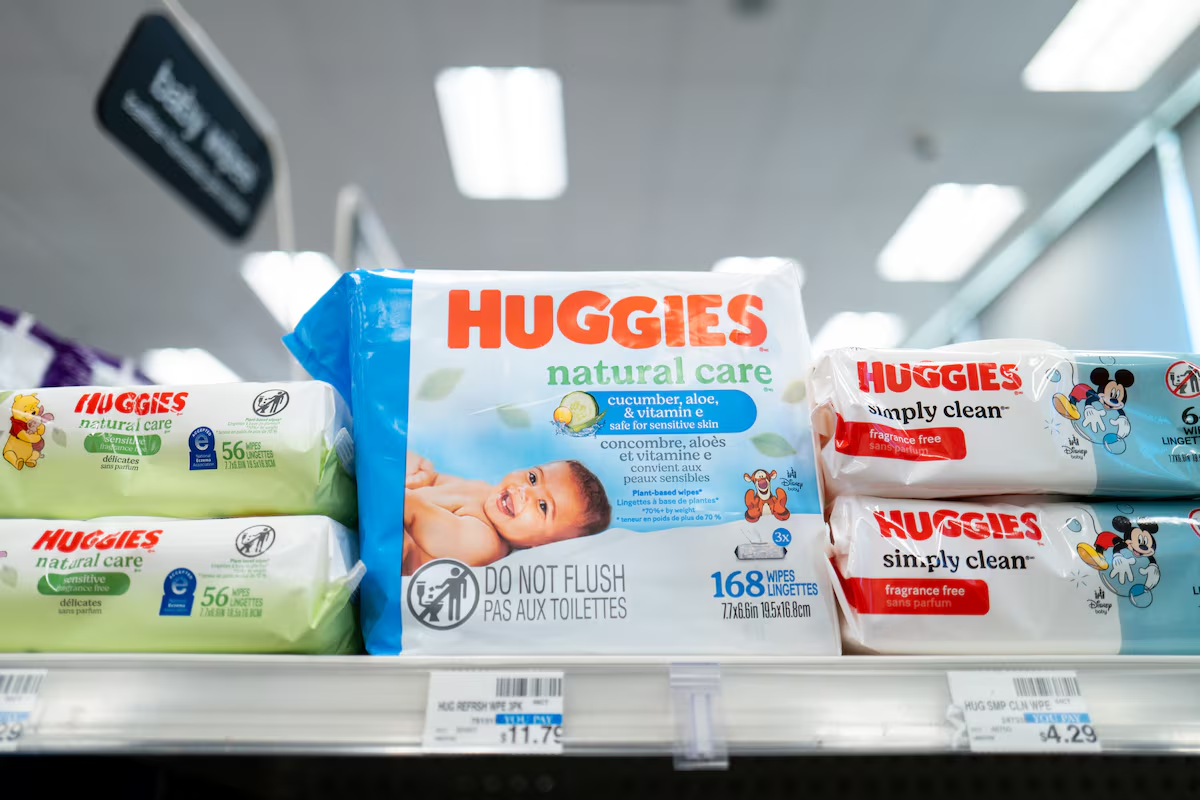
Kimberly-Clark has reduced costs through job cuts and by divesting lower-margin, non-essential businesses, including its private-label diaper and personal protective equipment segments. Those moves helped protect margins as the company refocuses on core brands such as Huggies and Kleenex, and expands lower-priced ranges that still include premium features.
Prices declined 1.1 percent in the quarter, but higher volumes offset that pressure. Adjusted gross margin held steady at 37 percent compared with the prior year, reflecting disciplined cost controls and efficiency efforts.
Numbers at a glance
- Adjusted EPS: US$1.86 vs US$1.81 expected
- Net sales: US$4.08 billion; consensus US$4.09 billion
- Organic sales growth: 2.1 percent
- Volume growth: 2.7 percent
- Adjusted gross margin: 37 percent, in line with prior year
What this means for shoppers
Shoppers can expect more emphasis on value offerings from Kimberly-Clark. The company is expanding affordable ranges that maintain premium features, a response to cost-conscious buying patterns that favour larger, value-format packs often sold at club stores. Demand strengthened for items treated as essentials, including surface cleaning agents, disinfectants and paper napkins.
Lower shelf prices in some categories reflect a broader strategy to win back households cutting discretionary spending. At the same time, consumers may see fewer private-label options from the company in future, following the divestment of non-core segments.
Outlook and strategic moves
Kimberly-Clark expects 2026 organic sales to be in line with or ahead of the roughly 2 percent average growth in its categories and markets. The company projects double-digit growth in adjusted profit per share, with margins expanding as efficiencies improve.
Separately, Kimberly-Clark has proposed acquiring Kenvue, the maker of Tylenol, in a deal valued at more than US$40 billion. The company says the acquisition would create a global consumer health business and expects the transaction to close by year-end.
Risks to watch
The company previously warned that steep U.S. import duties, particularly on some Chinese goods, could pressure profitability. Trade costs and consumer spending shifts remain key variables for how resilient margins and sales will be through 2026.
Procter & Gamble, another consumer goods bellwether, also posted better-than-expected earnings recently, suggesting larger manufacturers are weathering a tight consumer spending environment by leaning on cost controls and portfolio strategies.
For shoppers, the near-term effect is likely to be more visible value packs and budget-friendly lines from major brands, even as companies pursue higher-margin growth at the corporate level.
Kimberly-Clarkconsumer goodsearningsshoppingpersonal care