Mark Carney heads to Davos to build new trading and security coalitions
Prime Minister Mark Carney is using Davos to court investors, shore up new trade links and test defence options as global alliances shift under Donald Trump.
Copy link
By Torontoer Staff
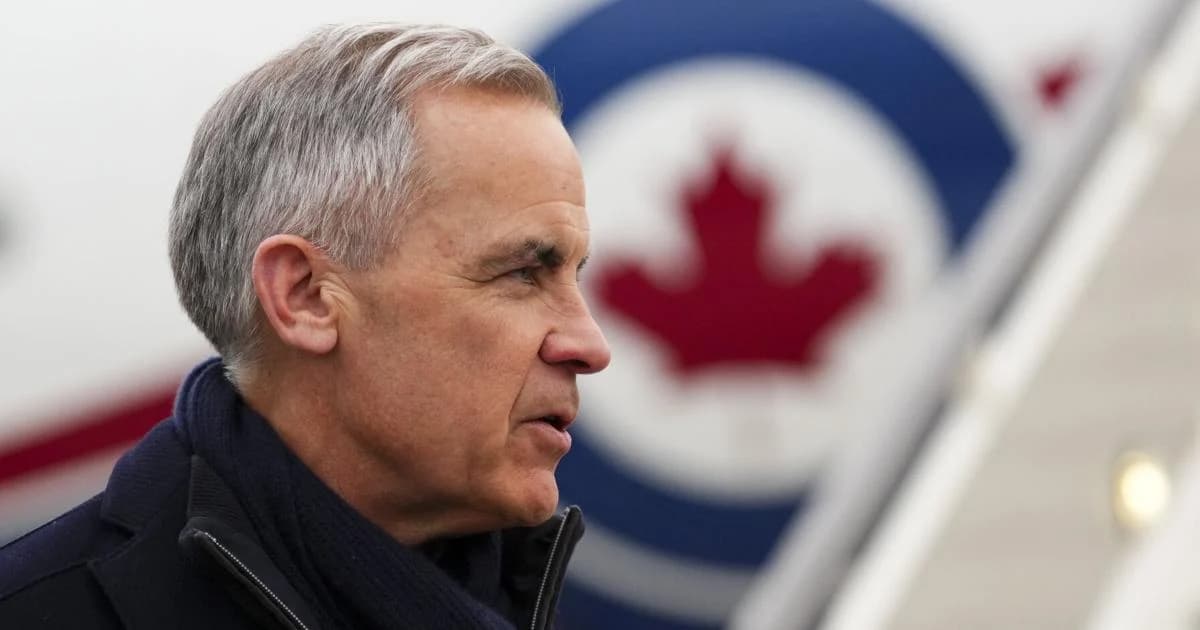
Prime Minister Mark Carney arrives in Davos this week with a transactional playbook: recruit new trading partners, deepen defence ties and broker coalitions that can replace fraying global institutions. He is presenting a pragmatic foreign policy focused on results rather than idealistic declarations.
At the World Economic Forum, Carney will meet political leaders and corporate chiefs, deliver a plenary speech and appear in a morning fireside chat. His aims include attracting investment to Canada and lining up partners for trade and security initiatives as Washington shifts course under U.S. President Donald Trump.
A transactional approach at centre stage
Carney has abandoned what his aides call broad preaching about values and embraced what he calls value-based realism. That translates into pursuing concrete agreements with countries willing to cooperate on shared interests, even if that means partnering with states Ottawa once treated cautiously.
He seeks partners for three core priorities: expanding market access for Canadian goods, strengthening Arctic and NATO-adjacent security, and unlocking investment in clean technology and infrastructure. At Davos he will mix high-level diplomacy with meetings designed to convert conversations into deals.
Trade: plurilateral deals and a China pivot
Carney describes the postwar multilateral trading system as eroding, in part due to recent U.S. decisions. His response is to pursue plurilateral arrangements, coalitions where willing countries advance freer trade among themselves rather than waiting for global consensus.
That strategy includes reviving ties with China on specific trade issues. Ottawa has announced a sharp cut to tariffs on a limited number of Chinese electric vehicles, from 100 percent to six percent, capped at 49,000 units this year. In return, Canada secured tariff relief on canola and seafood, Ottawa says.
What’s happening at pace and at scale is that a number of the multilateral relationships, institutions, rules-based systems are being eroded by various decisions of various countries, the United States included,
Mark Carney
Carney is also promoting deeper links between the Trans-Pacific Partnership and the European Union, positioning Canada as a broker between major trading blocs. He frames the effort as a practical alternative to a splintering global order that risks drifting toward economic isolation.
Security: Greenland, NATO and Arctic options
Trump’s recent rhetoric about expanding U.S. territory and his questioning of NATO commitments forced Canada to consider defence options more actively. Carney says Greenland’s future rests with Greenland and Denmark, and that NATO remains ultimately responsible for Arctic security.
Ottawa is weighing participation in Danish-led military exercises and options for a NATO-adjacent operation that could be scaled up if needed. Officials frame these scenarios as ways to reassure allies and deter unilateral moves in the region.
- Join Danish-coordinated exercises in the Arctic
- Support a subset of NATO members in a NATO-adjacent operation
- Increase defence spending and invest in dual-use infrastructure
Political trade-offs and reputational risk
Carney accepted a role on a U.S.-led Board of Peace that is meant to oversee Gaza reconstruction and broader Middle East initiatives. Ottawa says it joined to ensure humanitarian aid reaches Gaza and to press for a path toward a two-state solution. Details about how the board will operate and reports of a reported US$1-billion permanent membership fee remain unresolved.
Some observers warn that closer ties with China or endorsement of ad hoc U.S.-led panels could carry reputational risk for Canada. Carney’s team argues the trade-offs are necessary to secure immediate benefits for Canadian exporters and to stabilise humanitarian efforts where possible.
Brokering coalitions rather than restoring old orders
Carney’s foreign policy is built on the idea that fully multilateral solutions may not be achievable in the near term. Instead, he is betting on coalitions of the willing: combinations of countries that can move quickly on trade, defence and climate finance without waiting for universal agreement.
Examples include Canada’s participation in the EU-led ReArm Europe initiative to diversify defence supply chains, and the French- and British-led security guarantees for Ukraine that aim to fill gaps left by a less engaged United States.
Where there is progress, and where Canada and like-minded countries are looking to make progress is through plurilateral deals. Fancy word,
Mark Carney
Carney’s approach prioritises adaptability and pragmatic outcomes over ideals that require broad consensus. It is a clear response to a shifting global landscape, though critics say it risks aligning Canada too closely with partners whose long-term behaviour is uncertain.
At Davos, the prime minister will attempt to translate strategy into concrete partnerships. Investors, trading partners and defence planners will watch whether his efforts produce measurable gains for Canadian exporters and stronger security arrangements in the Arctic and beyond.
Carney is betting that pragmatic deal-making will protect Canadian interests as global institutions evolve. The test will be whether those deals deliver durable benefits without compromising Canada’s long-term reputation and values.
Mark CarneyDavosWorld Economic ForumtradeCanada foreign policy