Markets, not missiles: how bond sales could check Trump’s Greenland brinkmanship
Trump’s Greenland threats rattled stocks and bonds, prompting a quick retreat. European holders of US debt could use capital markets to push back, but the tactic has limits.
Copy link
By Torontoer Staff
Donald Trump’s recent talk of buying Greenland and threatening military action last week prompted a fresh market wobble, and the president pulled back almost immediately. U.S. stocks slid—S&P 500 down 2.1 per cent, Dow Jones off 1.8 per cent, Nasdaq down 2.4 per cent—while Treasury yields ticked higher before calming after Mr. Trump softened his language.
The episode echoed a sharper market reaction last spring, when Mr. Trump’s tariffs and trade rhetoric drove yields up and forced him to temper his policies. That pattern underlines a simple fact: Mr. Trump respects, and fears, the capital markets, especially debt markets.
Why bond markets matter to the president
As a borrower and developer, Mr. Trump knows how rising interest rates raise borrowing costs and squeeze returns. His history with heavily leveraged projects, including the 1991 bankruptcy of the Trump Taj Mahal casino, shaped that view. In office he has repeatedly tried to influence borrowing costs, publicly attacking Federal Reserve chair Jerome Powell as a “major loser” and pressing for actions aimed at lowering mortgage rates.
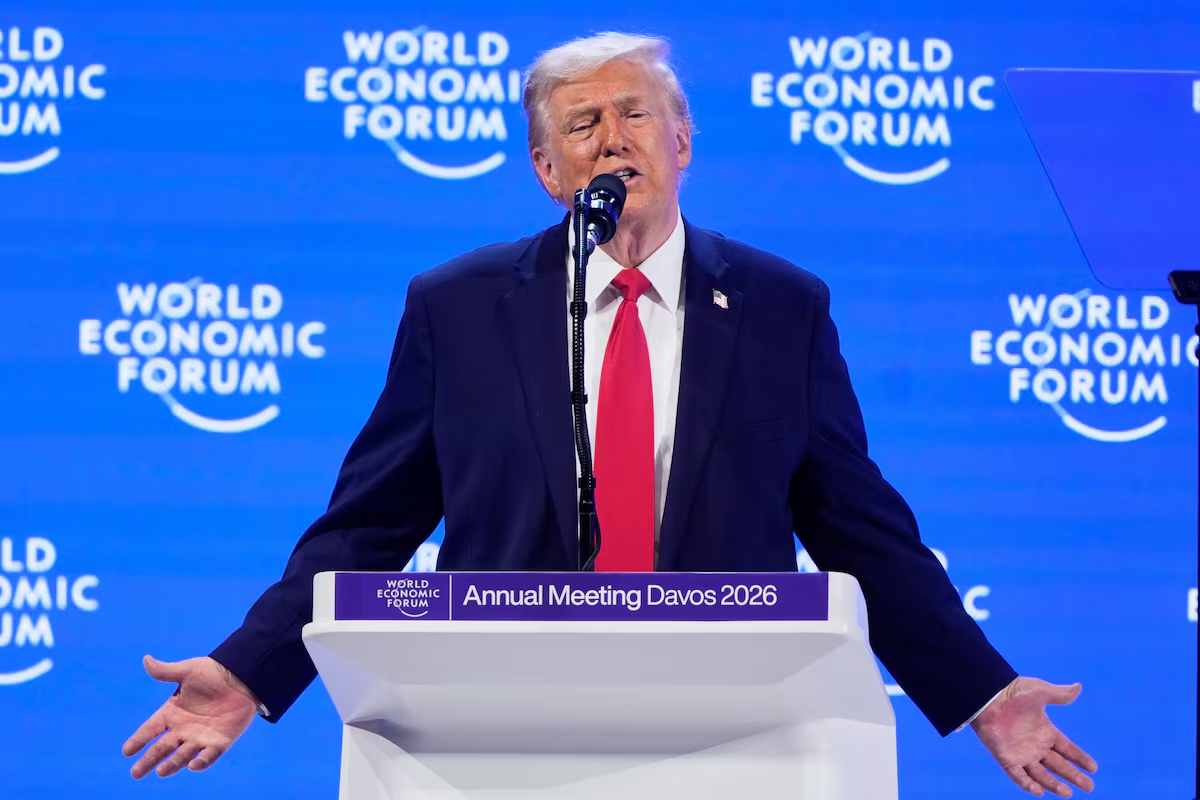
When markets show stress, Mr. Trump has at times dialled back aggressive moves. After policy-driven turmoil last year, bond yields fell once he eased his stance. The same pattern appeared after the Greenland remarks; the president insisted he still wanted a deal, but not by force, and also promised not to impose tariffs on eight European countries that had sent personnel to Greenland. “Our stock market took the first dip yesterday because of Iceland, so Iceland’s already cost us a lot of money,” he said in his remarks, conflating Iceland and Greenland in a rambling speech.
Can Europe use that fear as leverage?
European governments collectively hold trillions in dollar-denominated U.S. assets. Federal Reserve data suggest roughly US$2-trillion in Treasuries and a similar amount in U.S. corporate bonds across European hands. That ownership gives them a potential lever: selling U.S. debt could push Treasury yields up and raise borrowing costs for the U.S. economy, creating political pressure in Washington.
A targeted, sustained sell-off might replicate episodes of bond market panic, such as the 2022 U.K. experience under Liz Truss, when unfunded fiscal plans triggered a spike in yields and a quick political collapse. The lesson for those considering market pressure is that bond vigilantes can impose real costs on policymakers who rely on cheap credit.
If European countries were to dump their holdings of U.S. debt, there will be big retaliation, and they should be careful.
Donald Trump
Mr. Trump warned of “big retaliation” if Europeans sold Treasuries. That response highlights the danger: overt threats can escalate into tit-for-tat moves that accelerate selling, amplify market stress and harm the sellers too. European central banks and institutional investors would weigh losses from marking down U.S. assets against any political gains from rattling Washington.
Practical hurdles and risks
Using capital markets as a foreign-policy tool is neither simple nor risk-free. Large-scale sales would require coordination among sovereign funds, central banks and private investors, and they would need to manage the impact on their own balance sheets. Markets can also be unpredictable: a partial sell-off might not move policy, while a broad panic could destabilise global finance.
- Sales of Treasuries tend to push yields up, but they also lower bond prices for the sellers.
- Co-ordinated action would require political unity among European states and institutions.
- Retaliation from the U.S. could take many forms, including tariffs or restrictions that hit European exporters.
- Market moves can produce unintended spillovers to emerging markets and global credit conditions.
There is also a timing problem. Mr. Trump’s political incentives shift with the calendar. Ahead of elections, higher borrowing costs that translate into more expensive mortgages and loans create clear political pain. Outside a crisis, however, a disorganised or half-hearted market response will probably fail to change his behaviour.
What would a market strategy look like?
A credible market deterrent would need sustained, visible pressure, not a one-off headline-driven sell-off. That could combine coordinated reductions in Treasury holdings, public statements tying asset sales to specific policies, and parallel diplomatic or economic measures. Private institutions, including pension funds and insurers, would face governance and mandate constraints before joining such a campaign.
Even with coordination, the approach is a blunt instrument. It can signal resolve, but it risks collateral damage to global markets and to the very economies trying to exert pressure.
Market reactions have twice forced Mr. Trump to soften his posture. That gives European governments a potential tool, but it is not a clean solution. Using debt markets as leverage requires political will, tight coordination and an appetite for risk, including the possibility of provoking countermeasures that would reverberate through global finance.
TrumpmarketsbondsGreenlandUS politicsEurope