NATO expert says Trump’s Greenland tariff threat risks splitting the alliance
A former U.S. defence official calls President Trump’s tariff threat to force control of Greenland unprecedented, warning it could erode trust within NATO and chill Arctic cooperation.
Copy link
By Torontoer Staff
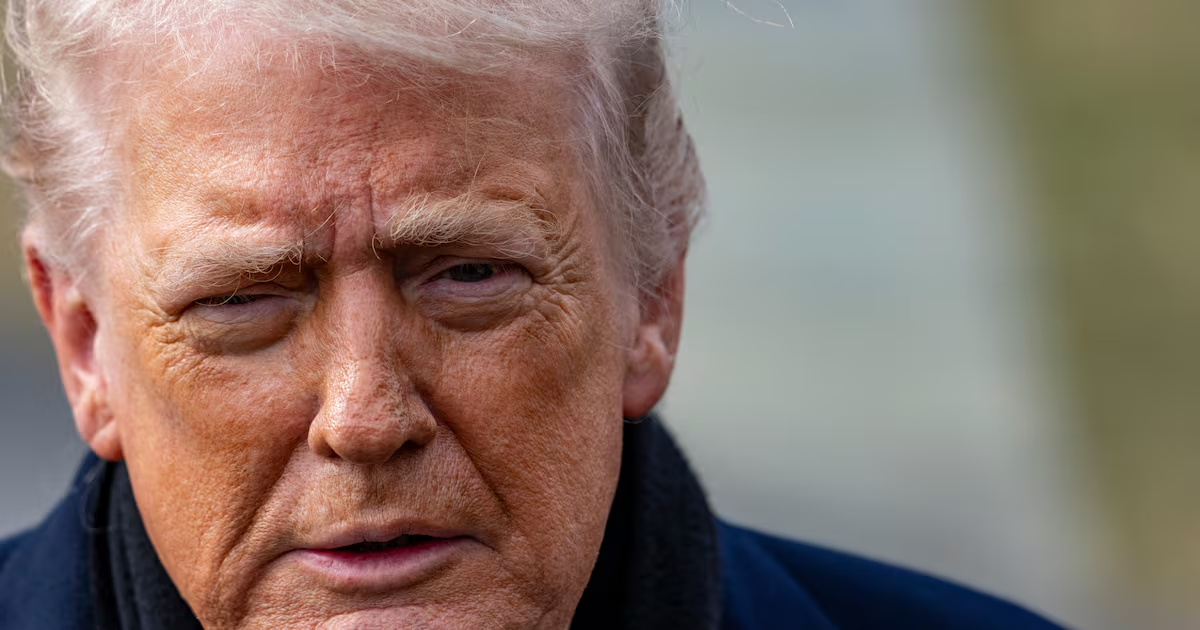
A former senior U.S. defence official says President Donald Trump’s use of tariff threats to press for control of Greenland is unprecedented and risks damaging the North Atlantic Treaty Organization. Jim Townsend, who served as deputy assistant secretary of defence for European and NATO policy, said the move is being received poorly on Capitol Hill across party lines and could undermine transatlantic cooperation.
Trump announced on social media that eight NATO countries that oppose U.S. control of Greenland would face new tariffs. The timeline he set begins Feb. 1 with a 10 per cent tariff, rising to 25 per cent on June 1.
The tariff announcement and who it targets
The countries named in Trump’s post were Denmark, Norway, Sweden, France, Germany, the United Kingdom, the Netherlands and Finland. Trump framed the measure as a response to opposition to U.S. control over Greenland, which is part of the Kingdom of Denmark.
The announcement follows a public push by the White House to expand U.S. influence in the Arctic. Officials and defence analysts say the region’s strategic position and resource potential have made Greenland a focus for several states and allied military planning.
Allied responses and concerns
The eight countries issued a joint statement declaring full solidarity with the Kingdom of Denmark, and warning that tariff threats undermine transatlantic relations and risk a dangerous downward spiral. They said Denmark’s Operation Arctic Endurance is necessary and poses no threat to anyone.
Tariff threats undermine transatlantic relations and risk a dangerous downward spiral.
Joint statement by the eight NATO countries
There were also public protests in Nuuk, Greenland’s capital, where demonstrators gathered outside the U.S. consulate. The protests reflected local unease about external pressure over Greenland’s future.
Canada’s reaction
Prime Minister Mark Carney said he was concerned about the escalation in U.S. pressure when asked at a news conference in Doha. Carney reiterated Canada’s support for Greenland’s sovereignty and said Denmark is a NATO ally. He added that Canada will continue working with allies to strengthen Arctic defence.
Ottawa has previously signalled an increased Arctic presence, including plans to open consulates in Greenland and Alaska, steps intended to deepen diplomatic and defence ties in the region.
Experts warn about the impact on NATO
Townsend told CTV News Channel that the tariff tactic threatens the credibility of the United States within NATO. He said the United States has become a bully, and that partners are losing trust in America’s ability to act as a reliable ally.
The U.S. has turned into a bully, it’s become a threat, and it’s a country that you can’t work with any credibility or with any hope of achieving a goal that we might have been able to achieve a year or two or 10 or 20 years ago.
Jim Townsend, former deputy assistant secretary of defence for European and NATO policy
Townsend and other analysts say the tactic could have several concrete consequences: weakened intelligence and defence cooperation, damaged political ties on Capitol Hill, and a chilling effect on joint Arctic exercises and planning. Lawmakers in both parties have expressed alarm and are reportedly seeking ways to contain the policy.
What this could mean going forward
The immediate effects will depend on whether the administration follows through on the tariff schedule and how allies respond diplomatically and economically. Congressional pushback, coordinated allied measures, and public opinion in Greenland and Denmark will all shape the next steps.
For NATO, the dispute adds a new strain to long-standing debates about burden sharing and strategic priorities. Analysts say repairing trust will require clear commitments and predictable behaviour from the United States, along with renewed dialogue among allies.
The situation remains fluid, with both diplomatic and domestic political pressures likely to influence outcomes in the weeks and months ahead.
GreenlandNATODonald TrumpArcticCanada