Ontario study links shingles vaccine to lower risk and delayed onset of dementia
A Lancet Neurology study of 250,000 Ontario seniors finds shingles vaccination associated with fewer new dementia diagnoses over 5.5 years, and researchers are calling for randomized trials.
Copy link
By Torontoer Staff
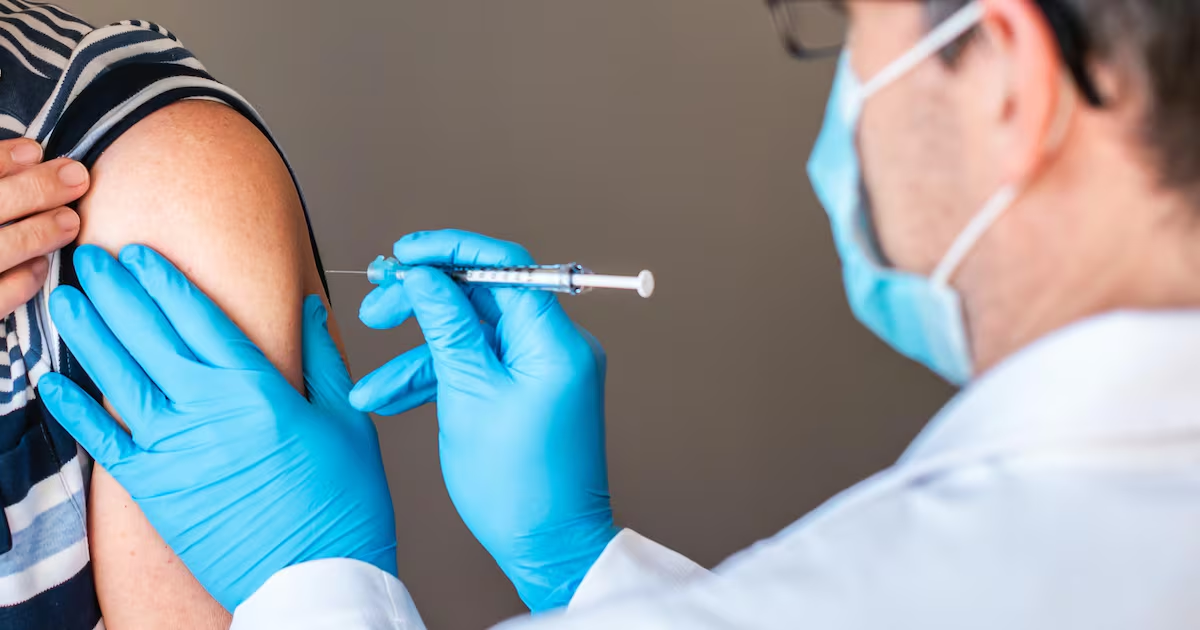
A new Ontario-based analysis published in Lancet Neurology reports that shingles vaccination was associated with a lower probability of new-onset dementia among older adults. Researchers behind the study compared more than 250,000 seniors and found an absolute reduction of about two percentage points in dementia diagnoses over 5.5 years for people eligible for Ontario's free shingles vaccine at age 71.
The paper, led by investigators at McMaster University and Stanford University, uses the staggered start of Ontario's vaccine programme in 2016 to create a natural comparison between adjacent birth cohorts. Authors say the size of the association exceeds effects typically seen from existing dementia treatments, and they are calling for randomized trials to confirm causation.
How the study was conducted
Ontario began offering the shingles vaccine free to certain older adults in September 2016. People who turned 71 after January 1, 2017 were eligible, while those who turned 71 before that date were not. That administrative cutoff created two comparable groups born just on either side of the date, allowing researchers to track health outcomes over the same period.
The team analysed provincial health records for more than 250,000 people over a 5.5-year follow-up. They report an absolute difference of roughly two per cent in new dementia diagnoses between the eligible and ineligible cohorts, equal to approximately two fewer dementia cases per 100 people in the eligible group during the study window.
What researchers say about the findings
There’s no pharmacological tool that has been shown to have such a large preventative effect.
Pascal Geldsetzer, lead researcher, Stanford University
Lead author Pascal Geldsetzer said the magnitude of the association is notable because dementia prevention options are limited. The paper also compared Ontario birth cohorts to the same cohorts in other provinces that did not implement a similar free-vaccine programme, and found fewer new dementia diagnoses in Ontario after the programme began.
Co-author Stephenson Strobel of McMaster University suggested the vaccine may exert broader effects on the immune system, such as anti-inflammatory changes, that could influence neurodegenerative processes beyond direct protection against shingles.
They may have this anti-inflammatory impact that not just directly impacts the disease itself but can kind of have a knock on effect that is especially important.
Stephenson Strobel, McMaster University
Possible mechanisms and prior research
The biological link between infections and dementia is an active area of research. Certain viruses that reach the nervous system are suspected of interacting with genetic and other risk factors. The exact mechanism by which the shingles vaccine could affect dementia risk is not established, but authors point to immune regulation and reduced inflammation as plausible pathways.
Other studies in the U.K. and Australia have reported similar associations, and a 2023 report from Brigham and Women’s Hospital in Boston found an episode of shingles was linked to about a 20 per cent higher dementia risk. The convergence of findings across populations motivates calls for randomized clinical trials to test causation.
Implications for people and policy
If the association proves causal, shingles vaccination would represent a simple, inexpensive intervention with meaningful public-health benefits. Researchers report the vaccine also appeared to benefit some people already living with dementia, including a lower probability of dementia-related death among those vaccinated after diagnosis.
It really does provide a signal and a strong likelihood for us to do further research to explain whether it is truly a causative effect.
Dr. Roger Wong, Alzheimer Society of Canada board member
Canada currently has about 700,000 people living with dementia, and projections indicate that number could climb substantially over the next decades if new preventive measures are not found. Researchers say the next step is a randomized clinical trial, and Geldsetzer is fundraising to support such a study.
What this means for Ontarians now
In Ontario the shingles vaccine is free for adults aged 65 to 70 and is provided as a two-dose series through primary care providers. Health Canada recommends two doses for adults over age 50 without contraindications. Public-health officials and clinicians will need trial evidence before changing vaccine guidance based on dementia prevention, but the current findings add to a growing case for further investigation.
Researchers emphasise that the study shows a strong association, not definitive proof of cause and effect. Still, the size and consistency of the signal across jurisdictions make a randomized trial a high priority for scientists interested in dementia prevention.
For now, the shingles vaccine remains an approved tool to prevent herpes zoster and its complications. The new analysis raises the possibility it could also help delay or reduce new cases of dementia, but further trials are required to confirm that promise.
shingles vaccinedementiapublic healthOntarioresearch